From the outside, the small village of Dingucha in Gujarat, India looks like any other of its size in the country. It’s an agriculture-dependent economy with a tiny population of about 3,600 people and a strong sense of community. Look closer, and see this village is filled with dreams and hopes of finding a better life — in America.
Since the ’90s, about half of the people who live in Dingucha, situated near the western coast of the country, have migrated to the United States. In that remote village, products from Costco or Walmart can be found in every home. Along its streets, huge signs and billboards advertise visa sponsorships. Every other person in Dingucha has thought of moving to the United States and living a more comfortable life.
But this rosy image of the American dream is sometimes a facade. Less than two months ago, a family of four from Dingucha was found dead near the border between the U.S. and Canada. Jagdish Patel, his wife, Vaishali Patel, and their children Vihanga and Dharmik Patel were found lying together in an empty field, frozen in the snow. Their bodies were discovered by the Canadian police less than half a mile from the U.S. border. According to officials, they were separated from a larger group of people being illegally smuggled into the United States. They were trying to cross the border on foot, in freezing weather of minus 31 degrees Fahrenheit.
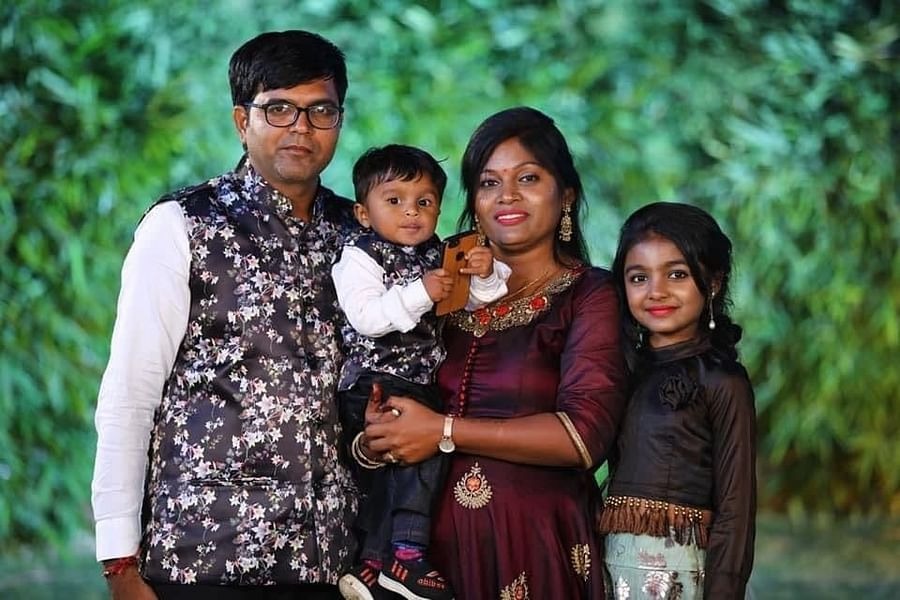
Jagdish Patel, his wife Vaishali Patel, and two children, Vihangi Patel and Dharmik Patel (Photo courtesy: Vibes of India)
Making quick money is one of the main motives for the residents of Dingucha to migrate to the United States, but another reason is the ongoing caste politics in the village. Two castes are predominant in Dingucha — the Patels and the Thakors. A lot of Patels are in a disadvantageous position and lack equal opportunities because of their lower caste. They mainly work in agriculture or factories as laborers. Many try to go to nearby major cities like Ahmedabad but do not find work. It is not only Dingucha’s residents who dream of an American life. There are about 60 other villages and towns in Gujarat like Anand and Kalol with a considerable Patel population who face similar problems.
Jagdish Patel worked a low-paying clerical job at a school. He tried to switch jobs, and worked with his elder brother in his clothing business for a while, but could not make a living wage there as well. His last resort was to go into farming with his father, but the earnings were even less. Ultimately, he decided to take the illegal route, hoping that America would have better living conditions.
Dr. Shyam Sriram, a lecturer and expert on immigration policy at Gonzaga University in Spokane, Washington, talked about the problematic influence of the caste system in the country.
He said that caste is a major issue in India because it not only benefits certain people economically but also in every other aspect of life. While racism makes a particular group more privileged, in India, it is casteism. People from upper castes have better access and advantages to everything. Caste is also an issue among the Indians living in America where they do not accept people from other castes.
Sriram says the Patel community is well known for establishing credit and offering a line of credit to others who come to America. “One thing that makes the Patel community unique sis they keep a lot of things in-house; whether it's credit or business or immigration,” he said. “People set up businesses, borrow money and sponsor people to travel within the community.”