Carol Schoolcraft's hair is pale yellow, cut short above her shoulders. She wears transition lenses in her metal-framed glasses to shield her eyes from the harsh desert sun. She's in her mid-60s, has lived in more cities than she can remember, and recently moved again, this time to Imperial County, California.
Within weeks of moving to Niland, a small, dusty town three miles east of California's dying Salton Sea and a 45 minute drive from the Mexico border, Carol’s doctor increased her asthma medication. Even with her stronger prescription, Carol sometimes struggles to catch her breath.
“I’ve had a lot more trouble since moving here,” Carol says. “It’s just harder to breathe.”
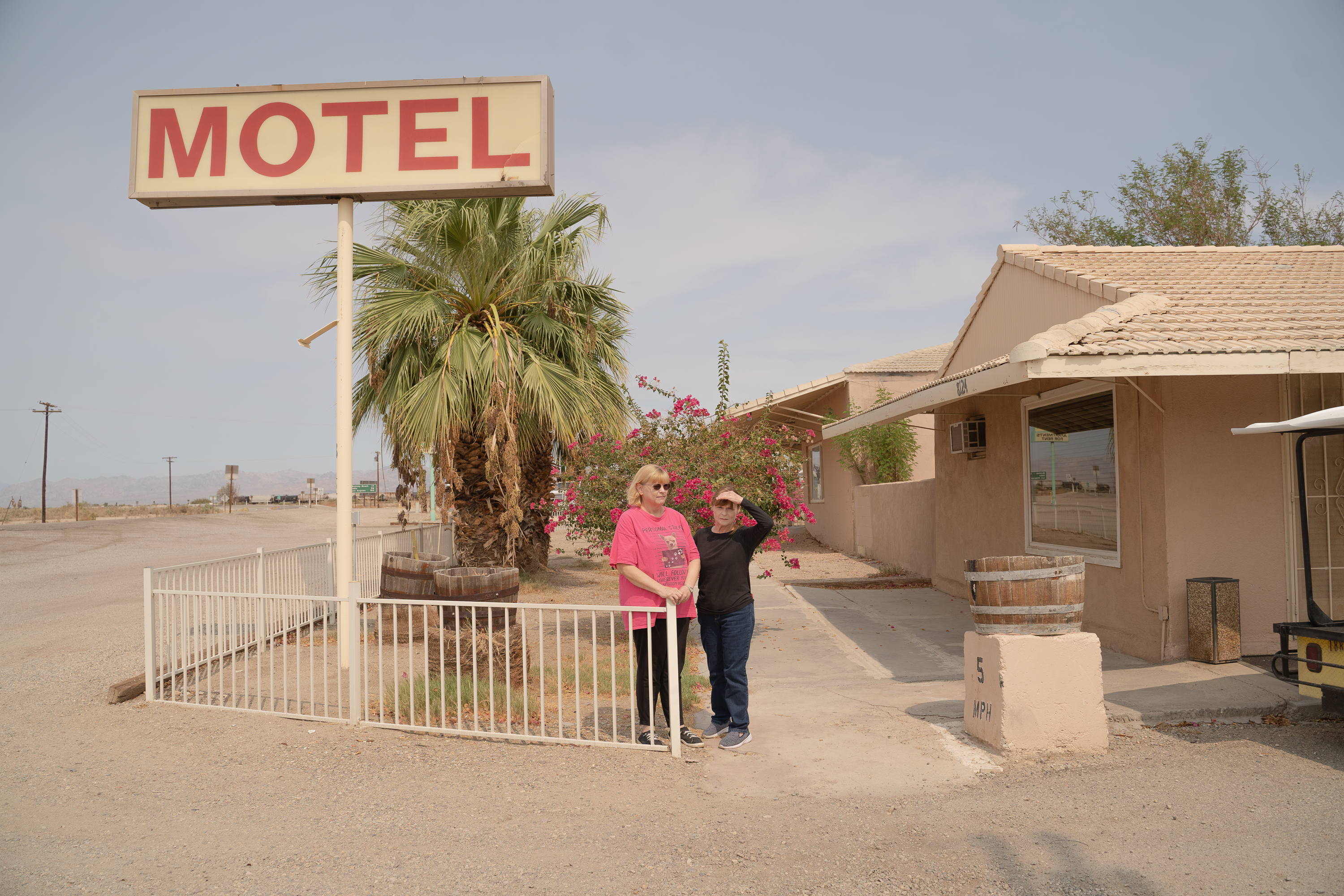
Carol and Elaine stand in front of the Niland Inn.
Imperial - An Empire in Ruins
Less than a hundred feet from the Buckshot Deli's hand-painted lettering, Carol is sitting behind the Niland Inn’s dimly lit front desk. She is the motel manager there, a job she found browsing Craigslist more than 100 miles away in San Diego. The stucco motel is beige and dirty and looks older than Carol. Elaine Ragland, Carol's older sister, is standing nearby. She is short and thin and has arms bruised by dog bites. When Carol moved to Niland in June, Elaine didn't want her sister to be alone, so she went along for the adventure.
Niland is a small, poor town in California’s Sonoran Desert. Houses there are old, many of them abandoned, boarded up and covered in graffiti. The cracks in the road make the asphalt there look like a jigsaw puzzle. The town is surrounded by miles of sand and dust. More than half of its 600 residents live under the poverty line. “I’ve never seen such meager circumstances,” Carol says.
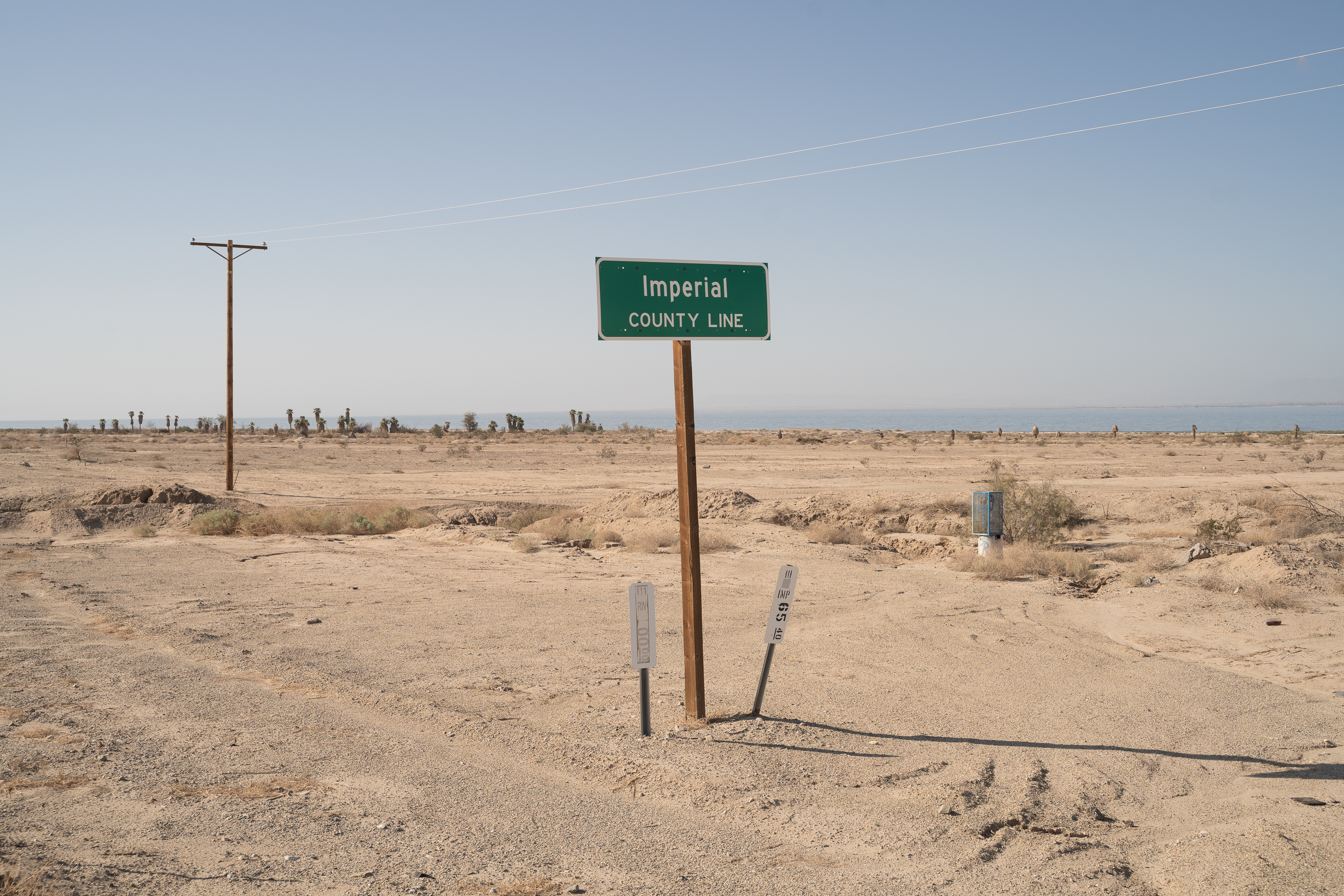
Imperial County Line.
Across California, there are areas of wealth and destitution, but there is no poorer place than Imperial County. And perhaps not coincidentally, Imperial has also had the largest percentage of its residents die from COVID-19 in the state.
Imperial’s mortality rate is well over double California’s. The proportion of people with the virus who have died is also higher than anywhere else in the state of nearly 40 million people. Someone in Imperial with COVID-19 is 50% likelier to die than the average Californian who catches the virus.
Though Imperial’s poverty plays a significant role in the county’s poor health outcomes, experts believe many of the county’s problems come from air pollution. The American Lung Association gives Imperial a failing grade for both ozone and particle pollution.
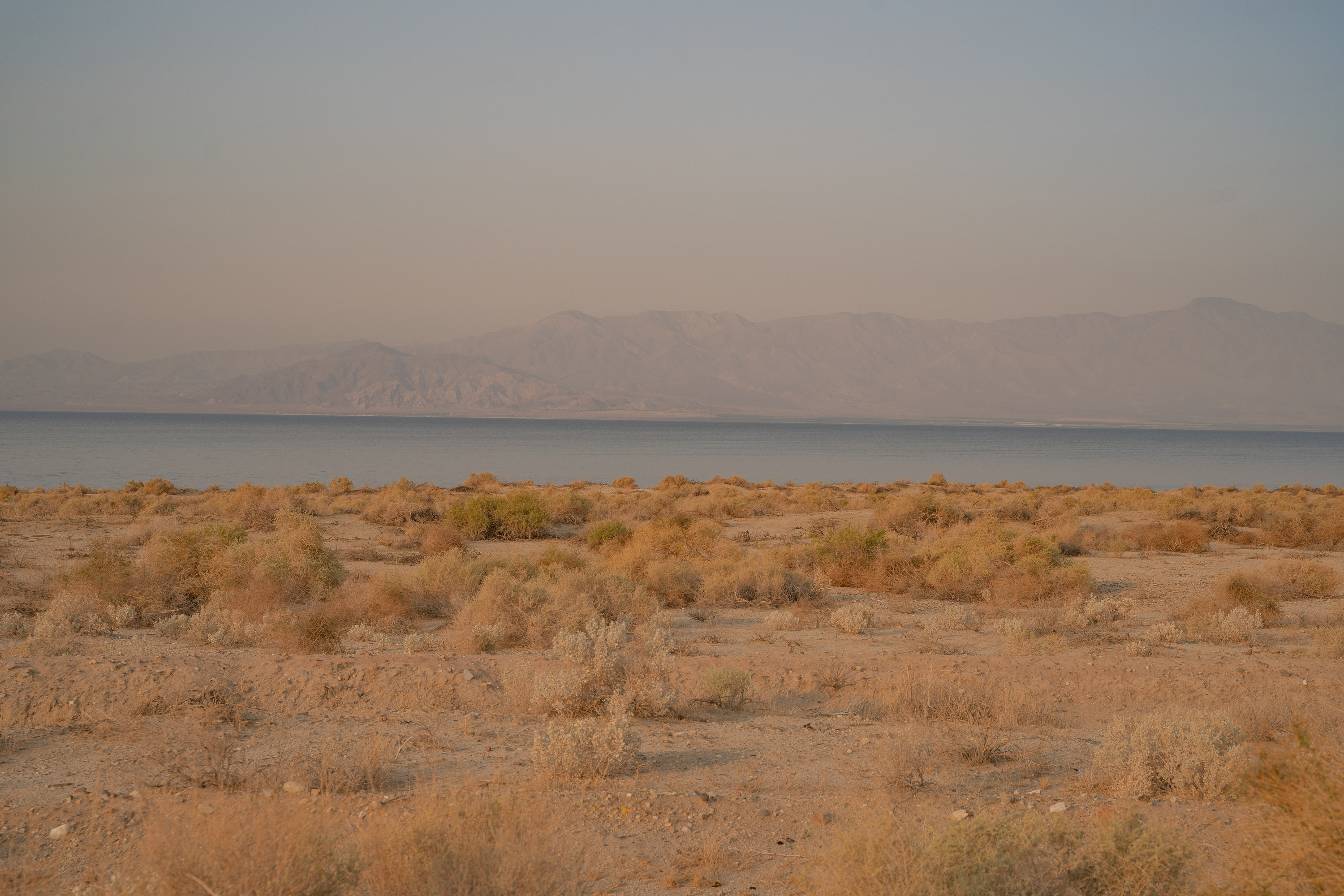
A thick haze of dust is suspended across the valley. Looking out onto the horizon, it is difficult to make out the hills just miles away. “It’s like seeing smog in LA, but it’s dirt and dust,” Elaine says. Smoke and exhaust from factories in Mexicali, just over the border, drift and settle into Imperial Valley. These pollutants contribute to what is a larger phenomenon of higher COVID-19 mortality rates along the US-Mexico border.
Locals like 70-year-old Ralph Walker have seen the air worsen. “The pollution is really, really bad here,” Walker says. “I remember when I was a little boy, I could see Mount Signal from my house." Today, all Walker sees is the faint suggestion of a mountain hidden behind a haze.
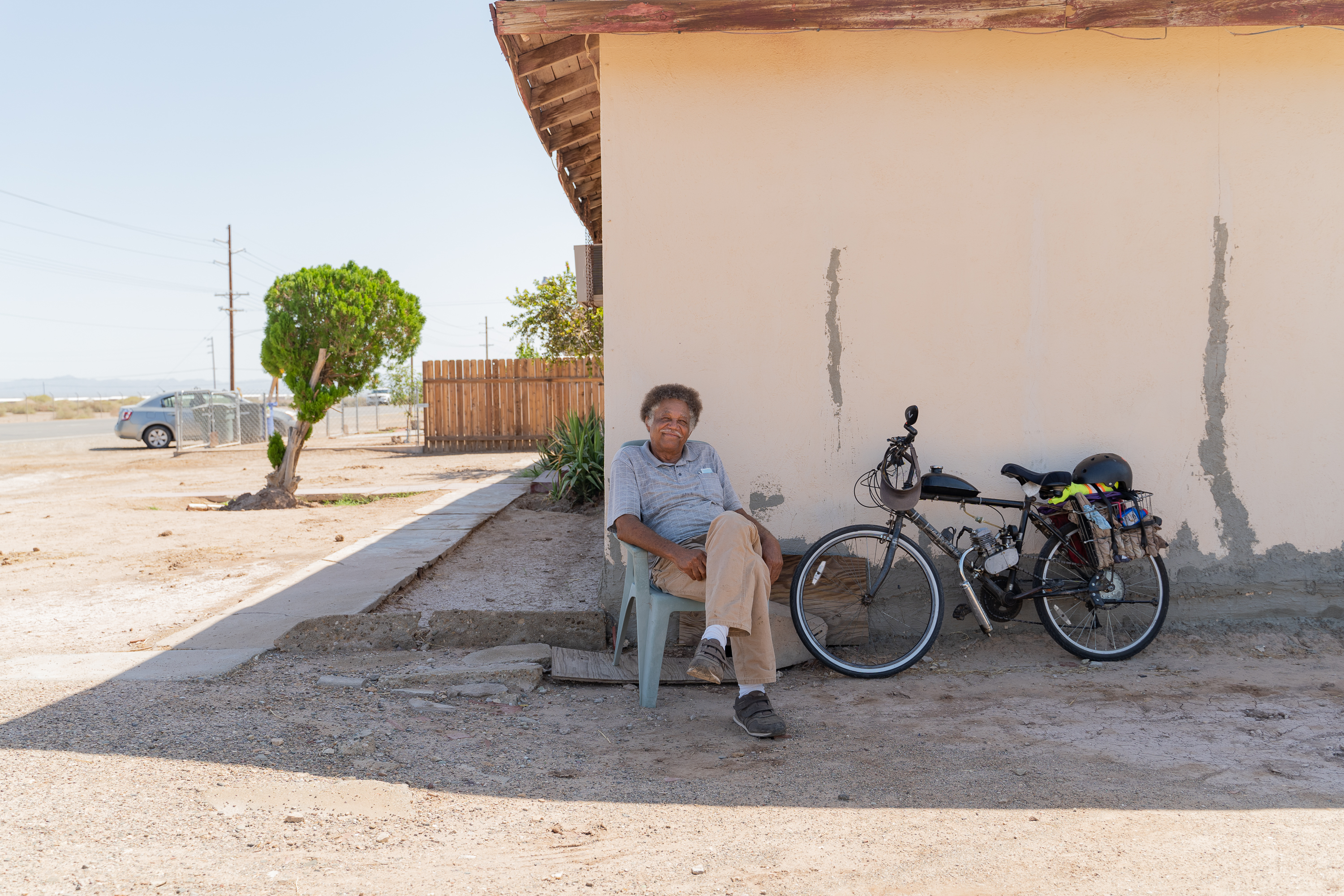
Ralph Walker sits outside of his friend's house in Imperial County.
Imperial’s air quality has contributed to its residents' respiratory diseases. More than one in five children there have asthma, far above the national and state averages of less than one in 10. In 2015, flu and pneumonia mortality rates were more than twice that of the state.
The dust makes life hard in Niland. “All the dirty air, that pollution, it just hangs,” Elaine says. “You can see it; you can smell it.” And for Carol, her asthma makes it especially difficult to go about her day without struggling to breathe.
The sisters say they will leave Niland as soon as they can. The adventure they came for was not the one they got. They miss the coastal air back home in San Diego. Elaine does not want to be pessimistic about the area's future, "but I don’t have a lot of hope. I feel bad for the people that are going to be stuck here,” she says.
Elaine shakes her head and looks down at the stained carpet of the motel lobby, “it’s a vortex of hell.”
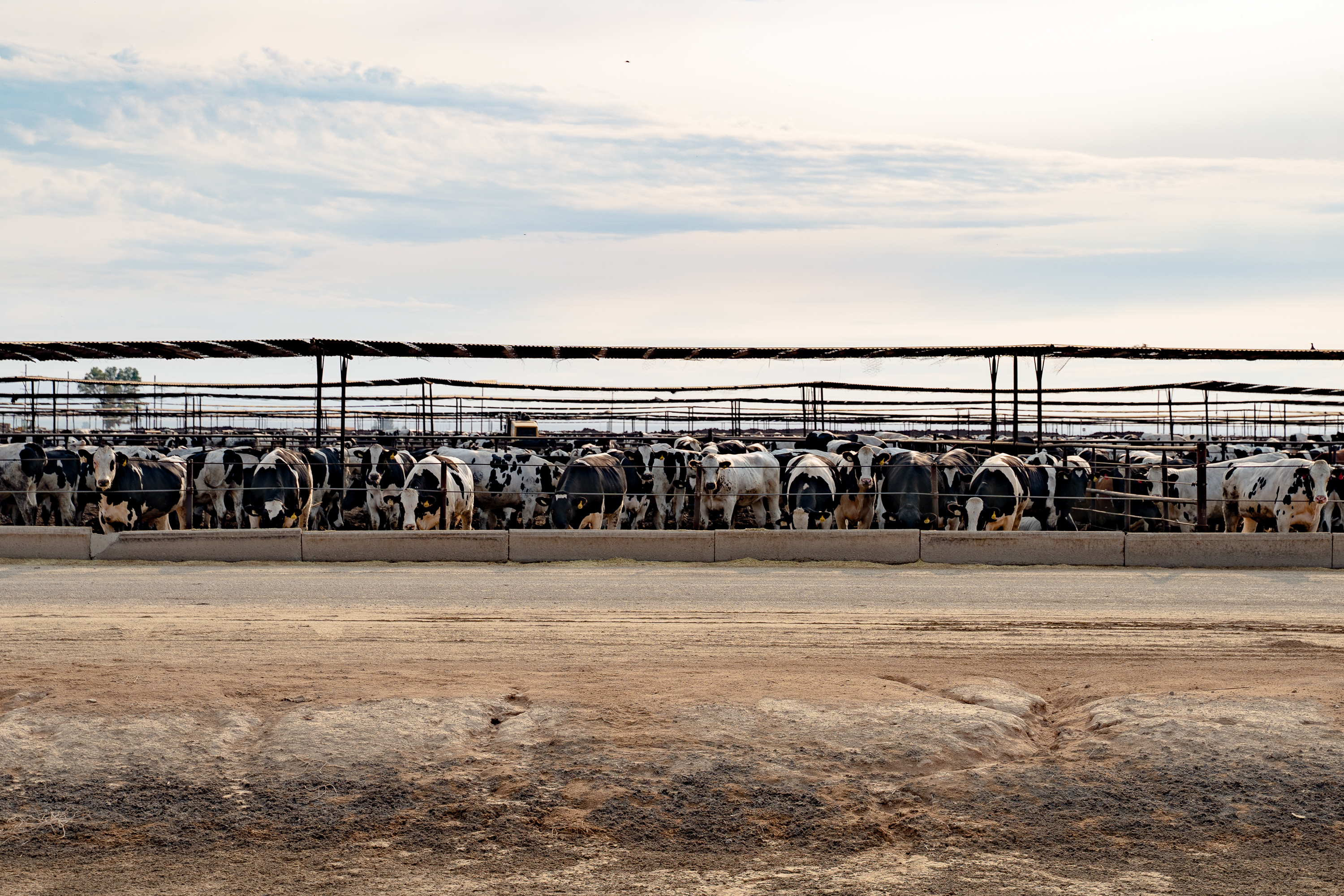
Elaine Ragland on Imperial's Cattleyards.
Many people who are “stuck” in Imperial County work in the vegetable fields. Imperial’s economy depends on agriculture. Farmland stretches out for miles in all directions.
To the south, spinach and potato fields pass through El Centro, a city of 44,000 people and the third largest in Imperial County, and continue toward the Mexico border. To the north, they veer into the Salton Sea, the largest lake in California, the lowest-altitude body of water in North America. It was once an idyllic getaway destination for Californians that was frequented by the likes of Frank Sinatra and the Beach Boys.
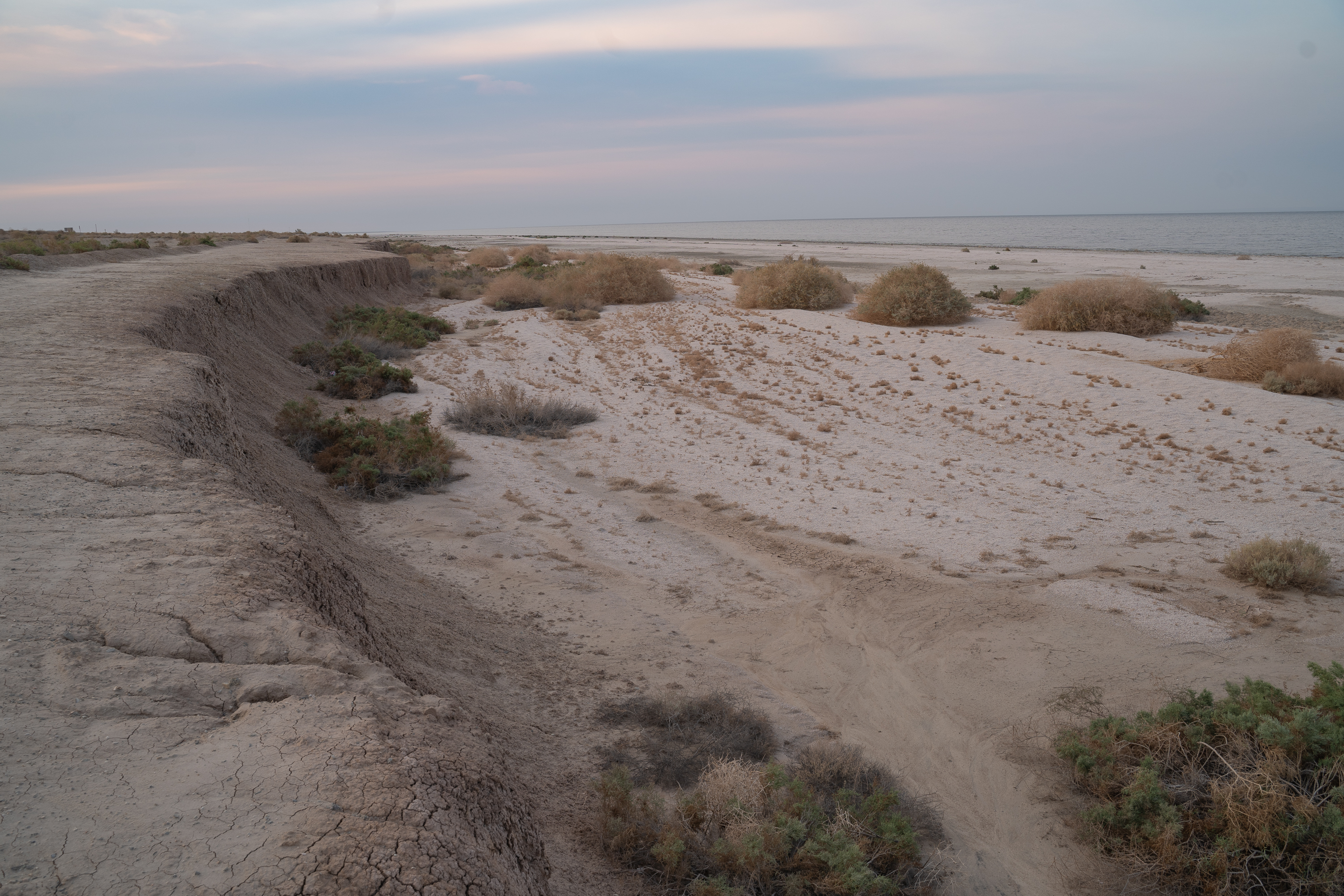
The Salton Sea's former coastline which is now a cliff drop-off hundreds of feet from the shore.
California's Dead Sea
Today, the Salton Sea is a rotting dead thing. The earth around it is nearly lifeless, only suitable for the most salt-resilient shrubs. The lake's rotten-egg stench carries for miles downwind. Decades of agricultural runoff flowed into the lake choking it with toxic fertilizers and pesticides. Its salt concentration increased over the decades due to the runoff’s high salinity and evaporation from summer temperatures that break 110 degrees. The Salton Sea is now twice as salty as the Pacific Ocean. The high salinity has killed nearly all Redbelly Tilapia and Corvina, a close cousin of the white Californian seabass found off the coast, in the lake. Algal blooms once limited by a thriving fish population now give the inland sea its distinctive sulfuric odor.
The Salton Sea’s shoreline has been receding for decades due to evaporation and the redistribution of water from the Colorado River. The retreating shoreline leaves behind a toxic lakebed known locally as the “playa”. The ground there is unstable. When visitors step on the grime, their feet sink shin deep. As more pesticide-laden lakebed is exposed, more toxic chemicals are swept up by desert winds and into the already polluted ecosystem.
The lake’s death has long been connected to health problems, but in the age of COVID-19, its impact on local lungs merits a reexamination. A Harvard study shows that exposure to the kind of fine particles given off by the Salton Sea is linked to a higher chance of dying from COVID-19. Researchers compared counties across the United States and found that even a small increase in long-term exposure to fine particulate matter results in a “large increase in the COVID-19 death rate.”
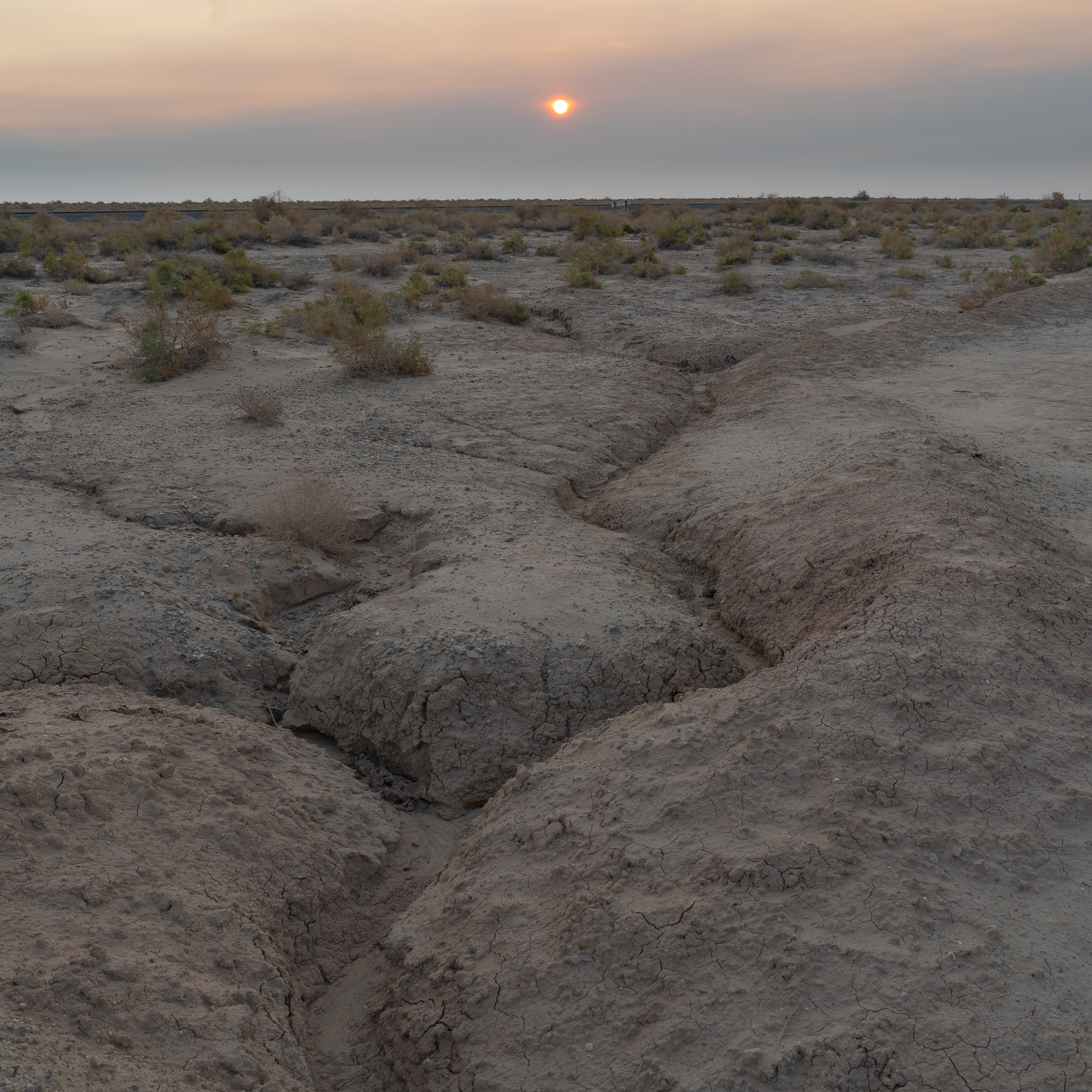
Elaine Ragland on the Salton Sea.
Even before COVID-19 began ravaging Imperial County, local activists were calling on government officials to heal the local ecosystem.
Luis Olmedo, the executive director of the Comite Civico del Valle — or the Valley’s Civic Committee — an environmental justice organization, has called for the state and federal government to act. Born in Mexico, Olmedo crossed the border when he was 7 years old and has since spent his entire adult life in Imperial. Olmedo has been inhaling the county’s pollution for four decades. “It’s like The Mummy movie, where they have these big clouds of dust,” Olmedo says.
Olmedo also has firsthand experience with the government’s failure to address the death of the sea. He has seen responses to the local environmental crisis fail because they lack state and federal funding. And even when projects like the Bruchard Road Dust Suppression Project, which addresses just over 100 acres, do get funded by California’s Natural Resources Agency, they are too small to combat major underlying problems. “We might think they’re being generous giving us some money, but no,” Olmedo says. “That’s not good enough. They need to give us all the money that we need.”
To combat the problems associated with the shrinking Salton Sea, scientists agree that 10,000s of acres of exposed lakebed will need to either be extensivley ploughed or flooded. One of the more popular restoration ideas among environmental engineers involves building a canal from Mexico's Sea of Cortez 125 miles south to the Salton Sea. But the canal would be more than twice as long as the Panama Canal and likely cost billions of dollars.
California’s Natural Resources Agency is currently considering several canal proposals. But the agency has until the end of 2022 to commit to funding a specific long-term plan for the lake, meaning any comprehensive restoration strategy will not bear fruit for years.
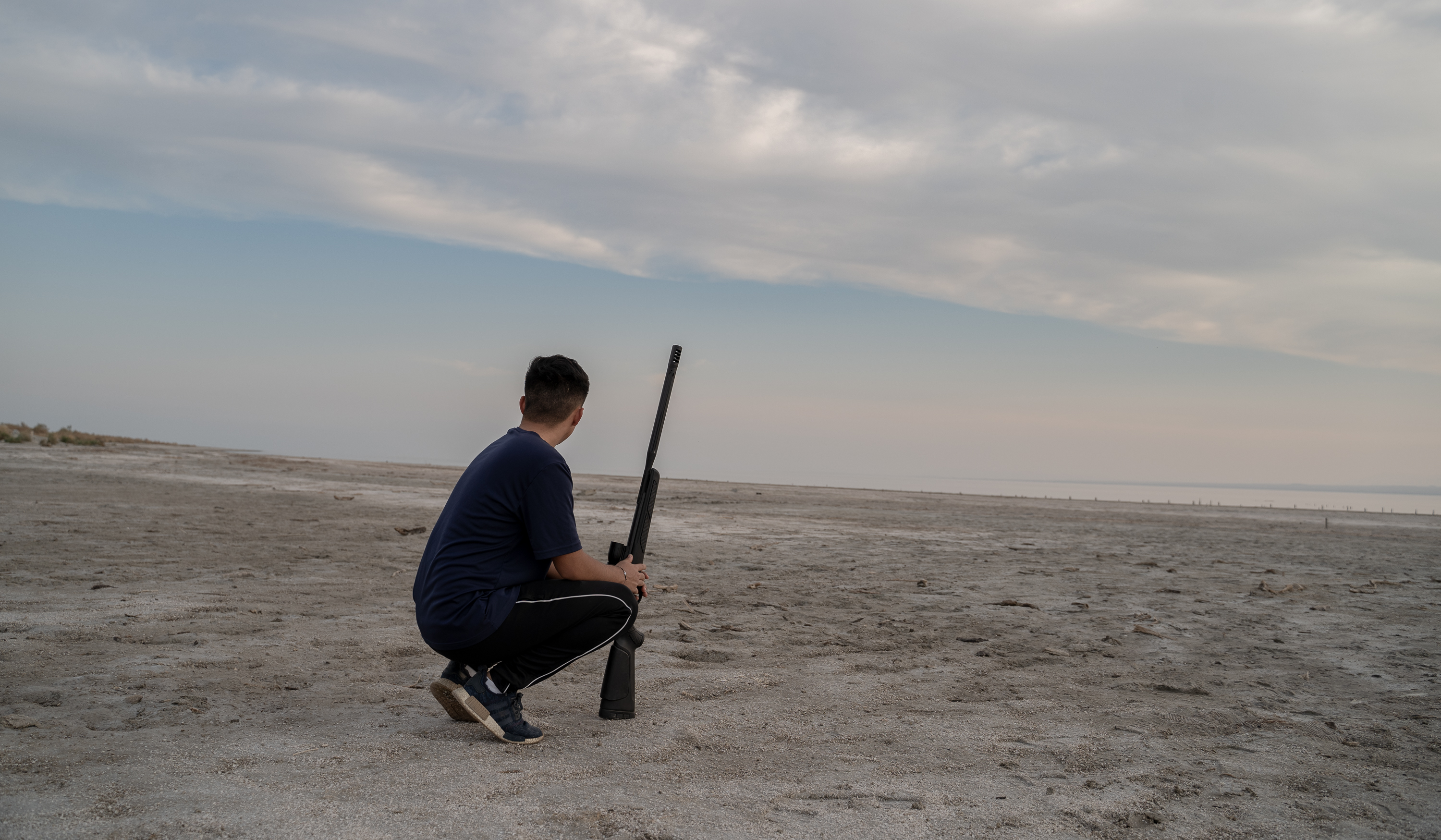
Cesar Orozco squats on the Salton Sea's exposed lakebed.
But smaller restoration efforts have begun. The Parks and Water Bond Act of 2018 invested more than $200 million in trying to restore the lake and another $240 million might be allocated to Salton Sea restoration in a bill moving its way through the California Legislature. But for those who have lived near the stench of the disappearing lake for decades, those efforts may be too little, too late.
“The Salton Sea is a timebomb, nothing but unknown, hazardous chemicals,” Olmedo says. “We need to keep pushing hard on the administration to allocate the billions of dollars that are necessary to mitigate the impacts of the Salton Sea.”