The Honey Trap

The bee crisis continues, but we may be focusing on the wrong ones.

Text and Photography by Jeremy Lindenfeld

A queen bee, twice the size of any other insect in her hive, lays thousands of eggs every day. She oversees her workers, each of which plays a crucial role in maintaining the delicate balance that keeps a beehive thriving. For the most part, things run smoothly.

But today, something is wrong. A disoriented forager returns to the hive with pollen on her hind legs. She can’t remember how it got there. More bees return confused. Many struggle to stay airborne, some fall onto their backs and writhe like helpless turtles unable to right themselves. Their tiny legs convulse, their wings tear under their twitching bodies. In the chaos, thousands die and thousands more will never fly as fast or as far again –– if at all.
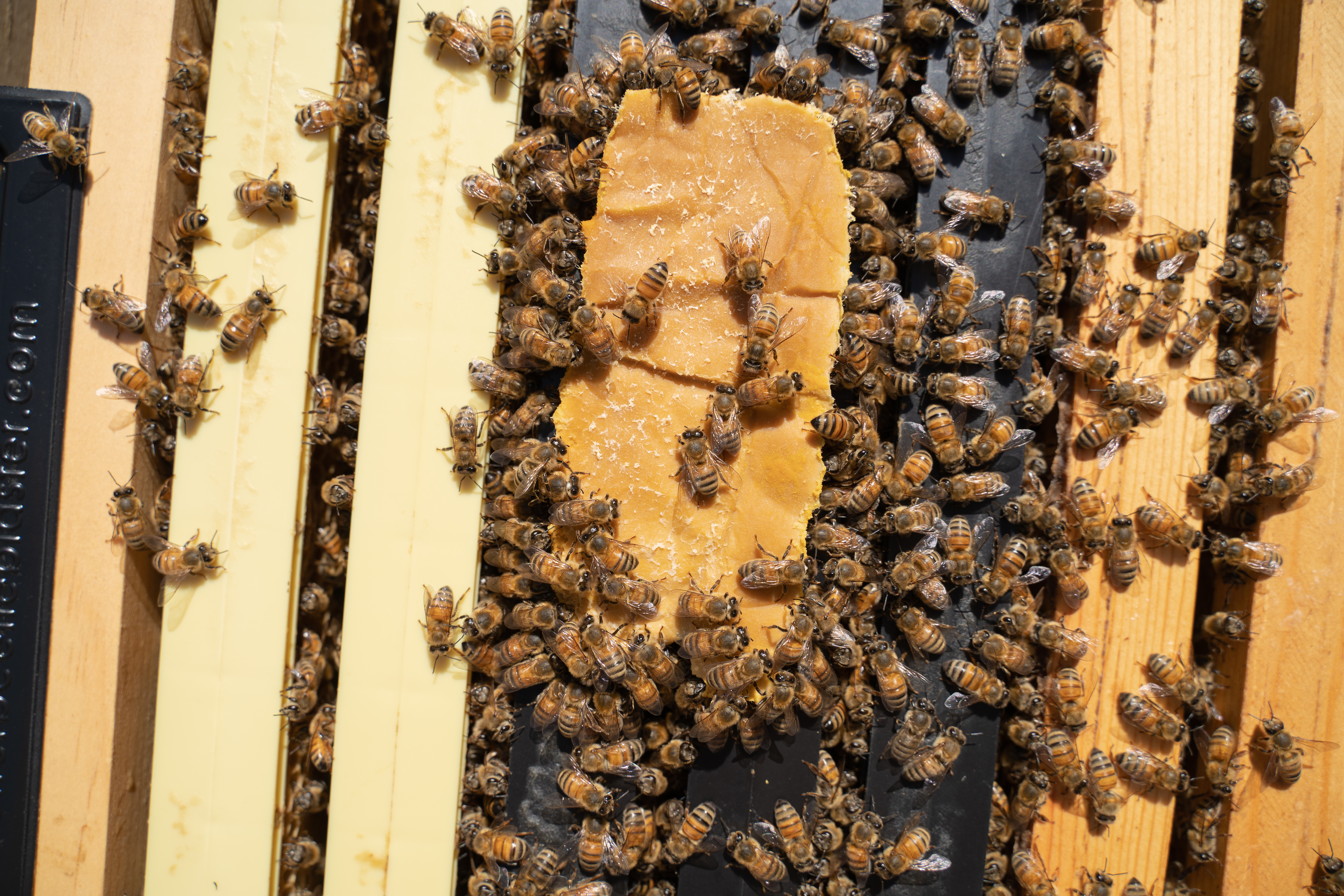
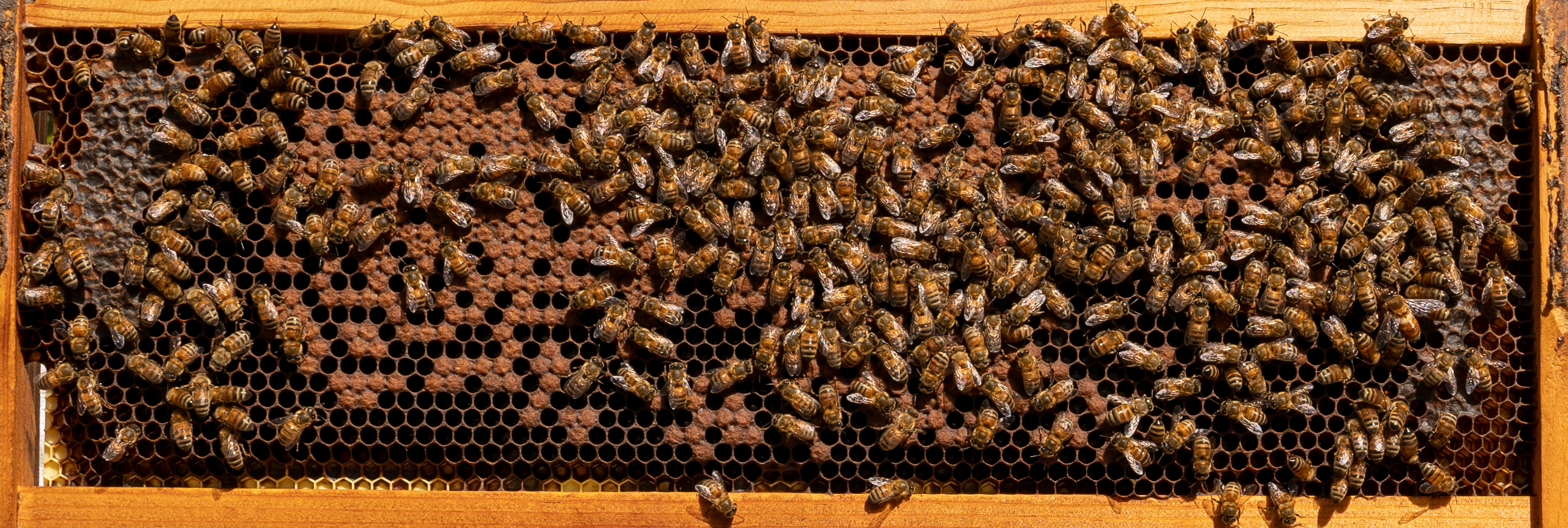
Bees eat a pollen patty.

Without foragers to retrieve pollen, the young brood and larvae do not mature, they do not learn their roles, and they perish. The worker bees have failed their queen. As her kingdom collapses beneath her, she soon starves, leaving a dead husk of a hive behind.

This kind of mass-casualty event is collateral damage. A farmer sprayed neonicotinoids, a kind of pesticide designed to ward off beetles and mites, on his orchard down the road. Danger can come with the wind. Without the honeybees, his apple trees, which depend on those bugs for cross-pollination, bear less fruit, or perhaps none at all.
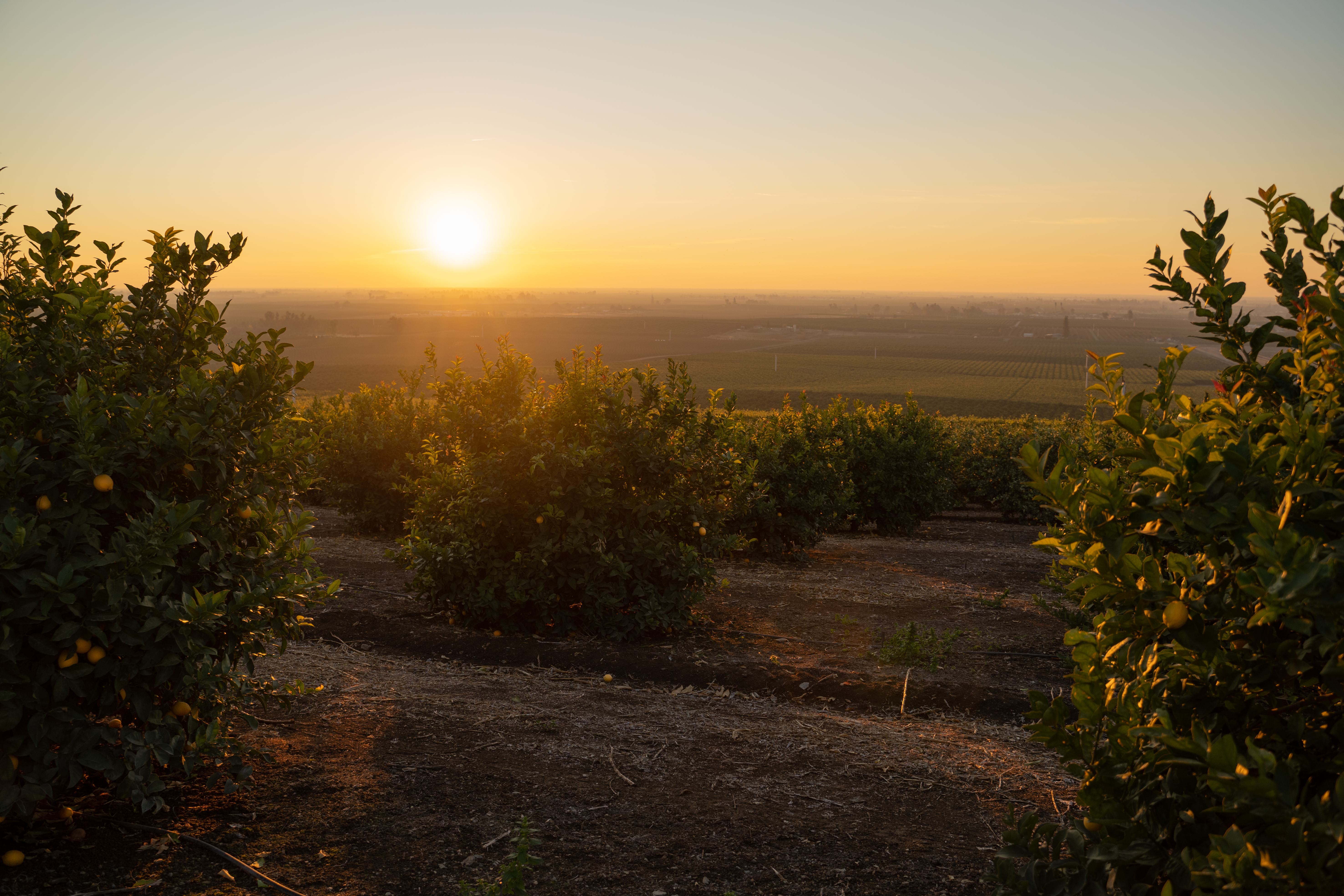
A citrus grove in Central California.

Bees have been described as the canary in our food-growing coal mine. The apple orchards, melon fields and pumpkin patches that nourish us all owe their yields to the tireless dedication of those bugs. Some crops like almonds are almost exclusively pollinated by the tens of billions of honeybees that are shipped across the U.S. every year. One out of every three bites of food that humans eat exists thanks to pollinators like honeybees. In the United States alone, they play a crucial role in the production of $15 billion worth of crops annually.

But the number of honeybee colonies in the U.S. has declined for generations. In 1947 there were more than 6 million. Seventy-five years later, less than half that number remains.
Disorder

In the late 2000s, awareness of declining honeybee populations went mainstream after the discovery of Colony Collapse Disorder, a condition that causes worker bees to abandon their hives, ultimately leading to the demise of their collective home.

Outlets like Time Magazine and NPR published stories outlining what they portrayed as apocalyptic threats to honeybees, and environmental nonprofits began seeking to “save the bees.”

In the decade since, the honeybee crisis has been overtaken by intensifying natural disasters, a global pandemic, and existential concerns related to climate change.

So, where does that leave the honeybee?

As beekeepers adapted to the pathogens, environmental dangers, and high rates of winter bee-death, honeybee populations started bouncing back with an 8 percent increase in their numbers in the United States in the 2010s.

That is encouraging, but the situation remains volatile. Last year, beekeepers in the U.S. reported losing nearly 46% of their colonies, the second highest rate of loss since the Annual Bee Informed Survey began in 2006. Honeybees still face many of the same dangers that led to their save-the-bees moment, and as climate change further destabilizes ecosystems, new threats are almost certain to emerge.

The Beekeeper

Charlene Potter stands in a cramped shed in the backyard of her Alhambra home in Southern California. The room, which is lit by diffuse sunlight shining through two small windows that face stacked wooden boxes, is full of oddly shaped tools and binders full of years of notes. The boxes visibly vibrate and emit a buzz that can be heard through the shed walls. Hundreds of bees enter and exit the makeshift hives, orbiting the boxes like tiny meteors.

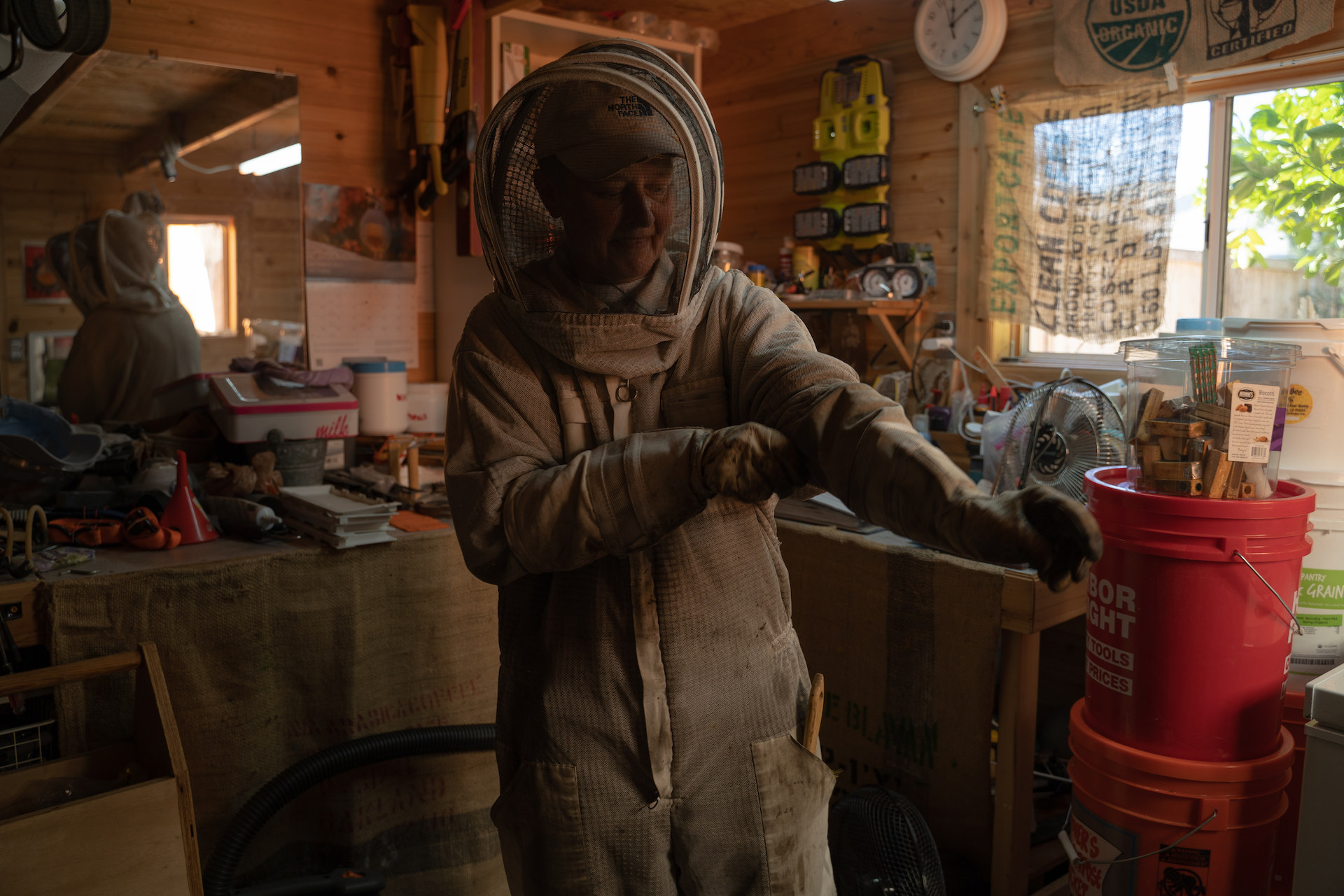
Potter zips up the front of her brown-stained white canvas suit and pulls a black-mesh hood over her face. She tightens the elastic around her ankles and wrists and completes the set with a pair of gloves. This is her astronaut-like preparation as she prepares to step into a hostile atmosphere.

Charlene Potter finishes putting on her canvas suit.

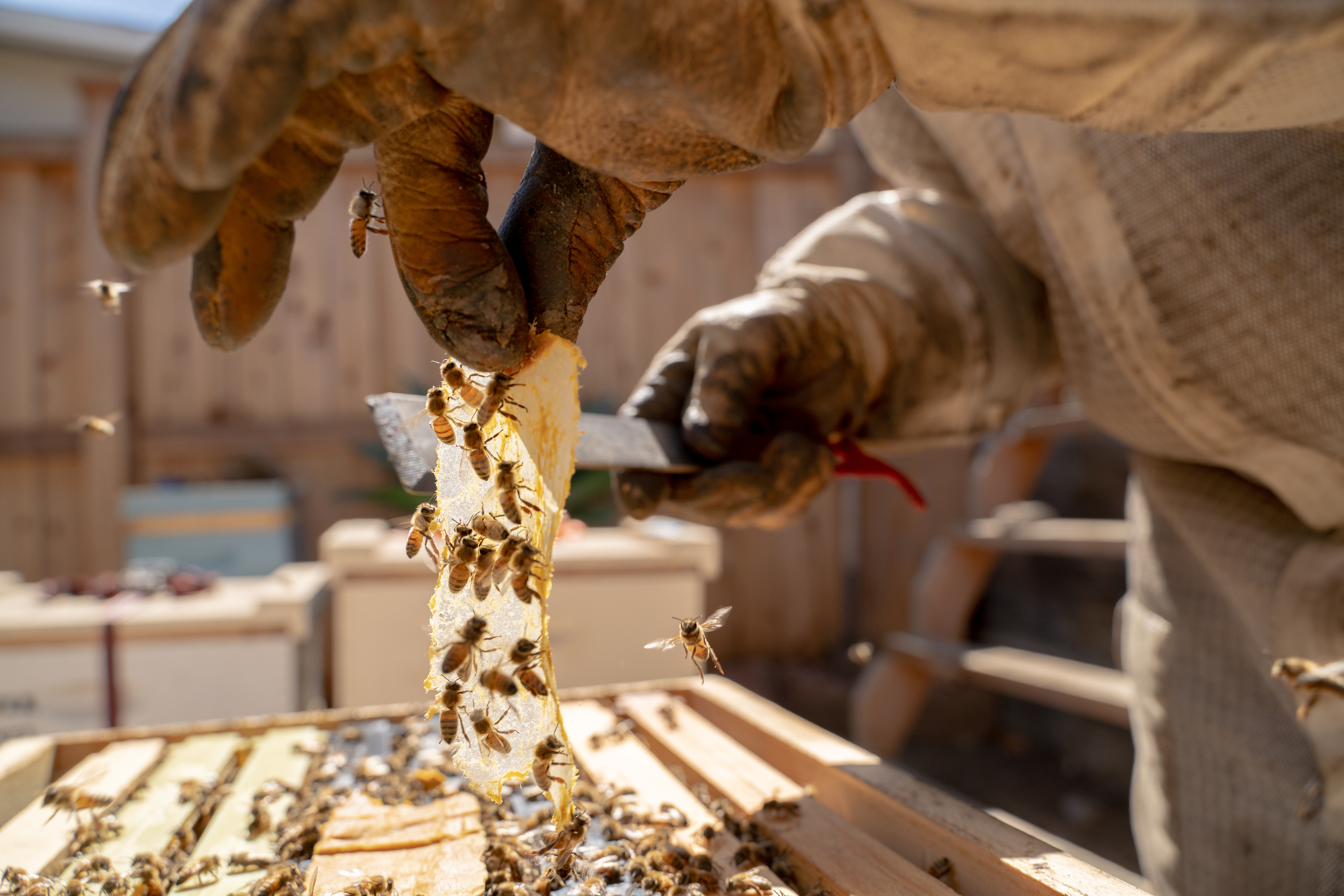
Potter’s canvas suit serves primarily as protection against the potential sting of 100,000 honeybees, but it is also effectively her armor as she heads into battle, not with her bugs, but with the many dangers that threaten them.

Deformed Wing Virus has mutilated thousands of her bees, forcing useless scraps of tissue to grow where wings should flutter. Abdomens contort into gnarled shapes instead of streamlined bodies. Varroa destructors, which are red and brown parasites the size of pencil points, have vampirically fed on her bees, leaving them unable to regulate hormones or their immune systems. Worst of all, pesticides released by Potter's neighbors have killed tens of thousands of her bees.

“Beekeeping is not for the weak of heart,” Potter says. “There are constant struggles to keep your bees alive.”

Pathogens, parasites, and pesticides, like the ones Potter has contended with in the five years since she got into this work, have caused bee-death for decades. As those dangers have emerged, beekeepers have sought to respond with varying results.

When tracheal mites entered the U.S. in the early 1980s, they wrecked havoc on hives until beekeepers started using vegetable oil, menthol, and formic acid to repel or kill the pests. Just a few years later, varroa destructors invaded the country, likely by hitching a ride on the hives of a foreign beekeeper importing their supply.

The fight against varroa has seen limited success. Initital pesticide-use proved effective, but after a few years, the mites developed resistance. Beekeepers still use pesticides like Apistan to combat infestations, but varroa continues to devastate hives across the country and accounts for up to 40% of annual bee losses in recent decades.

Beekeepers are the first line of defense against the bee crisis, according to Potter, but not everyone agrees.

The Search for Plan B

James Nieh, a professor at the University of California San Diego and a leading expert in the study of the effects of man-made stressors on bees, warns that these bee protectors can unintentionally cause major problems.

For one, as beekeepers ship their hives to keep up with the agricultural industry's demand for pollination, they can also ship pathogens and diseases across the country.

The infestations that result have proven disastrous for some honeybee populations, but Nieh emphasizes that “there is no danger that honeybees will go extinct,” because commercial incentives make it worth protecting them.

The biggest problem, he says, has to do with the all-imporant native bee species. People often think of yellow and black honeybees when they hear the word ‘bee,’ but really, there are over 20,000 species worldwide. In the United States alone, there are more than 4,000 species, some of which are unrecognizable as bees to non-experts.

When beekeepers release their insects to pollinate crops, many of the pathogens they carry are transmitted to local species. What’s more, when honeybees are introduced to new areas, it disrupts the natural cycle of pollination and often leaves native species without sufficient resources to thrive. This increased competition paired with the introduction of diseases and devastating habitat loss caused by farming has irrevocably harmed many native bees.

Some bee species have already gone extinct, and others are on their way out. An analysis by the Global Biodiversity Information Facility found that as of 2015, a quarter of known bee species had disappeared since the 1990s. This trend is concerning because they, like their domesticated cousins, pollinate crops.

According to the U.S. Geological Survey, native bees are the primary pollinators, or at least supplement honeybee pollination, for most crops. And because many native species are specialized pollinators –– meaning they only pollinate one kind of plant –– they are more efficient than honeybees.

While media attention regarding honeybees has faded since the 2000s, it still eclipses the attention that native bee species receive. An analysis of articles about pollinators found a disproportionate focus on European honeybees, while native species were only mentioned in 15% of articles.

If trends hold, many bees that have pollinated American plants for millennia will disappear, and those plants may disappear with them. If that happens, native bees won't be the only ones to feel the sting.

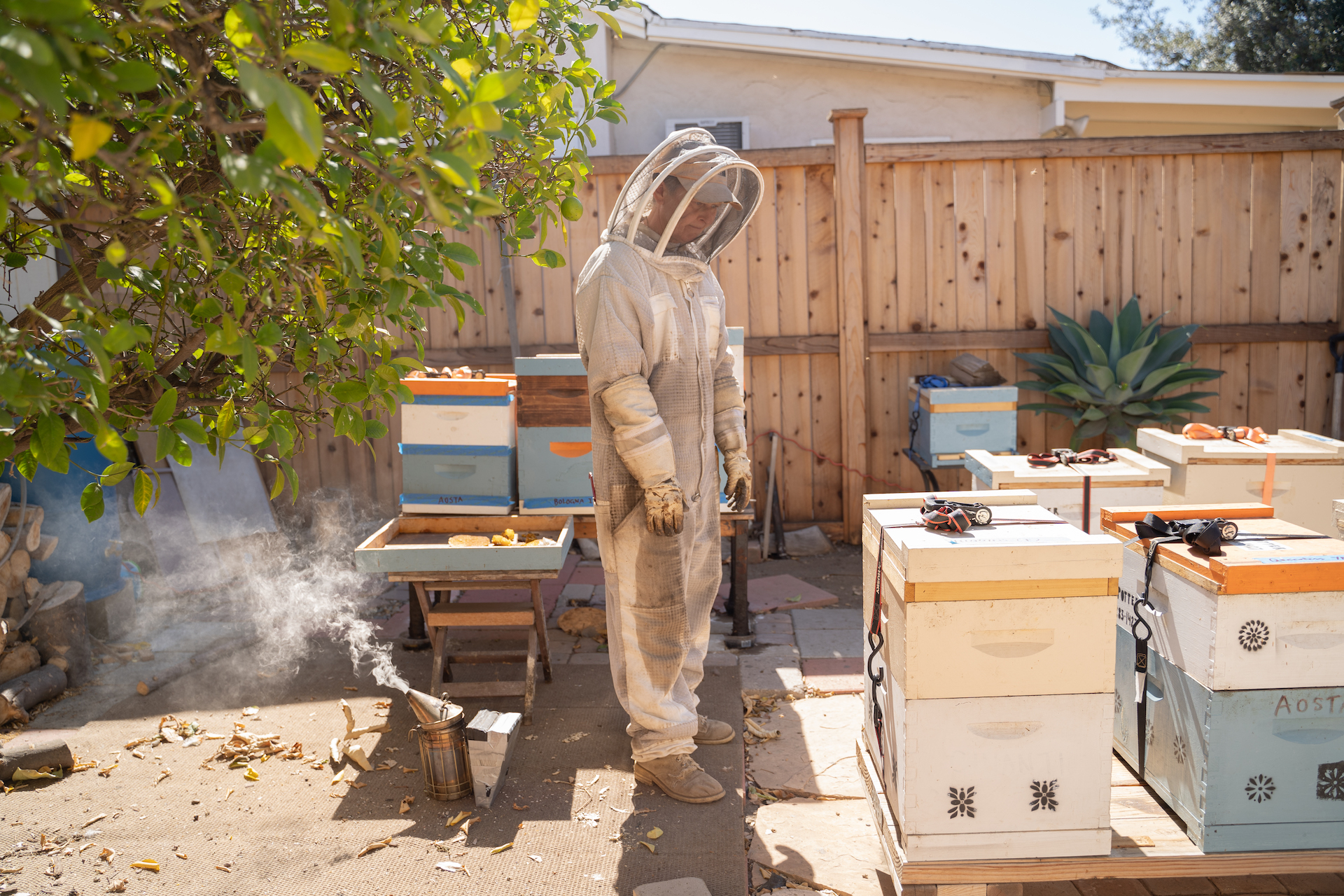
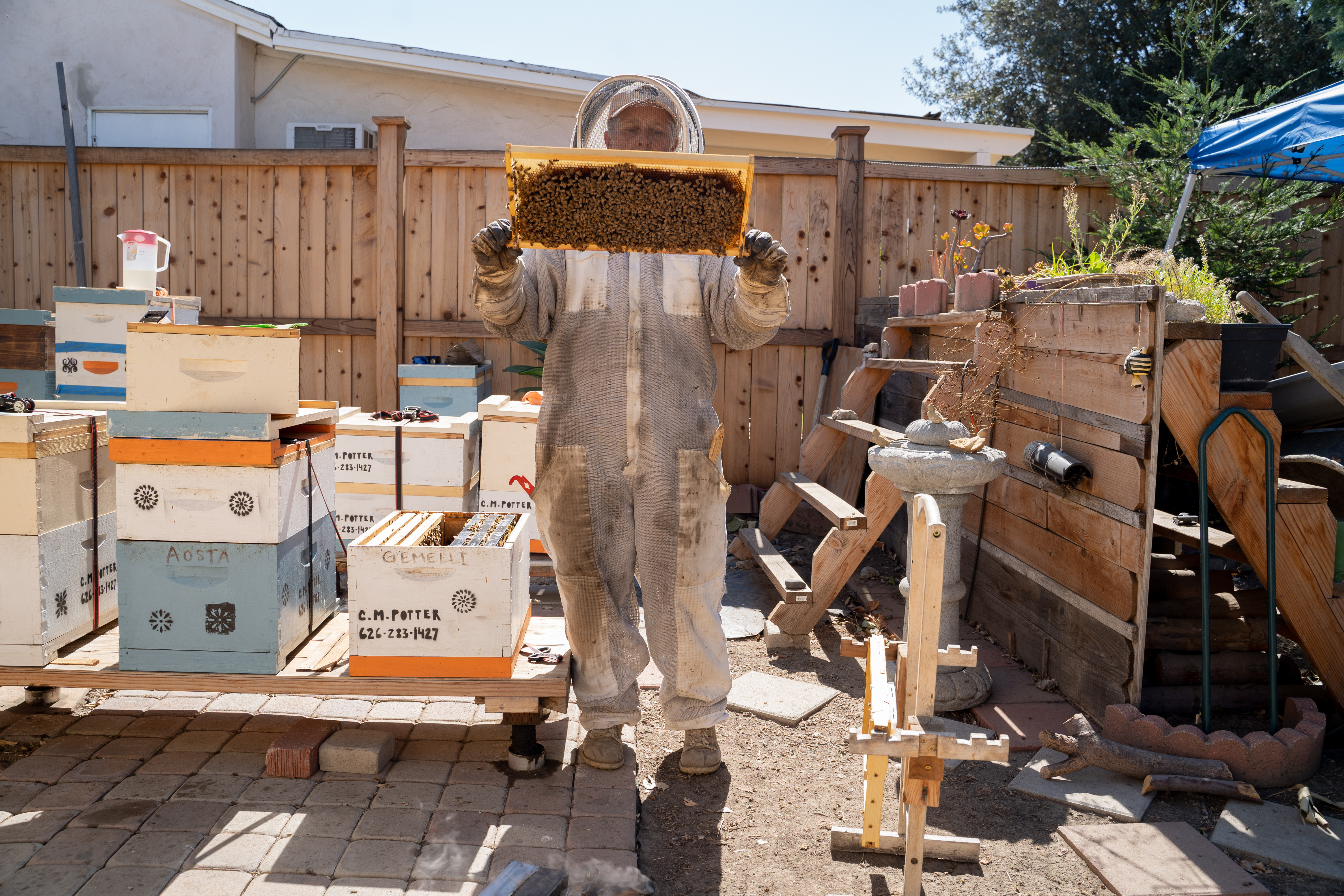
Charlene Potter stands in her apiary and examines her hives.

Click X to close