
By Hanna Kang
In the thick of the coronavirus pandemic, an internship program was launched in an unexpected place — the dorm room of a college student nestled between the rolling foothills of the Santa Monica Mountains and the vast, blue stretch of the Pacific Ocean.
Umeesha Nethmi D’Alwis had three legal internships lined up at the start of the pandemic. But when all three were canceled as the deadly virus ravaged the globe, she was faced with the tough reality of having to accept that she did not have an internship as a junior in college, or create her own. D’Alwis, who graduated from Pepperdine University this year with bachelor’s degrees in computer science and philosophy, went with the latter.
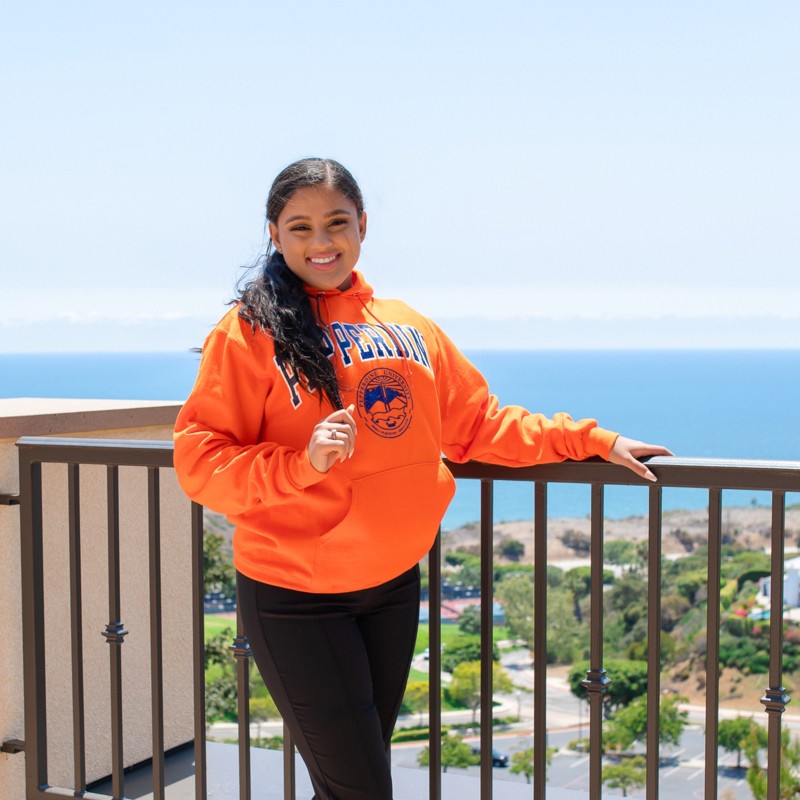
Umeesha D'Alwis created LawyerUp as a junior at Pepperdine University. Photo courtesy of Umeesha D'Alwis
“I was an incoming junior in college and didn’t have the experience I wanted at the time under my belt,” she said. “So I was really excited for this opportunity, but as we know, the pandemic happened, and everything shut down.”
Amid the uncertainty, D’Alwis founded LawyerUp, a virtual, two-month summer internship program turned international nonprofit that connects thousands of students with lawyers, legal recruiters, professors and career coaches across the globe. Realizing the need for effective mentor relationships was even more necessary during the pandemic, D’Alwis reached out to lawyers on LinkedIn, and 76 came on board to give presentations and speak to students. In the program’s pilot year, 1,000 students across 98 countries were accepted to participate from a pool of over 7,000 applicants.
Losing a valuable opportunity wasn’t her only motivation behind creating the program, however. Throughout her undergraduate education, D’Alwis noticed a myriad of issues dotting the legal field. One particular issue stood out to her — the lack of a comprehensive legal resource for aspiring law students.
“The deficit was more glaring for students underrepresented in the profession, like myself,” she said in a Zoom interview. “We’re trying to bridge the gap between legal education and legal experience for students who otherwise wouldn't have that opportunity.”
Response to need
The cancellation of coveted internships is just but one product of the pandemic. In the past year, protests against police brutality rocked the nation and conversations around race were ignited at the workplace and the dinner table, which have forced the legal field to rethink its structures and reproduce solutions to accommodate its future leaders.
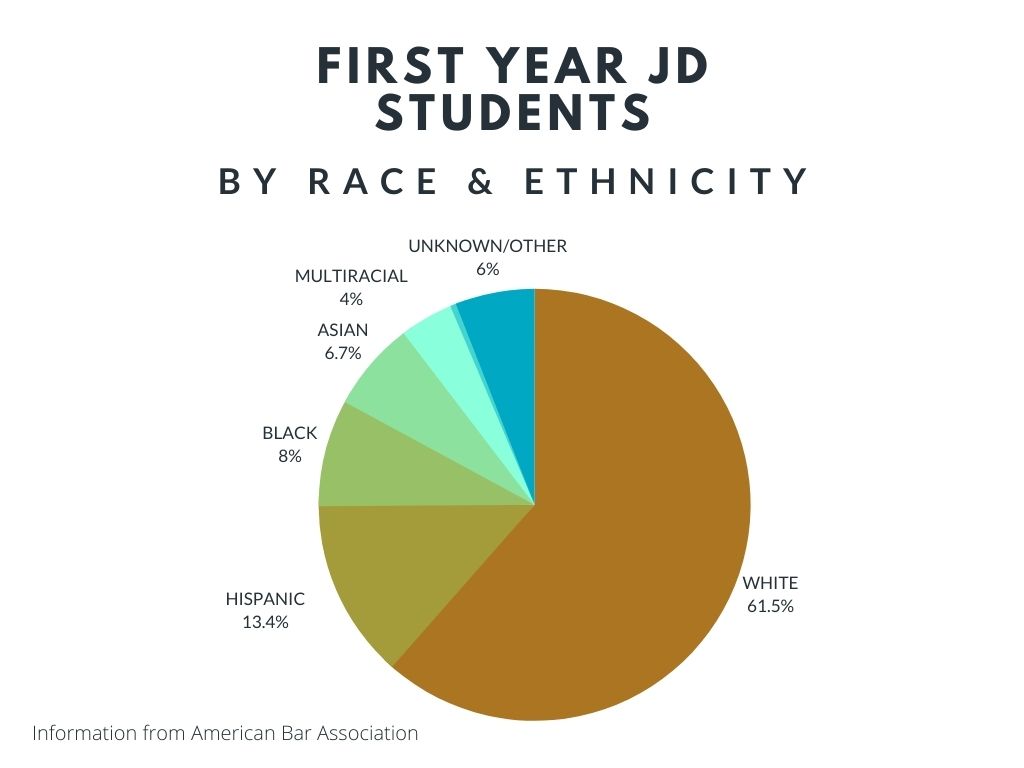
According to the American Bar Association’s 2021 Profile of the Legal Profession, white men and women are still overrepresented in the legal profession compared with their presence in the overall U.S. population. In 2021, 85% of all lawyers were non-Hispanic whites. By comparison, 60% of all U.S. residents were non-Hispanic whites in 2019, according to the U.S. Census Bureau website.
These numbers are reflective of first-year matriculation numbers at law school. In 2020, Hispanic students made up 13% of first-year law school seats, while Black students composed 8%, according to the ABA profile. The Black and Hispanic communities in the United States account for nearly one-third of the U.S. population.
“These problems go back to inequities in education,” said Cindy Lopez, a retired California Deputy Attorney General.
Lopez served for three decades in the Attorney General’s Office and spent 13 years in leadership in the college access nonprofit space. In her experience in the sector, Lopez said she observed that the demand and need for programs that build access to law school education for underrepresented groups far outpaced existing offerings.
In 2019, Lopez founded LEAP, a nine-month fellowship program based in Southern California that provides comprehensive law school admissions assistance for underrepresented groups in the field. LEAP, which stands for Legal Education Access Pipeline, Inc., offers a free LSAT prep program, comprehensive workshops and a mentoring program where students are paired with a law school and a practicing attorney. Before the pandemic, classes were held on the Loyola Marymount University campus, Lopez’s alma mater.
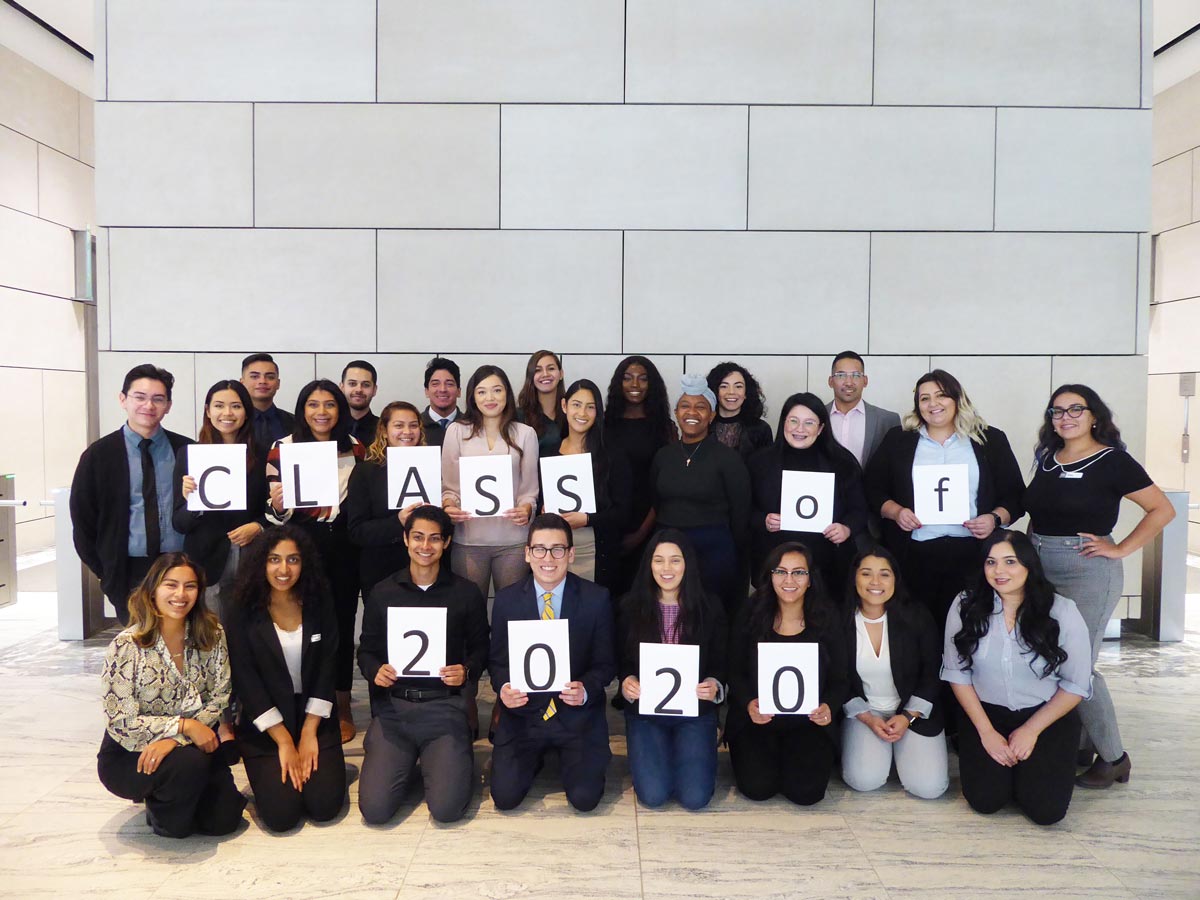
LEAP's class of 2020 took classes at Loyola before the pandemic but had to go virtual. Photo courtesy of Cindy Lopez
Much of her motivation behind founding LEAP comes from a personal place. Lopez said she developed the program because she didn’t have the help on her journey to law school.
“I don't even know how I got into law school,” she said. “I took the LSAT once. I didn't know that you could take it more than once. I have no idea what I wrote my personal statement on. No one looked at it.”
Because the mission of the pipeline program is to diversify law school and the profession, applicants must identify as at least one of the four diversity factors: first-generation college student, socioeconomically disadvantaged, student of color, and LGBTQ, Lopez said. LEAP also established a broader fifth category for students who are underrepresented but do not fit into the four factors. For instance, some students in the program were formerly incarcerated, while some were former foster youth.
Lopez believes the program will set up the fellows who emerge from it as changemakers who go on to do critically needed work. It is important to improve representation and ensure diversity in positions of leadership, and that starts with exposing students to accessible and comprehensive resources, like hers, she said.
Glenn Moss, who participated in LawyerUp’s pilot year as an educator, said the program was designed to bring in diverse experiences students can connect with, similar to LEAP.
“To have people who actually look like you, sound like you, were having experiences that you can connect with, who have gotten to a place in a career that you believe that you'd like to think about getting to, it gives you a sense of reality that it's possible,”said Moss, who serves as the external general counsel for Globecast America.
D’Alwis agrees. “The difference between LawyerUp versus just a regular internship,” she said, “is we're focused on bringing a very holistic understanding of what the legal field is. The program brings in lawyers from over 30 different legal sectors to ensure that students aren’t stuck in one area or expertise, she said. “We also often ask our lawyers questions about how being a lawyer has impacted them, so we've had a lot of conversations about addiction in the legal field, depression in the legal field, racism in the legal field, not just culturally, but also when it comes to religion as well.”
Blessing in disguise
LEAP had its last in-person workshop in March, Lopez said. Within three weeks, she and the students had to learn how to use Zoom.
While Lopez did not enjoy the virtual environment due to the loss of human interaction, she said there were advantages to being online. She was able to get attorneys who work in Northern California to be on the monthly workshop panels. “Students got an exposure to Northern and Southern California lawyers that they would not have gotten had we been in person,” Lopez said.
LawyerUp was able to attract a very broad array of people from all over the world due to its completely virtual environment. David Champine, the Assistant Prosecuting Attorney at the Oakland County Prosecutor’s Office, spoke to students during a webinar, and was astounded by the diversity of the program.
“The diversity of people there, and the diversity of ideas and thoughts and backgrounds, is incredible,” he said. “They have people who are in California and the United States, but they're also grabbing people from Asia, from Europe, from so many different places to bring a bunch of ideas together.”
Going forward
This summer, LawyerUp expanded the program overseas and created a second branch, LawyerUp UK, which recently wrapped up a successful first term in August. D’Alwis says she plans on introducing the program to other countries and also making the program completely free next year through the support of sponsorships.
“We want to stay true to our principle of trying to bridge the gap without making it too much of a burden on our students,” she said.
Next January, LEAP will expand to Northern California and hold classes at the Santa Clara University School of Law. Lopez says she plans on making the program hybrid; for example, one of the classes, The Anatomy of a Law School Application, will be taught in-person at Santa Clara while students at Loyola will Zoom in.
“There's more access when you're online, if your students have access to WiFi,” Lopez said.
For both women, giving back to the community seems to be a common theme in their work.
D’Alwis has settled into a small studio in Los Angeles since graduation, but her dreams to help others still run as deep and wide as the Pacific Ocean her old dorm room had once overlooked. She’s not entirely sure if she wants to go to law school anymore, but it’s still something she has in her career plan.
“At the end of the day, I really do want to help people through their careers [and] through their goals,” she said. “With LawyerUp, it taught me that maybe entrepreneurship is the path that I want to go down and if law school ends up being a huge part of that, then I welcome it with open arms. But for now, I would definitely like to just expand my idea of business and also help people through it.”

