A Wave of Hostile Urbanism Hits Downtown Los Angeles
Devika Girish, Jon Reed, Tyler Walker, Jiahui Lin, and Vivian Medithi
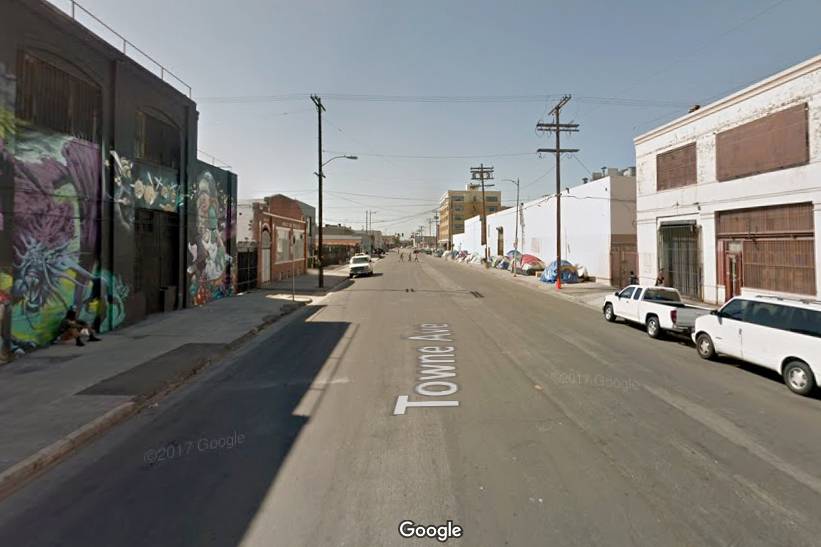
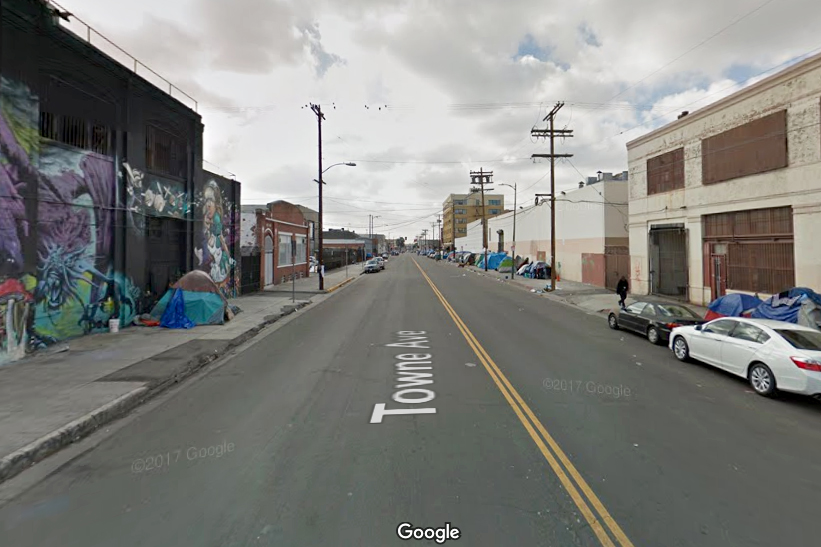
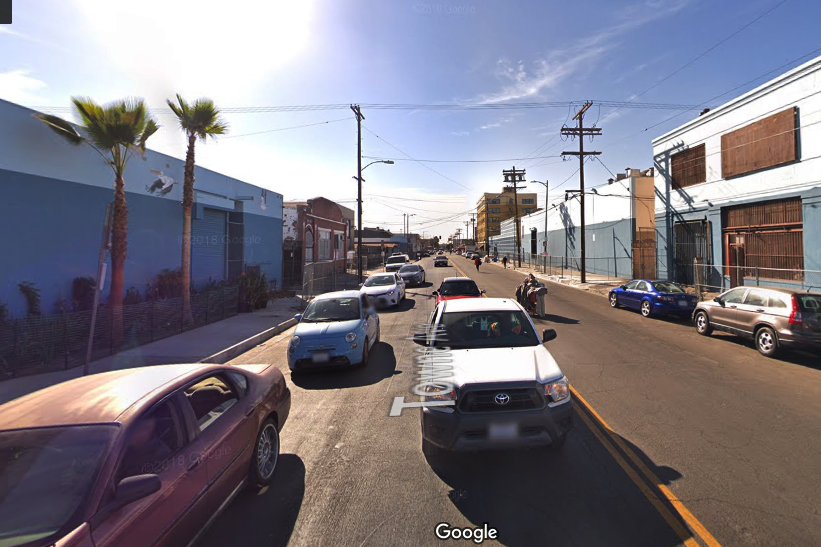
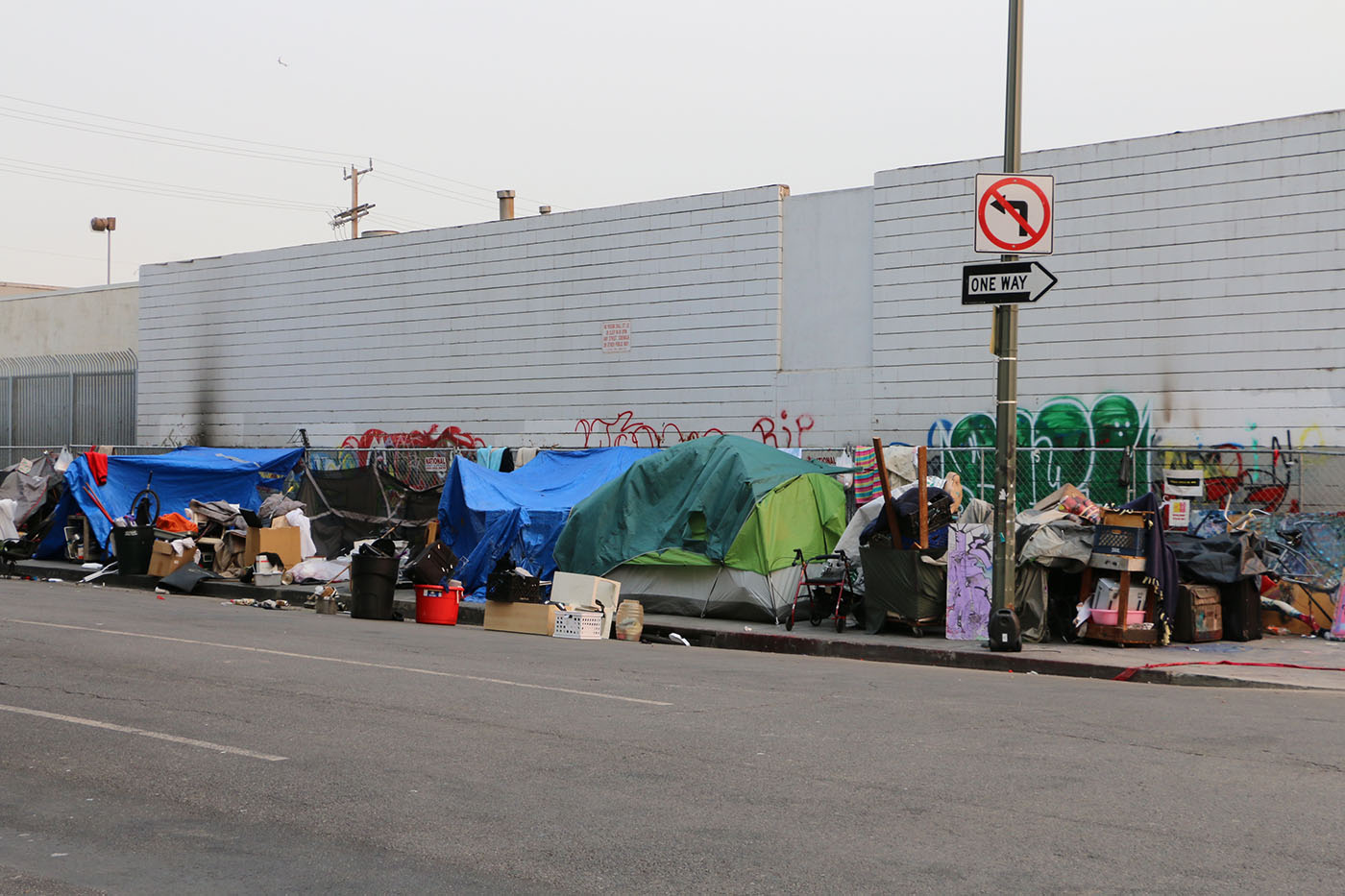
If you walk down the stretch of Towne Avenue from East 6th Street that cuts through Skid Row in downtown Los Angeles, you'll find scenes typical of the so-called homelessness capital of America: sidewalks lined with grubby nylon tents; streets sticky with trash and waste; and people sitting or milling around dazedly, often with nowhere else to go.
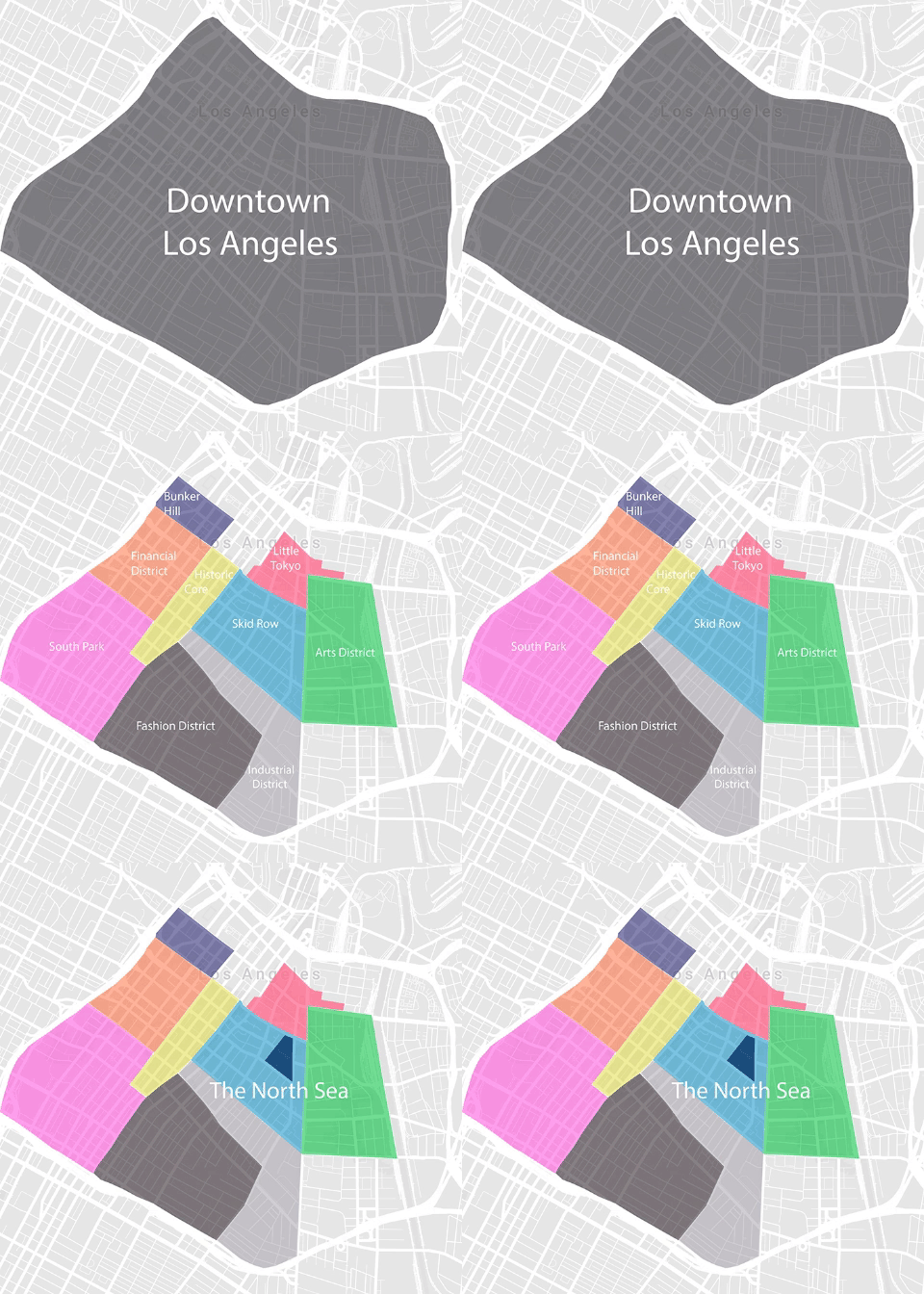
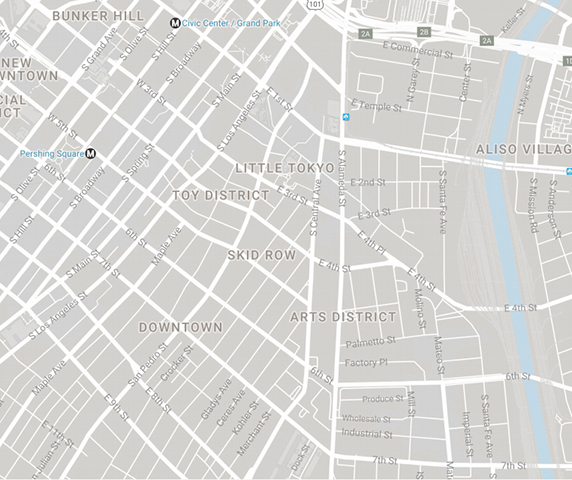
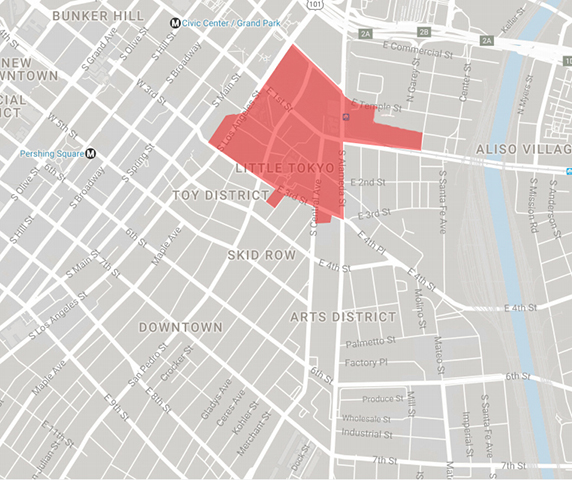
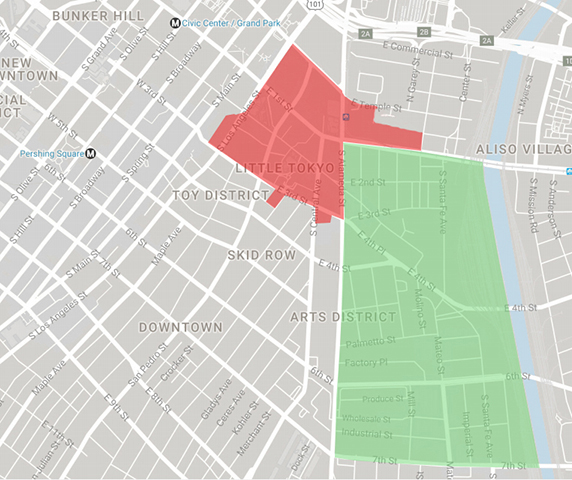
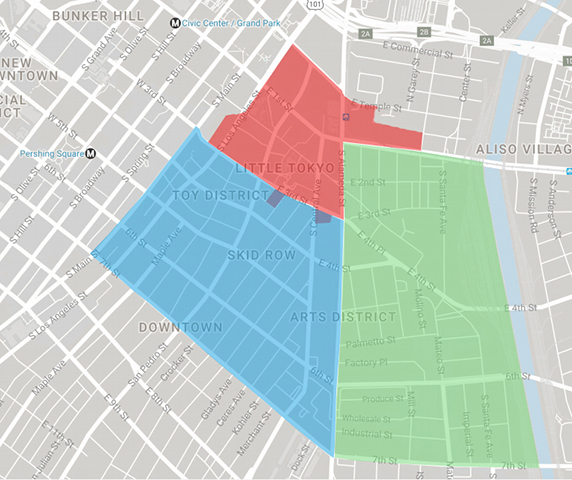
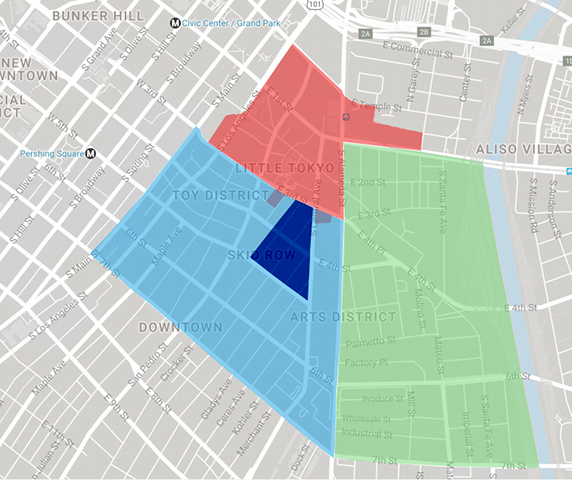
Selected Districts of Downtown Los Angeles
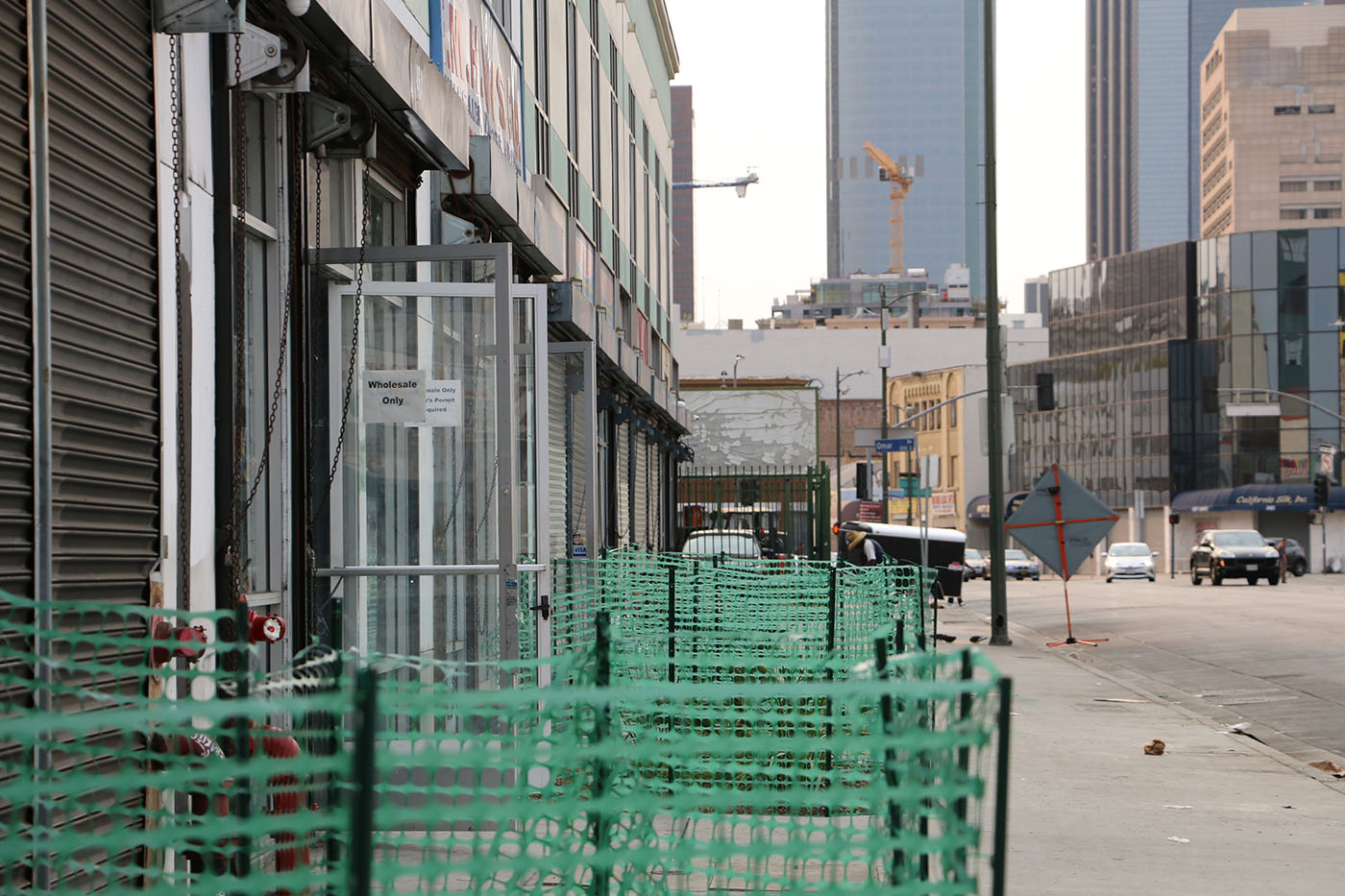
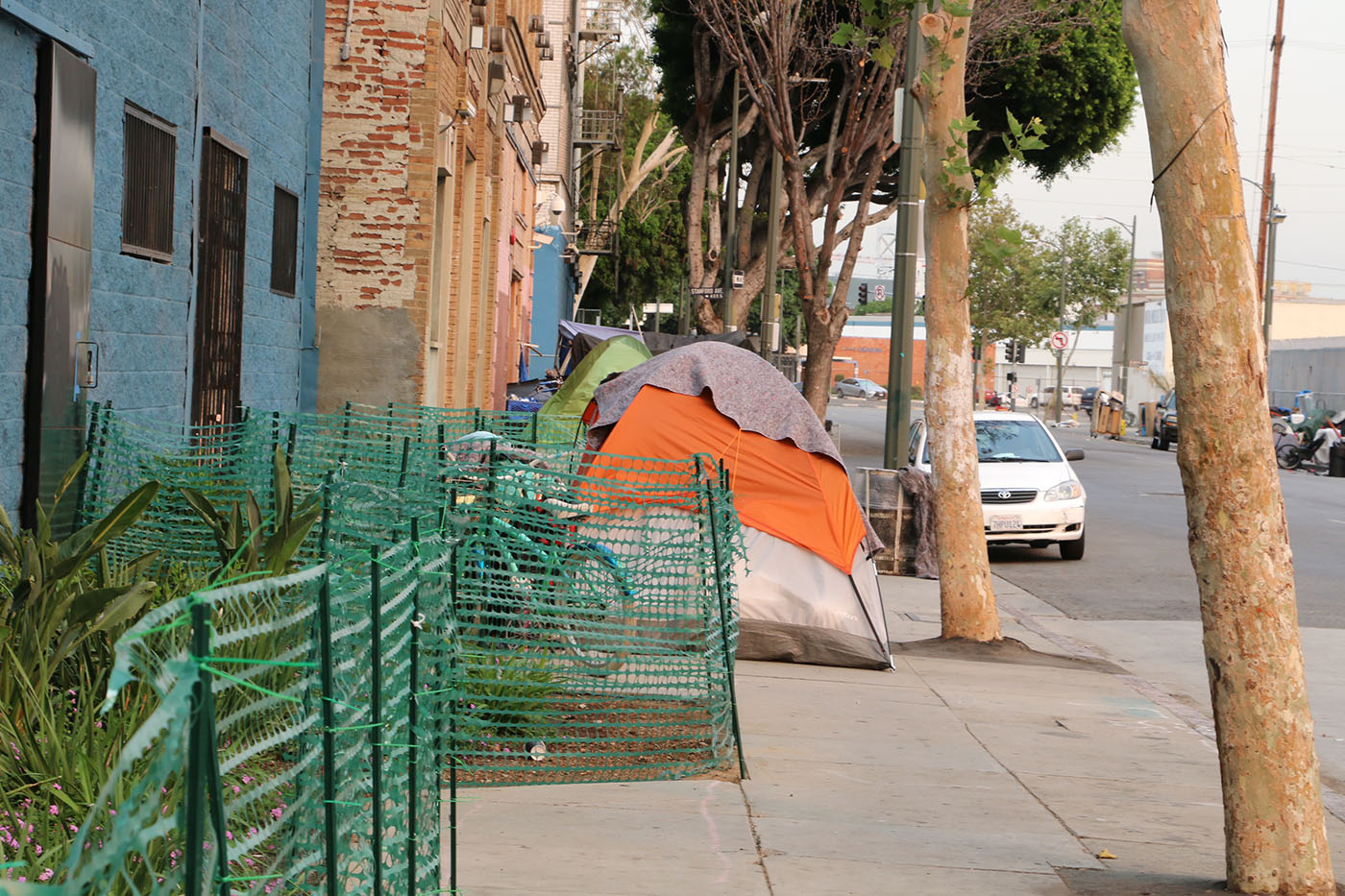
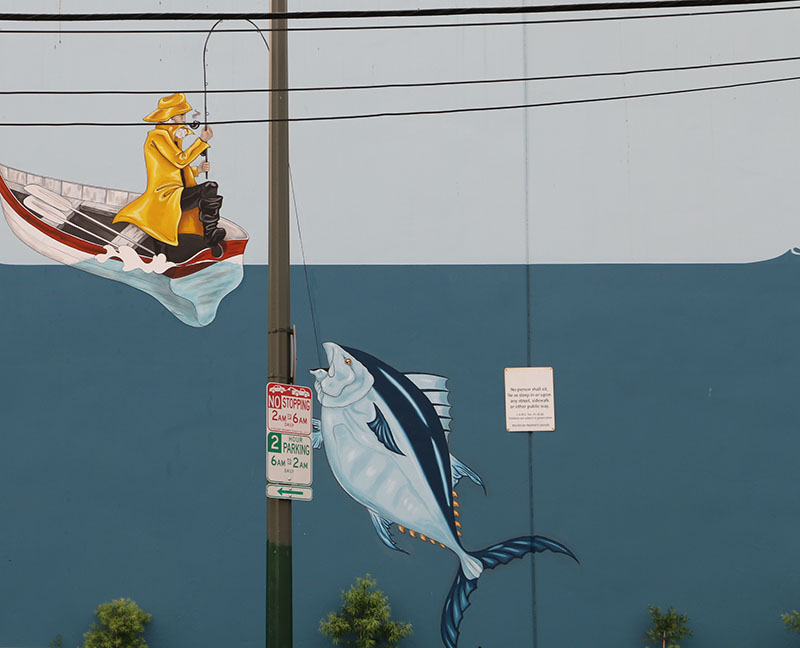
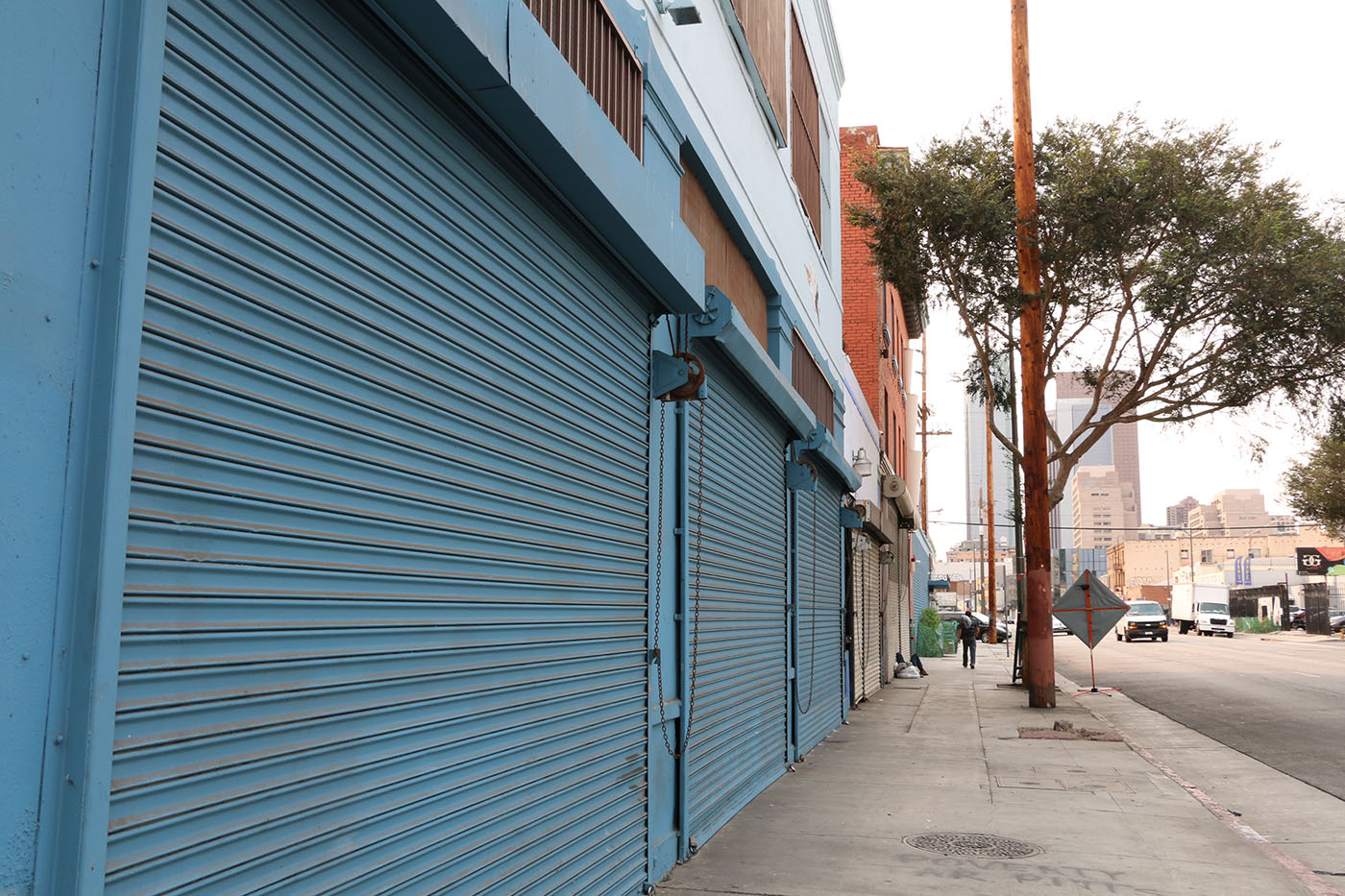
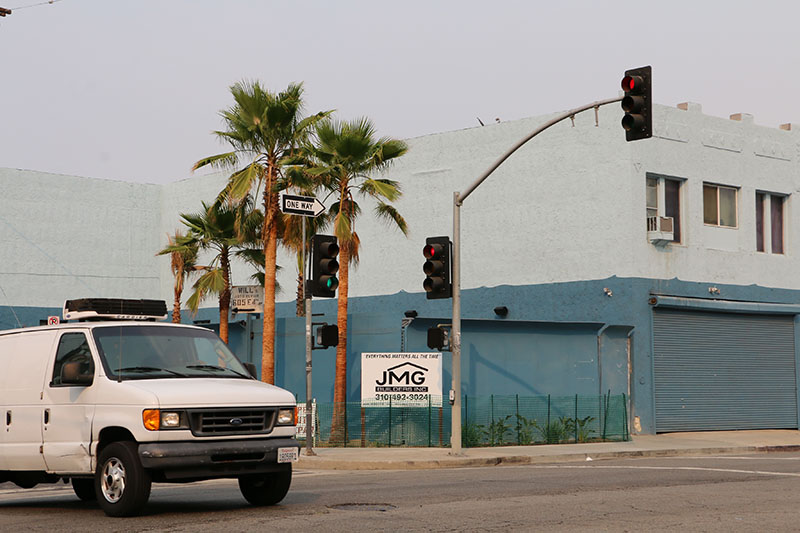
Continue past East 5th Street, however, and the scene changes drastically. Buildings are painted a bright oceanic blue, with occasional murals featuring seagulls and fish. The bleach-cleaned sidewalks are landscaped with small shrubs and plants, providing a rare splash of green in a sea of concrete and asphalt. And most noticeably, apart from the occasional cyclist or security guard, the streets are completely devoid of people or tents.
This oasis - which covers about five blocks, from East 5th to East 3rd, and from Central to Crocker - is part of a new self-funded initiative spearheaded by local business owners to beautify the neighborhood and rebrand it as the North Sea. And like several other recent beautification initiatives in the city, it has
generated controversy
over its perceived use of landscaping to remove the homeless from public spaces.
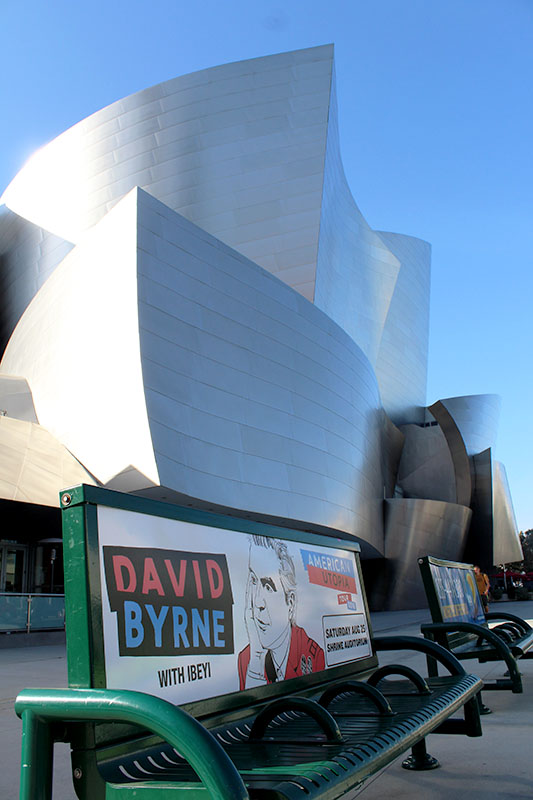
A bench with anti-homeless bars
The North Sea is part of a larger trend often described as "hostile urbanism": the use of design to restrict people's access to public spaces. According to Amber Hawkes, founder of the design firm HereLA, "any element that makes someone feel unwelcome" - whether the homeless, a member of the public or a visitor - qualifies as hostile urbanism. Although it can manifest in specific objects or design elements, it is a product of the ways in which the overall construction of a city serves to welcome people or to deter them from different spaces.
After years of under-realized city planning, Los Angeles is now making a
concerted effort
to accommodate a growing population with urban desires - better public transportation, walkability and plenty of public and green spaces. At the same time, the city is attempting to build enough shelters to house Los Angeles' massive homeless population, which, at 53,000, is the highest of any city in the country. In their current incarnations, these plans have been met with fierce opposition and inflating prices.
The city went as far as to create an entirely new position, chief design officer, and in March, Christopher Hawthorne, the former architecture critic of the Los Angeles Times, accepted the position. According to a
press release
from the mayor's office, "a key part of this effort will be ensuring that transformative infrastructure and architectural projects under development today - from housing to parks to transit lines - are inclusive, accessible and cost-effective." Hawthorne himself has
acknowledged
that the city's two biggest challenges are homelessness as well as housing.
However, given the slow pace of public planning and a homeless population that's growing out of control, private businesses are starting to take matters into their own hands. The North Sea would seem to be one such effort, aimed at taking advantage of a prime downtown location left largely untouched and forgotten for far too long. But where does that leave the homeless - and the larger Skid Row community?
Towne Avenue, March 2015
Towne Avenue, January 2017
Towne Avenue, December 2017
Like several other recent beautification initiatives in the city, the North Sea has generated controversy over its perceived use of landscaping to remove the homeless from public spaces.
Skid Row residents discuss the impact of the North Sea on their community.
Out of the 52,765 homeless people in Los Angeles County, 4,294 live in Skid Row, which measures less than a square mile.
The Los Angeles Fish Co. is situated on Stanford Avenue in the southern section of the North Sea project area. The small distribution center run by Santa Monica Seafood is housed in a building that
dates back to 1885
, when the seafood district was in its early days. The property, currently owned by a company named Kansas Marine, has been home to several businesses over the years.
Blake Wheeler, vice president of retail sales for Santa Monica Seafood, works in that building now. A veteran of the seafood industry, he used to work in this same neighbourhood 20 years ago. At that time, Skid Row had a larger homeless population than the rest of the city, but Wheeler says that it is much worse now. There would be a handful of people in the streets during the day, but by nighttime most had disappeared, likely having found space in one of the various shelters in the area, he recalls.
Voice of R. Scott Mitchell, Assistant Professor of Practice at USC School of Architecture
Now, however, the sidewalks just outside of the North Sea's boundaries are home to entire tent cities, with the homeless on the streets at all hours.
What Wheeler is seeing is backed up by data. In the last six years, the homeless count in LA County has
surged
. For a population that is notoriously difficult to track, current estimates range from 52,000 to 58,000; the most recent official
count
, conducted by the Los Angeles Homeless Service Authority in January, placed the number at 52,765. This includes people housed in temporary shelters, as well as the "unsheltered," or those classified by the U.S. Department of Housing and Urban Development as living "in a place not meant for human habitation, such as cars, parks, sidewalks, abandoned buildings (on the street)."
Wheeler can't say for certain whether the growing number of homeless has hurt his business, nor whether the area's recent face-lift will make things better. The Los Angeles Fish Co. is primarily a distribution center, although it does operate a smaller cash-and-carry business that's open to the public. He says it's possible that the homeless affect that aspect of the business, noting that people are sometimes scared to walk around this part of town. He says, however, that he personally isn't scared or deterred by the homeless on the street.
Wheeler emphasizes that he has no direct affiliation with the North Sea or its beautification efforts, other than working within its boundaries. Nevertheless, he appreciates its impact on the neighborhood. "It's good to see effort," he says. "Effort is a catalyst for change. But it's going to take time."
"Skid Row is a really special and engaged community of people. The activists here have been active for decades, and they're very receptive to - even hungry for - outreach."
"There are two different ways to start doing work in a community," says Katherine McNenny, an environmental and community activist based in Skid Row. "One way involves community outreach - connecting with the people and organizations that live here, figuring out who the community leaders are and consulting them. And then there's the other way: Don't do any of that; just come blazing in and do whatever you want."
McNenny is the co-founder of Industrial District Green, a small nonprofit that organizes community-based greening initiatives in downtown LA. She became involved in local tree-planting efforts soon after she moved into an apartment in Skid Row in 2008, after having spent a year in a single-room-occupancy building without a steady job. One of the first things she learned, she says, is that Skid Row is "a really special and engaged community of people. The activists here have been active for decades, and they're very receptive to - even hungry for - outreach."
Voice of Katherine McNenny, community activist in Skid Row
McNenny and landscape architect Gabrielle Newmark have led several successful tree- and garden-planting campaigns in the area since they founded IDG in 2010. They abide by a core principle: to never infringe on a homeless person's space without his or her consent. Instead, their activities are deeply embedded within grassroots efforts to engage and educate the community in Skid Row.
"I swear to God, every time I went out there with the buckets, someone would come help me water the trees," McNenny says of her initial experiences with planting trees in the area. "People wanted to help and wanted to take care of the trees. I would hear all these stories about how they used to be gardeners, or that they'd worked with plants before."
Given IDG's extensive greening work in the area, McNenny says she was surprised by the sudden appearance of the North Sea landscaping, which seemed to have involved no prior outreach or consultation.
Moreover, the landscaping seems diametrically opposed to what IDG has been trying to achieve. Newmark distinguishes between the types of greening implemented by the North Sea and by organizations like IDG. Trees, she says, address the specific needs of the Skid Row community. "They provide shade, help buildings cool faster, provide better stormwater management. There's also studies that show that trees help calm the mentally ill."
The shrubs planted by the North Sea "don't really provide much of anything," Newmark says. "They've done it for their own purposes." She suggests that business owners are often reluctant to allow trees in front of their property for fear that they will attract homeless people seeking shade.
Part of the reason the North Sea has ruffled the feathers of many local activists is that, despite being presented as the collective venture of a group of businesses, it seems to be largely organized by one particular business owner named Miguel Nelson. Nelson is a fairly recent entrant in the neighborhood: In 2016, he bought a 6,000-foot property at the intersection of East 4th and Stanford streets and has since renovated it into a venue for "private events, courtyard weddings, receptions, exhibitions and productions," according to his
website. Nelson declined to comment publicly, but other sources have confirmed that he filed the necessary permits for the North Sea landscaping, contacted neighboring businesses to get on board, and hired private security guards to patrol and clean the landscaped areas.
Several residents and workers around Nelson's establishment did not seem to know who he was or what exactly the North Sea represented.
Representatives at some of the entities listed as "Neighbors" on the North Sea website - such as the Fred Jordan Mission and Yemetz Family Farm - said that they didn't know much about the North Sea. Neither was aware of its inclusion online.
Jerome Guillory, a resident of the Hart Hotel (a nearby SRO), said that he appreciated the landscaping because it had made the sidewalks cleaner and less crowded, but that he didn't like how Nelson's events venue - and the North Sea - had been advertised in the community.
"It's like a private club. They're blocking it with gates so you can't see inside, but on the other side of the gates is a paradise," he said. "The way that they're advertising it - it's like they just want us out!"
Some see this lack of community involvement and transparency as part of a larger effort by business interests to quash the voices of Skid Row's residents and activists.
In April, voters in the downtown area rejected a proposal to create an independent neighborhood council for Skid Row, which is currently part of the much larger Downtown Los Angeles Neighborhood Council. Emails
obtained under the California Public Records Act by the blog
michaelkohlhaas.org
showed that the campaign opposing the proposal was led by local property owners - both large and small - who feared that the formation of the council would lead to a decline in property values in the area.
General Jeff, a local activist who led the efforts to create the neighborhood council, lamented what he called a lack of respect for by the Skid Row community. "People can't just come in here doing whatever they want to do. We live here. It doesn't matter if we own property or not. This is our community."
For many residents of Skid Row, however, the North Sea's promise of development and beautification is a welcome change after years of neglect. In fact, the project even counts some of the homeless among its fans.
Terrell Brown is one of them. A former boxer and physical trainer, he maintains a strict regimen even while living on the street. He sleeps in the same spot every night, at the corner of 5th and Towne, and is up at 4 every morning. Most days, he walks across the street to the Fred Jordan Mission and helps clean the sidewalks outside the building. He doesn't do it for money. "I was just sick of looking at it," he says.
People have set up their tents where the planters end along 5th Street
He approves of the North Sea landscaping not just because it helps keep the area clean, but also because he believes that the homeless need a firm push to get off the streets and make positive changes in their lives.
"They've gotten enough chances," he says. "They have everything they need here to turn their lives around if they want it. Most of them just choose not to."
A few blocks away, Alan Williams sits in a plastic chair outside the Hart Hotel. "Even though it's hot outside, it's hotter inside," he says.
Williams has been in Skid Row for the past 30 years. He moved into the Hart Hotel soon after it was built in 1992, and he's been there ever since.
He thinks the North Sea is a major improvement over what has been an eyesore for a very long time. He says that "almost everyone" is happy with the changes. "There's no plant life in Skid Row. Once you start beautifying anything, things get better."
Williams agrees with Brown's belief that the homeless can sometimes benefit from being displaced. "Substance abuse is a big problem," Williams says. "It's up to them to want to make a change. And you know, they need an intervention. It does help."
"We can do two things simultaneously. We can try to address homeless issues but also allow downtown property owners to improve and beautify their projects and make it a place they can be proud of."
Brigham Yen, a Los Angeles-based real estate agent and editor of the blog DTLA Rising, highlights the possible development benefits of projects like the North Sea. He likes the development trend, especially in neighborhoods like the Arts District, itself once an industrial wasteland that has since reinvented itself as a
hip, vibrant cultural center
. He regards that kind of urban evolution as a step in the right direction for a city that is trying to shake its car-centric, suburban past.
He acknowledges the challenges faced by projects like the North Sea, which attempts to revamp a once-forgotten neighborhood, but he doesn't think economic development should stop because of homelessness.
"We can do two things simultaneously," Yen said. "We can try to address the homeless issues, which is the lack of permanent supportive housing scattered throughout the LA County region, but also allow downtown property owners to improve and beautify their projects and make it a place they can be proud of."
Voice of Brigham Yen, blogger behind DTLA Rising
"It may have some direct issues initially," he said, "but I don't believe it should stop because of homelessness."
Yen makes the additional argument that economic development is more than a cosmetic upgrade and can actually help the homeless because it brings a level of scrutiny that is otherwise absent. Skid Row, after all, has been contentedly abandoned for many years before the dramatic rise in LA's homeless population made it impossible to ignore any longer.
Though the city undertook a massive cleaning effort in 2013 that continues to this day, some argue that it has done little else. Yen notes that for a long time, homelessness was ignored in large part because there was little economic development in the downtown area. He says it "was the proverbial rug that the entire region swept their problems under. It was an out-of-sight, out-of-mind mentality."
Before the North Sea's efforts, he points out, buildings in the area sat unchanged for decades, in many cases deteriorating, as there was little incentive to make improvements. Skid Row is also notorious for its lack of basic amenities like bathrooms and drinking fountains, let alone grocery stores.
"With economic development comes eyes and ears on the street, and they see the atrocity that is Skid Row," Yen said. "So it puts the subject in the forefront of everybody's minds. If there was no economic development, nobody would care."
When asked whether businesses have a responsibility to the residents who call Skid Row home, he says it's a balance: "Americans are very individualistic and want their voices heard. My family comes from China, which is communist. For me, I can see it from both angles."
District Development in Downtown LA
A closer look at the development of different Districts in downtown Los Angeles
"If you're prioritizing profit over humanity, like in the case of the North Sea, then poor people are a nuisance to you, because they don't have any money."
Danny Park is also the son of immigrants. His parents came to America from South Korea almost three decades ago, and in 1995, they opened a small mart at the intersection of San Pedro and 5th streets and called it Best Market.
There's a hint of irony to the name. Best Market is the only market - and only consumer establishment, really, excluding those related to marijuana - in a stretch of about five blocks.
It's easy to see why. With the Downtown Women's Center across the street, the intersection is a major hub for the unhoused and their tents. And yet Best Market has survived in this location for 23 years.
"When I was little, I didn't know this place as Skid Row," Park says. "I just knew it as a community. I would hang out here during summer break, and people - my tios, tias, elders - would give me advice about life."
Voice of Danny Park, Founder of Skid Row Coffee
Three years ago, Park decided that he wanted to give back to the community that nurtured him, so he started to bring in major changes to Best Market. He began by selling basic necessities - feminine hygiene products, towels, razors and so forth - at wholesale or subsidized prices. He has also made an effort to bring in fresh fruits and vegetables, plus other healthy and affordable foods, to try to change Skid Row, which is often described a "food desert."
In recent years, Park has become well known for a different project - one that is distinct from Best Market but dovetails with its larger goals. Around the same time that he took over the family store, Park also co-founded, with his friend Andrew Kang, a pop-up coffee shop called Skid Row Coffee.
"Nine out of 10 people in Skid Row are unemployed," Park says. He hopes to make a dent in that figure by using Skid Row Coffee as a job creation venture: He hires people from the community for six months at a time and trains them in barista skills, as well as soft, communication skills, in addition to paying a minimum wage. Then he tries to place graduates in jobs at partner establishments. Park says he has had great success with the pop-up shop for a while now, and next month, he's opening the first physical Skid Row Coffee location at Central Library downtown.
Park wasn't always predisposed to this type of community work. He has a degree in graphic design, and he worked at Nike - at its headquarters in Portland, Oregon - for several years before becoming disillusioned with the culture there.
"I was flying back here twice a month, to work at the store, and just seeing the drastic difference - and realizing that everything is interrelated - made me really question the ethics of the company," Park said. "I was drawn to the Nike brand, but the consumer culture of the company and the way in which its products were manufactured made me think: Do I want to be a part of this thing? Is this right?"
A bar is set to open in this building at the corner of Towne and 4th.
It's an admirable sacrifice - some might even say too admirable to be a useful example within discussions of gentrification. People like Park would seem to be rare, altruistic exceptions, setting standards that are untenably high for the typical businessperson, like those involved in the North Sea. But Park disagrees.
"I was also raised on the American dream and the idea of meritocracy," he says. "I was taught that hard work pays off. But you just have to look around to realize that hard work doesn't always pay off. If wealth is transgenerational, so is trauma and poverty. There's so many black and brown bodies here - that's not a random accident. It's a byproduct of policies and practices. So there's a dark side to the American dream."
Park describes Skid Row Coffee as a "social enterprise," a model that uses the principles of capitalism but chooses to invest in people - and not just profit. It is run entirely as a business, with the aid of some private donations; so far, Park has not received any grant funding.
"If you're prioritizing profit over humanity, like in the case of the North Sea, then poor people are a nuisance to you, because they don't have any money." he says. But pushing them away further restricts their ability to earn income and simply exacerbates the larger issue of homelessness. Instead, Skid Row Coffee attempts to fix the root of the problem.
"We all still need to pay rent and eat, which requires money," Park says. "So we just work with that reality."
When asked what he would say to the North Sea business owners - and others looking to develop and revitalize Skid Row - Park pulls out a manifesto that he says was shared in a recent community meeting:
"How do you build a community? Turn off your TV. Leave your house. Know your neighbor. Greet people. Look up when you're walking. Sit on your stoop. Plant flowers. Use your library. Play together. Buy from local merchants. Share what you have. Help a lost dog. Take children to the park. Honor elders. Support neighborhood schools. Fix it even if you didn't break it. Have potlucks."
"Maybe that's what a revolution is, you know," Park says. "It doesn't have to be a bloody river. Maybe it can also happen quietly in your heart, in looking for just a better way to be with each other."