X
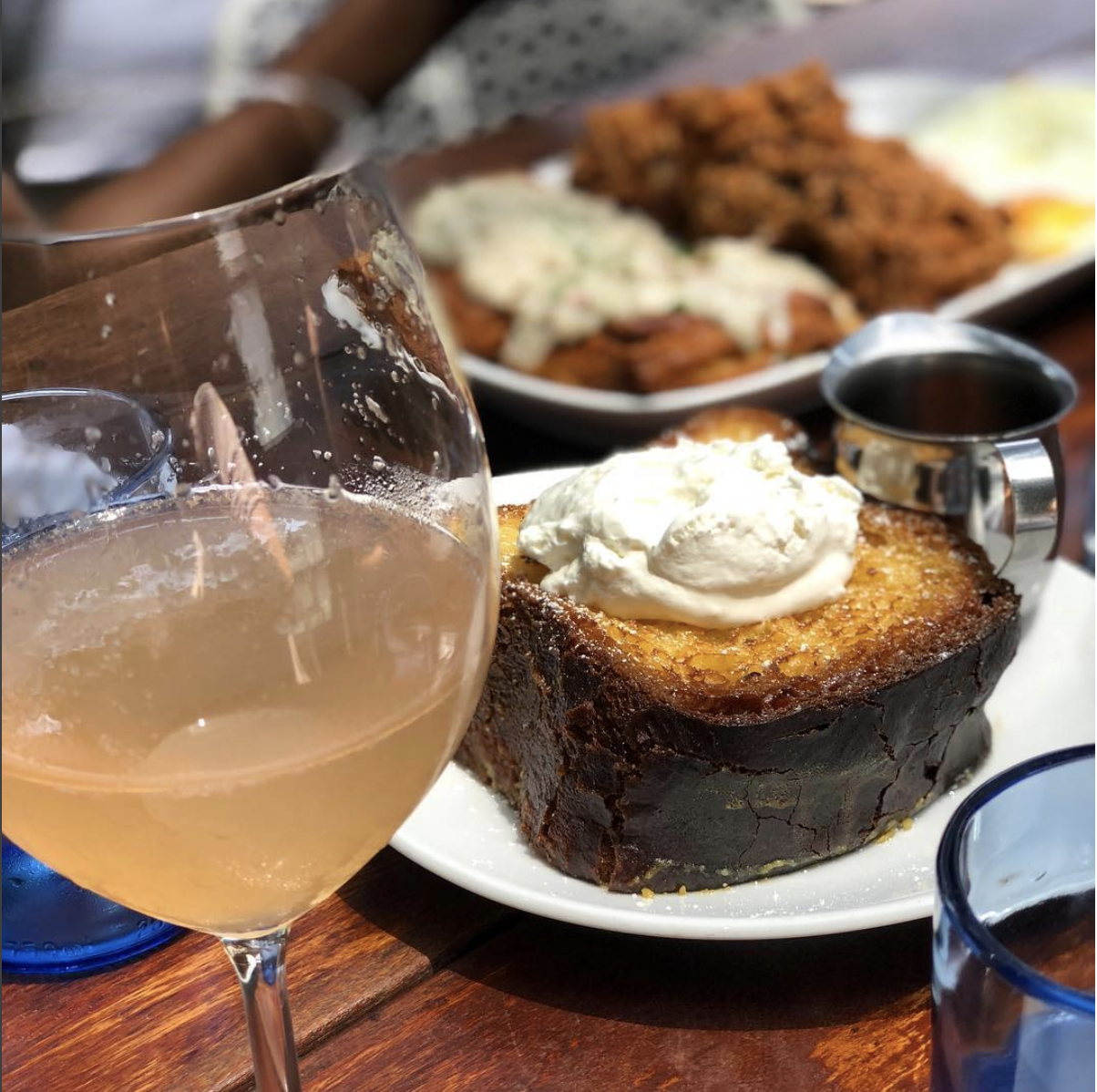
To most, a typical Sunday brunch in Venice Beach looks like this: a thick slice of hearth-roasted brioche French toast at Rose Cafe. It's served with lightly whipped cream, warmed maple syrup and the cafe's signature Rose mimosa.
But head west where Rose Avenue and the beach's bike path meet, and something entirely different is on the menu.
Corn.
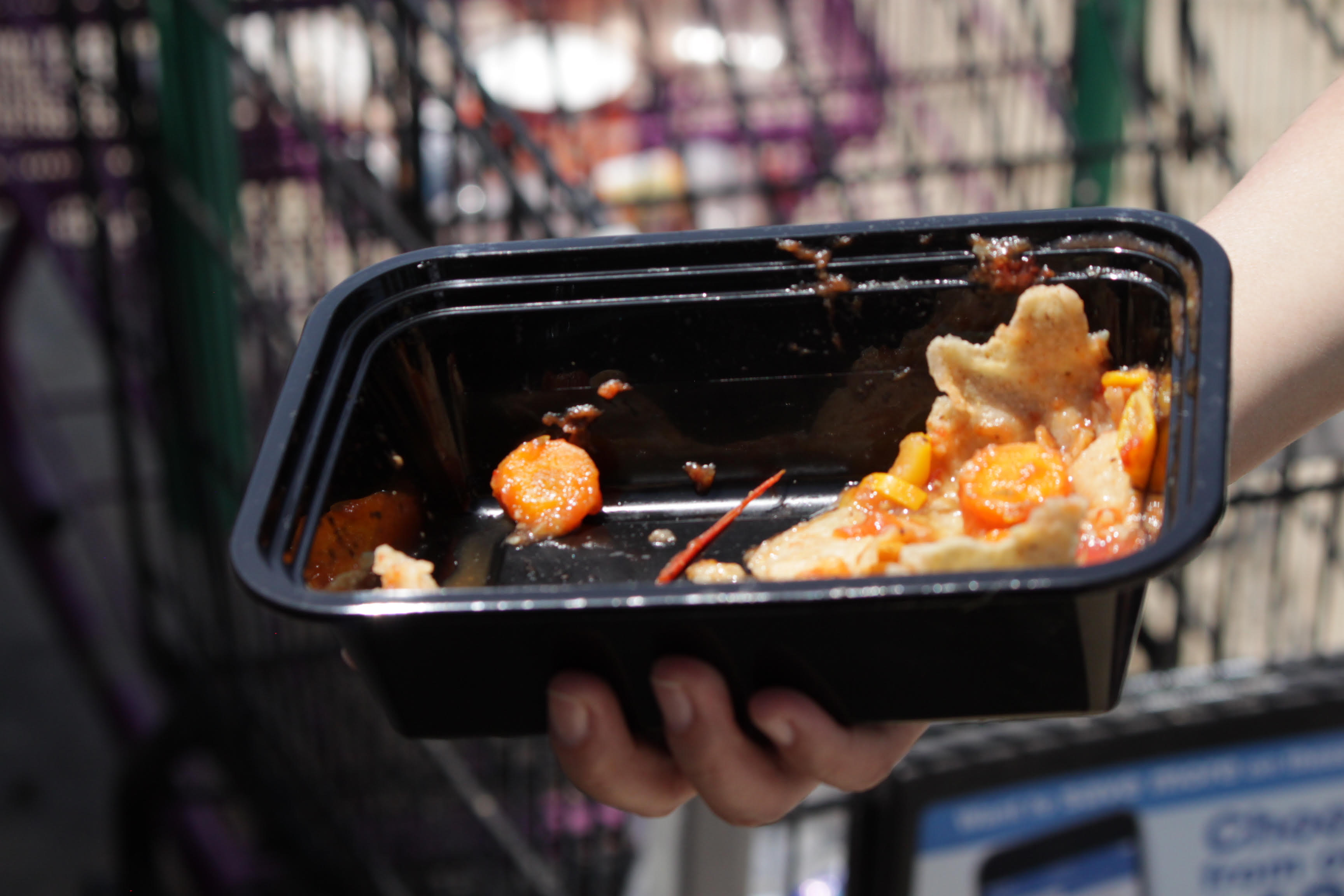
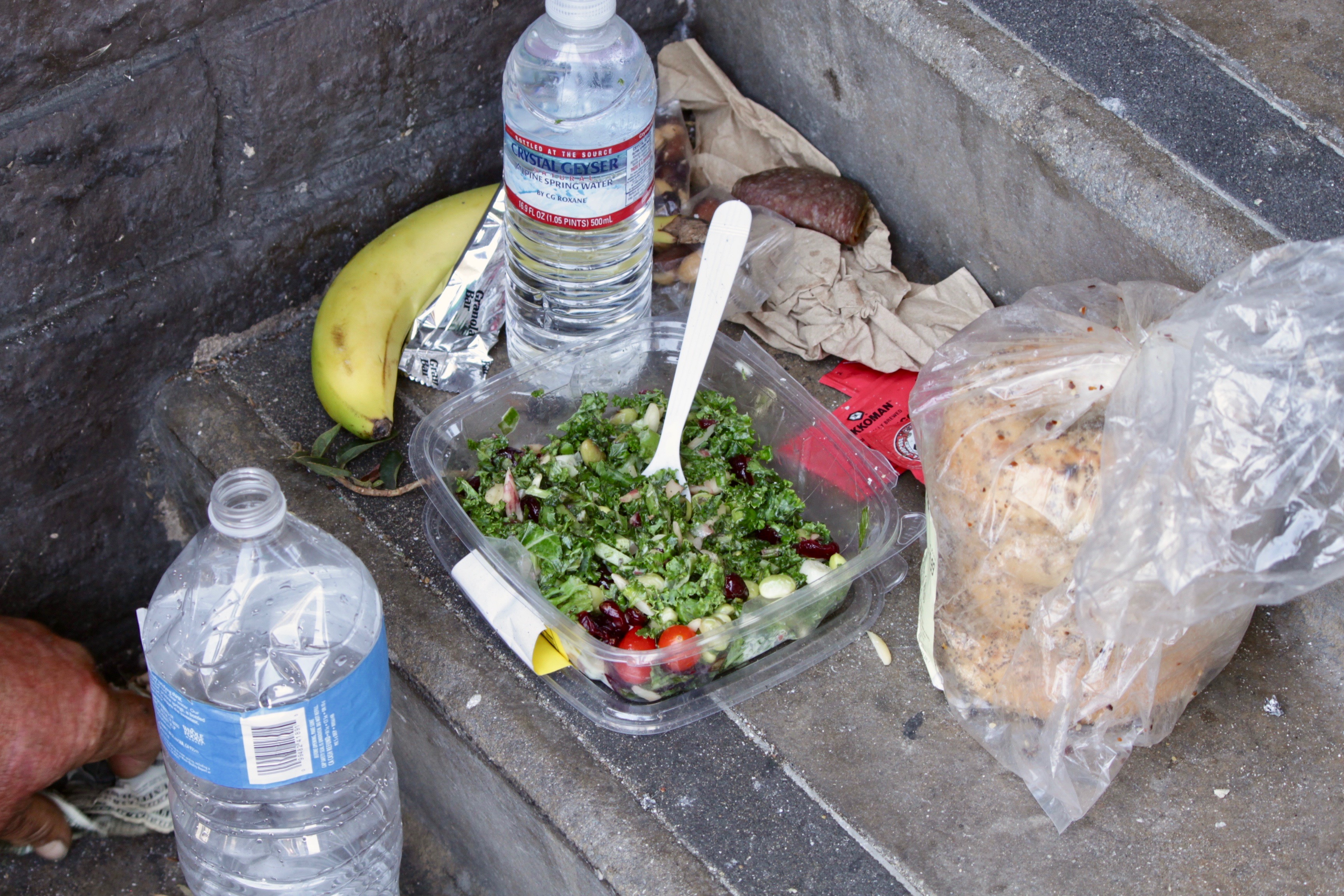
It's been prepared by a total stranger, along with a sandwich bag containing mixed fruit and something that resembled tortilla chips soaked in salsa, with chunks of cooked carrots to top it off.
"That?" Tashena Whittaker said, pointing a half-polished finger at the black plastic container holding the mystery contents. "I'm not eating that."
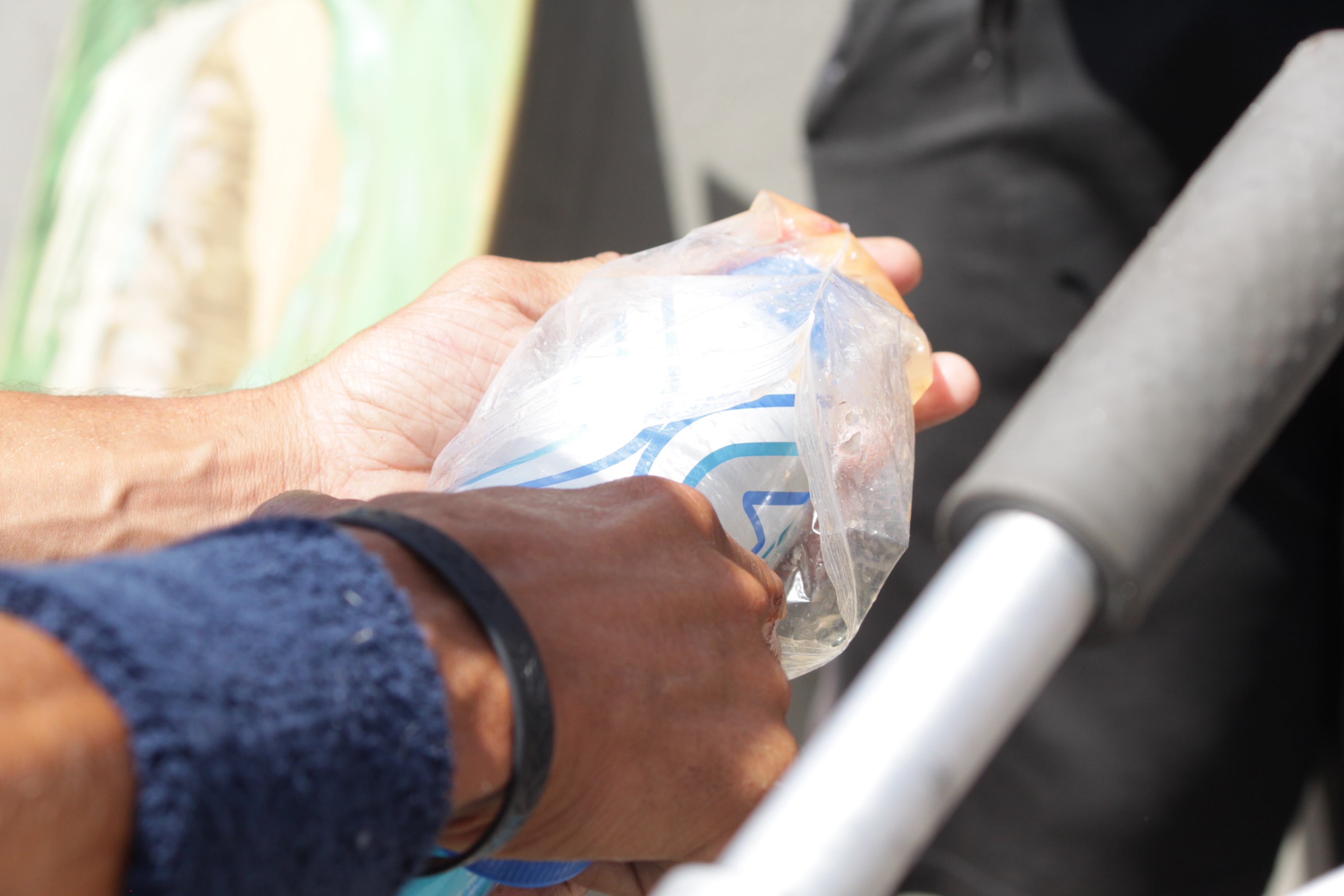
Whittaker took her final bite of the corn, then tossed it onto the sun-baked cement. She gave the sandwich bag to her friend Michael Mejia. He took a few bites of its contents, then shoved the leftover fruit and juice into an aluminum water bottle for safekeeping.
Whittaker and Mejia are just two among the homeless of Los Angeles County 52,756 as of the latest official count in January - most of whom struggle to find a decent bite to eat on a daily basis. Finding a healthy meal is a large challenge within the homeless community, having much to do with the lack of access to affordable, nutritious food.
[If video does not play, please click here]
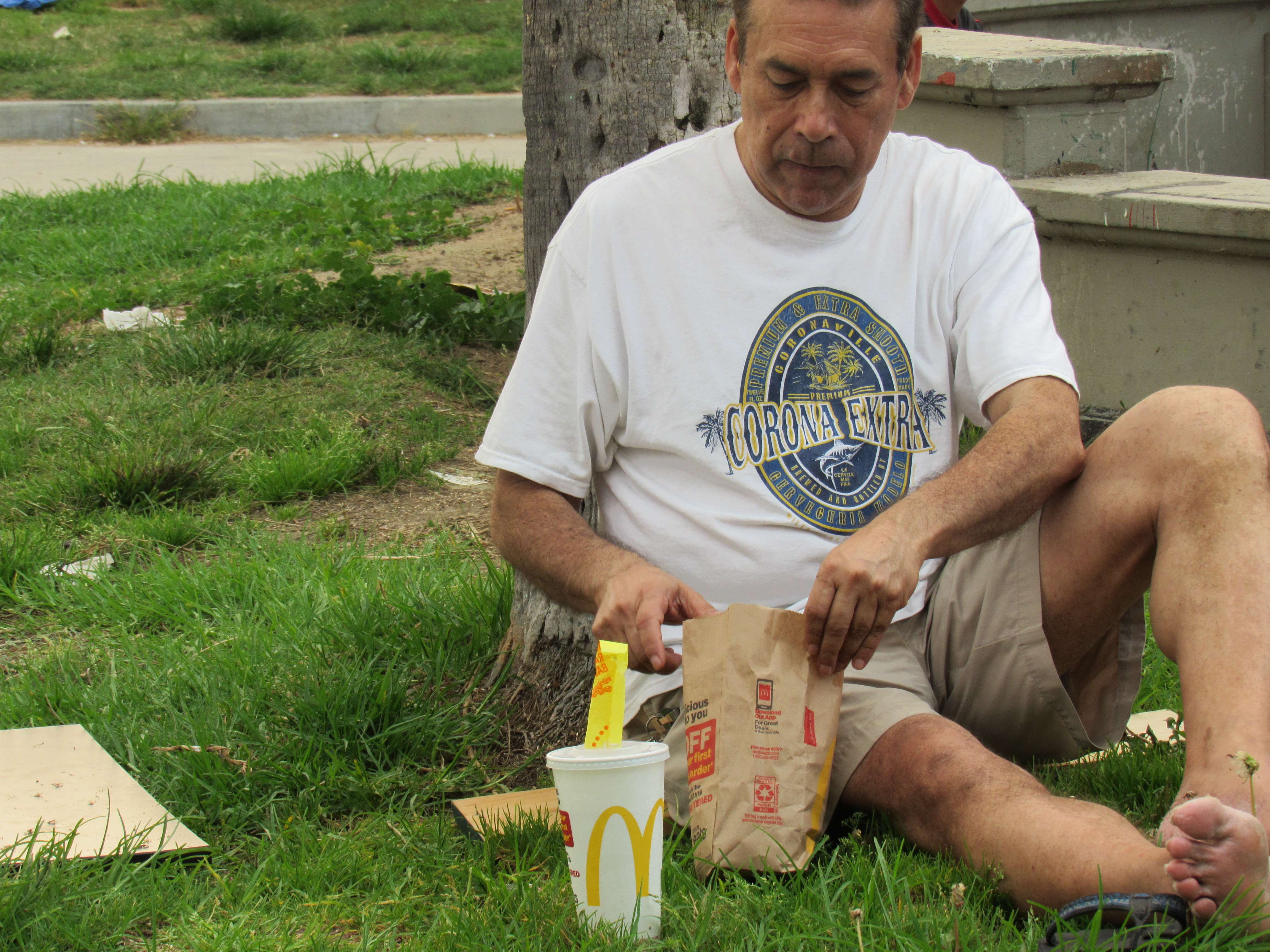
In place of more filling options like fibrous greens and lean protein, bread and processed cheese become the staples of many homeless people's diets as a result of their relying on street handouts or meals served at shelters and fast-food restaurants.
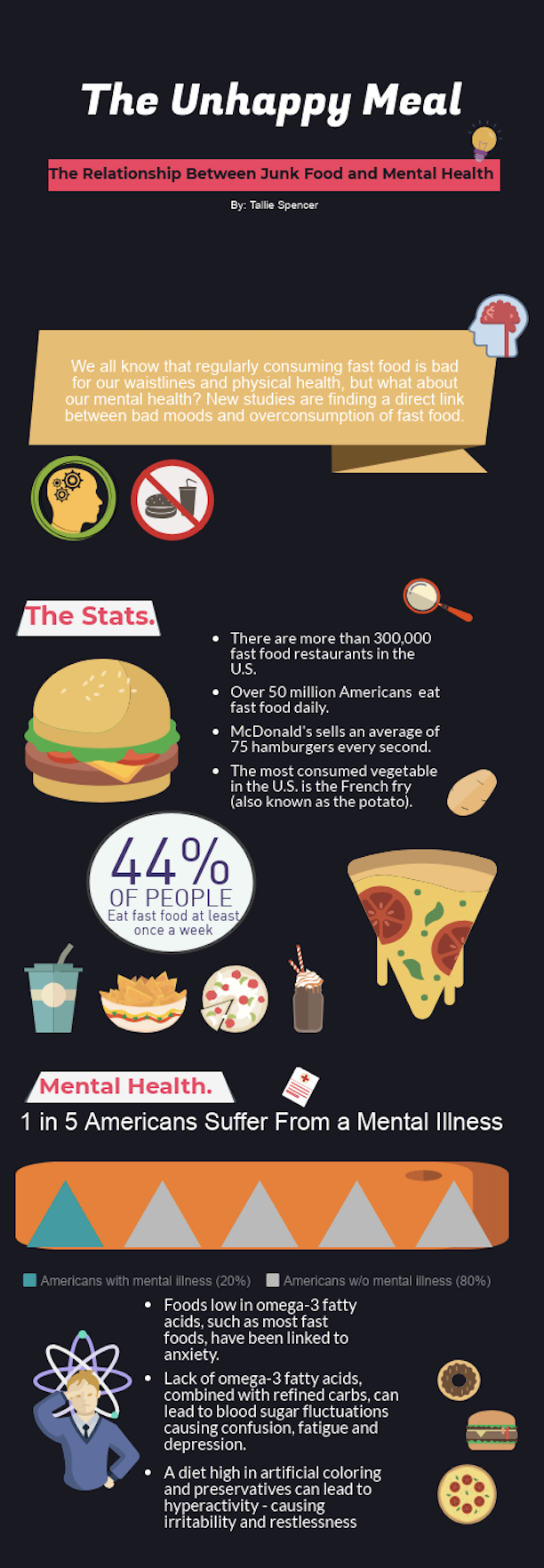
The Regional Research Institute for Human Services reported that the regular consumption of low-quality and nutrient-deficient items leads not only to physical health issues, but mental health issues as well. For the homeless population, depression, anxiety and mood inconsistencies can be a direct result of poor eating habits.
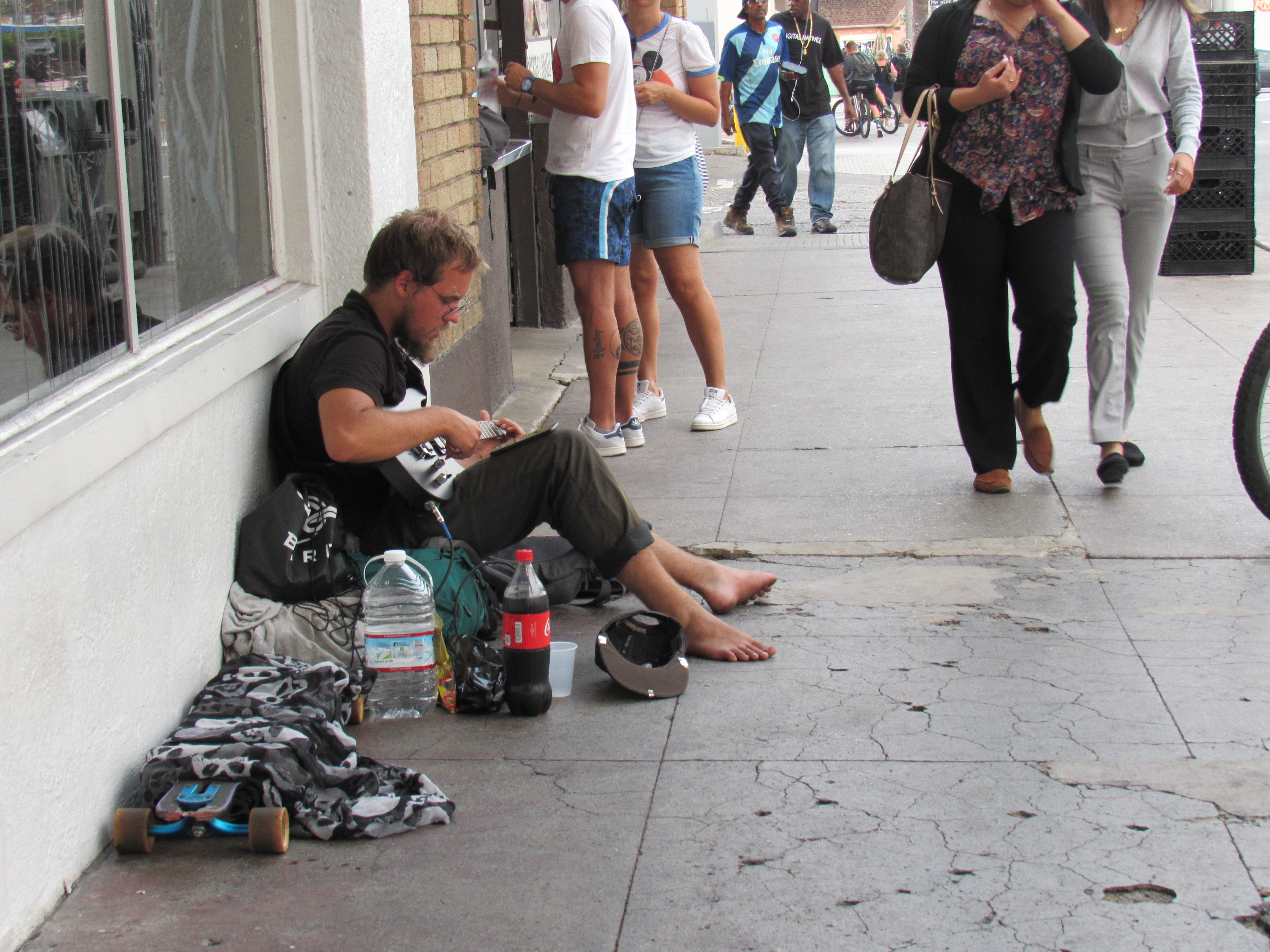
Whittaker resides in the corner of a busy parking lot by the sand with her German shepherd. Mejia is more nomadic, riding his bike sometimes all the way to San Diego and taking shelter wherever he can find it.
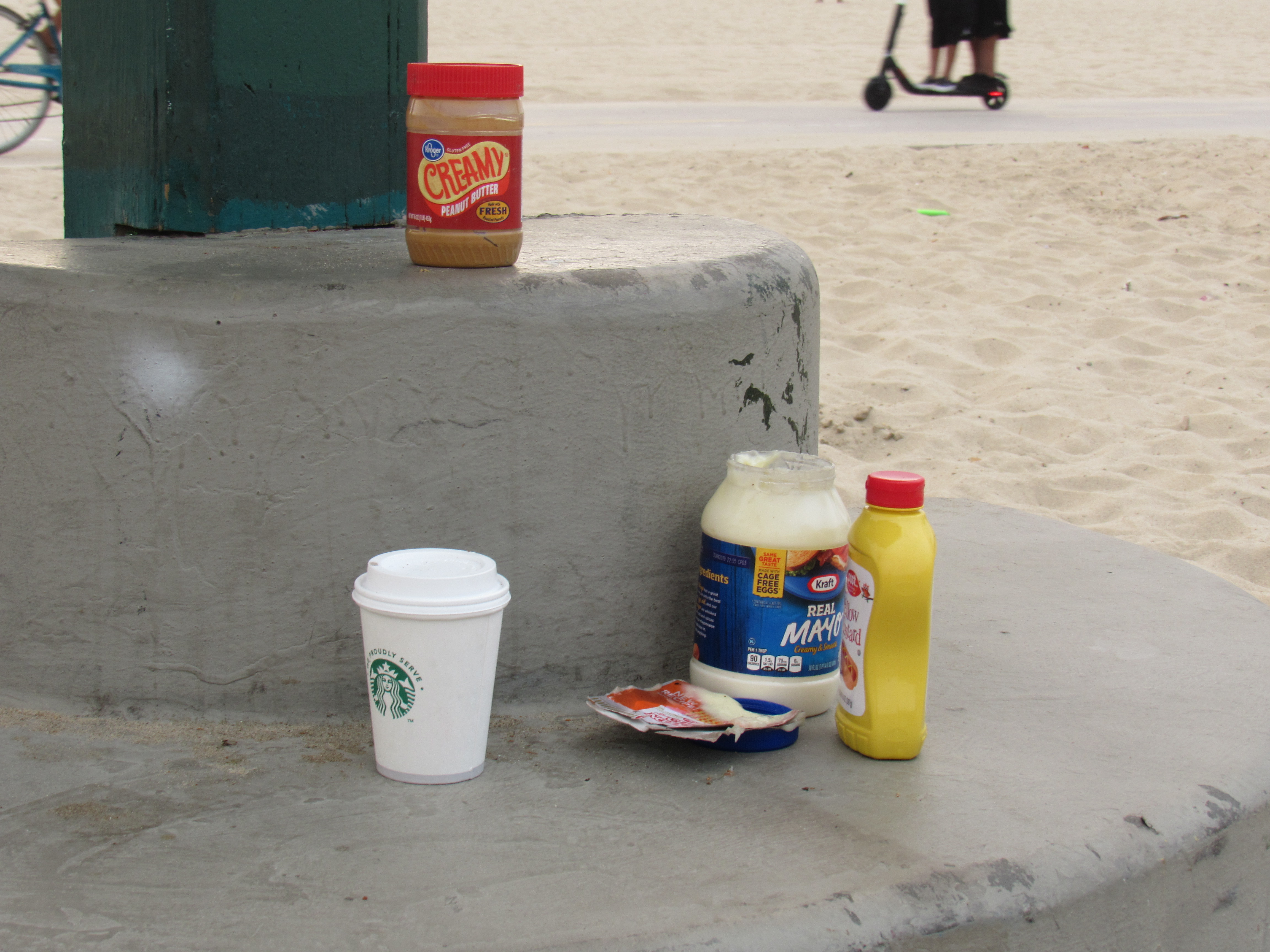
He also takes food wherever he can find it. A handout from a stranger, for example, is a welcomed gesture of kindness.
The kindness of government agencies comes more often in the form of carb-heavy fast and processed foods, the two explained.
"They're letting us eat ourselves to death," Whittaker said. "I could eat a thousand doughnuts ... and I'm not getting any nutritional value out of it."
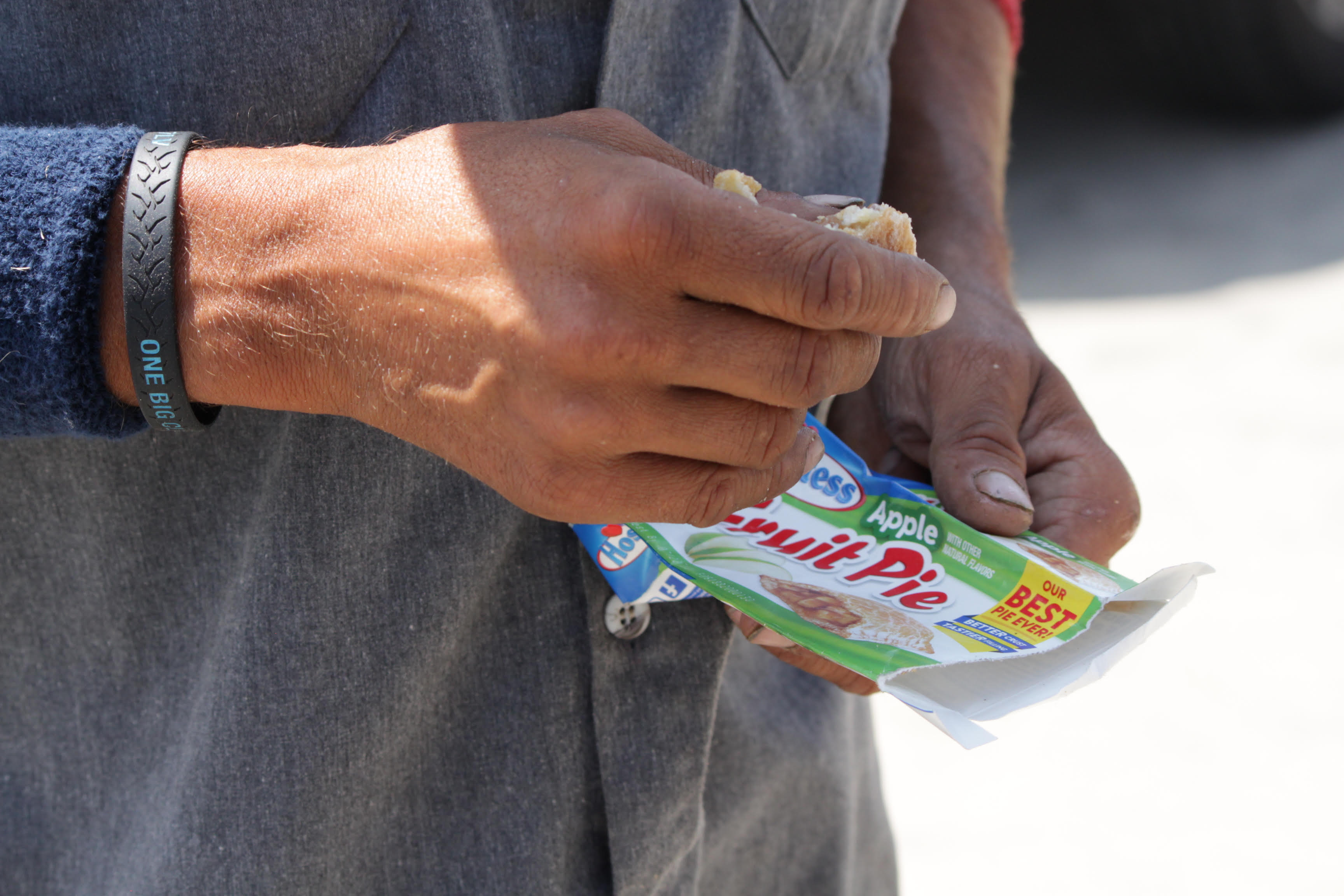
Back at her tent site, she offered a few other friends the last of the stale poppyseed muffins she keeps "fresh" in a large red cooler. Mejia declined, choosing instead to snack on a Hostess apple pie. It retails for about a dollar and boasts 42 grams of sugar, only 4 grams of protein and no more than 2 grams of dietary fiber.
"I've got a whole stash," Mejia said.
However, to Mejia, the 470 calories the pie provides are worth the nutritional compromise. He has no idea how many miles he'll endure this particular Sunday and needs the energy.


Although there is some truth to the notion that eating more calories provides more energy, not all calories are beneficial in this way.
Mejia's sweet, sugary Hostess pies, which advertise "real fruit filling," may provide a short-term energy boost, but it may do more harm than good in the long run.
According to Dr. Eva Selhub, a staff member at Harvard Medical School, a diet high in refined sugars "directly affects the structure and function of the brain, and ultimately mood."
Selhub calls highly processed foods "low-premium fuel." Individuals who consume them on a long-term basis will inevitably face physical and mental conditions like diabetes, depression, fatigue and anxiety, she said.
Holistic nutritionist Allyson Kleinbrodt warns that a diet high in these foods can also lead to inflammation, further diminishing brain health and functionality.
This is bad news, as serotonin and dopamine regulate mood and cognitive function to maintain mental stability.
"Particularly with the homeless population, you are looking at affecting serotonin and dopamine levels, which are all housed in the gut," Kleinbrodt said. "When those [hormones] start to become weakened, when the pathways to the generation of these hormones become blocked, this is one of the first areas that gets affected."
Dr. Paul Gregerson is an internist in Los Angeles and serves on the board of directors of the National Health Care for the Homeless Council. The average life expectancy of a homeless person in Los Angeles is only 58 years, he said.
"You're exposed to the elements ... not having access to a home, warmth, food," he said. "Living outside basically ages you faster."
Gregerson said that most of the homeless patients he interacts with are either morbidly obese or suffering from malnutrition and have a low body mass index. Both extremes are caused by a lack of nutritious food.
"The thought is nice to give cheeseburgers and Krispy Kremes and all of the other things … but even for somebody with malnutrition, that's not the best way to do it," he said.
One of the answers? Health education.
"A lot of people think that homeless people don’t have access to the foods they need so they're going to eat whatever they can, forgetting that when they do get housed, it does resonate with them eventually," Gregerson said. "At some point they will hear a bell that says, 'No, I shouldn't eat this cake, or 'No, I shouldn't eat this high-fat fast food."
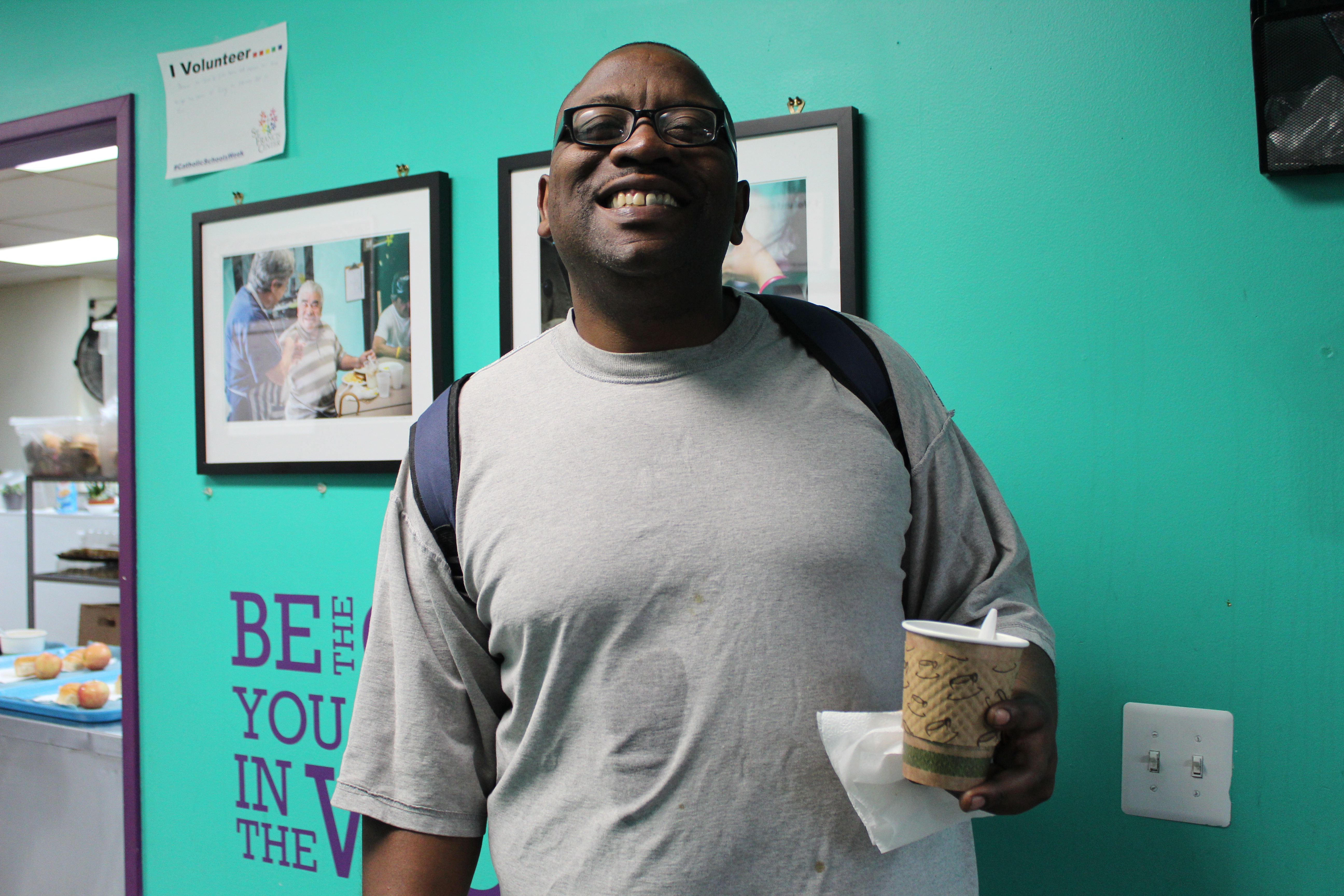
Wendell Sloane, who regularly visits the St. Francis Center in downtown Los Angeles for its food services, is already on the path of cooking his own nutritious meals despite being "in and out of a living situation." "For dinner, I like to make steak, chicken and vegetables," he said.
"I try to eat two meals a day," Sloane said. "I'm trying to keep my weight down, 'cause my high blood pressure. You know, I don't want to get diabetes."
Sloane has seen the dark discoloration on his uncle's feet and the dark patches that appear on acquaintances' arms because of diabetes, prompting him to stay health-conscious.
"Diabetes ain't no joke. Even though you just think, 'Oh sugar,' but it can get in your system," Sloane said.
Health experts have debated whether dietary supplements could be a potential solution to malnutrition, but Kleinbrodt has another idea.
"I am a firm believer that supplements can supplement an already healthy diet," she said. "But if we can somehow bridge the gap by bringing more attention to the small farmers in our communities, especially in the Los Angeles area ... I think that will help us bridge the [nutritional] gap more than the supplements."
According to a report in Nursing Times, much of the supplement debate concerns the risk of homeless people misusing them or possibly selling them for profit because they have a high street value. But the report also argues this could be avoided if supplements were solely distributed at meal time in a glass rather than a carton.
While Kleinbrodt said she's an advocate of supplement distribution, she believes an easier, less controversial solution exists.
"I think we could get away with feeding the homeless less food if we had higher-quality food," she said. "We need a revolution, where we bring it back to just real, whole food."
[If video does not play, please click here]
The presence of real, whole foods in the kitchens of L.A.'s homeless assistance agencies is increasing, despite the fact that California does not specify nutritional guidelines for feeding the homeless.
The Midnight Mission and St. Francis Center are among organizations in Los Angeles that say they factor nutrition into their meal planning.
Both draw large crowds to their downtown locations, feeding hundreds every day. Midnight Mission serves breakfast, lunch and dinner, while St. Francis Center serves breakfast every morning.
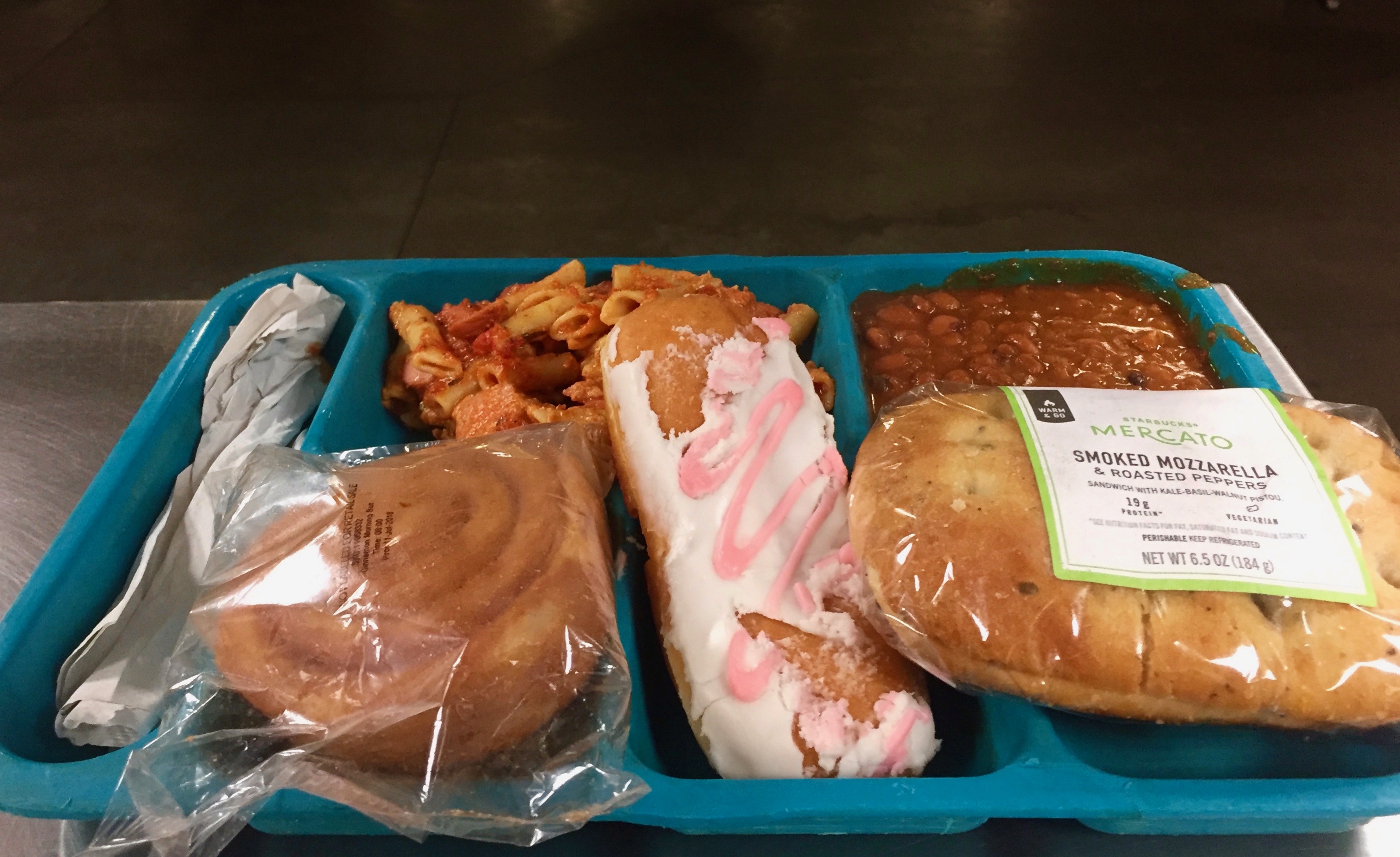
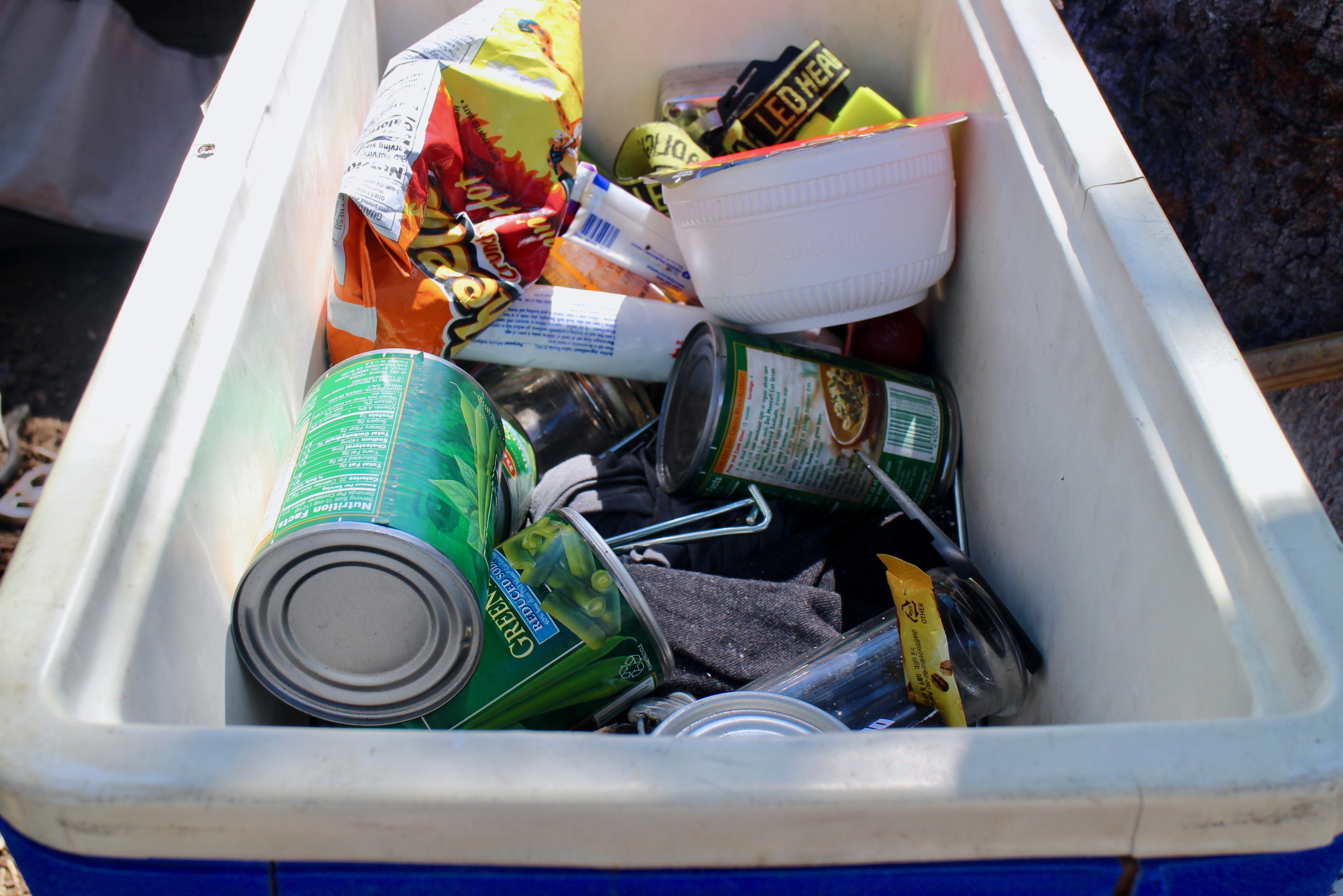
Partnerships with restaurants and hotels allow them to bring healthier options to the table, but outside donations of canned food, bread and processed sweets still dominate the shelves.
Joey Weinert, Midnight Mission's volunteer manager, said it's tough operating on a low budget of only $100,000 a year, roughly $300 a day, to feed hundreds per meal service. Still, making sure the community eats well by shopping for healthy and filling ingredients is his top priority.
"Our mission is to focus on giving people the best experience possible," Weinert said. "We do the best we can to make sure we are covering all the bases on the food pyramid."
Midnight Mission's executive chef, Javier Sanchez, also strives to provide a balanced plate regardless of the organization's daily inventory of fresh food.
"We make sure that all of our guests get a salad, some fruit, some dessert, something to drink, some starch, a vegetable and some protein," he said.
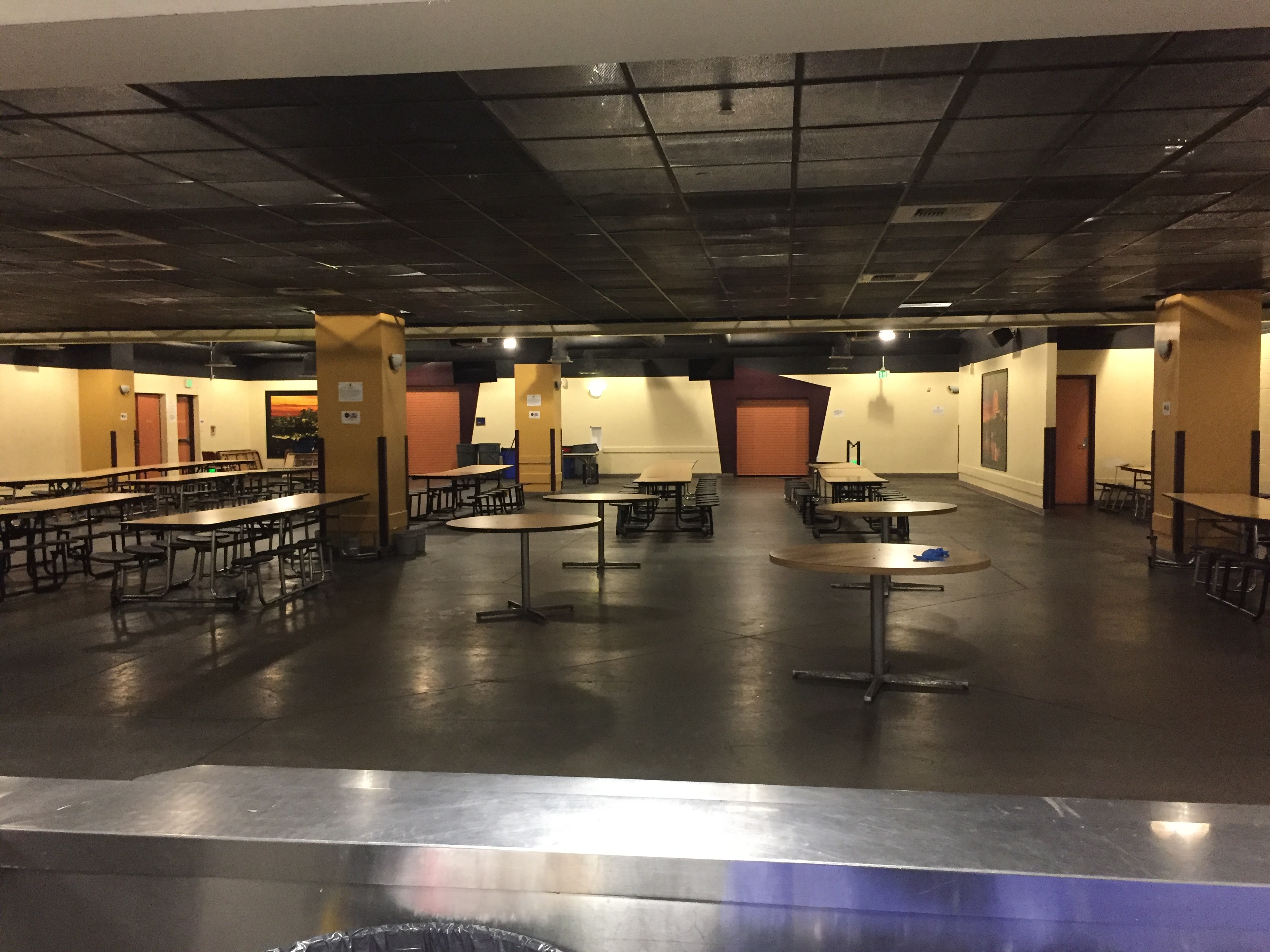
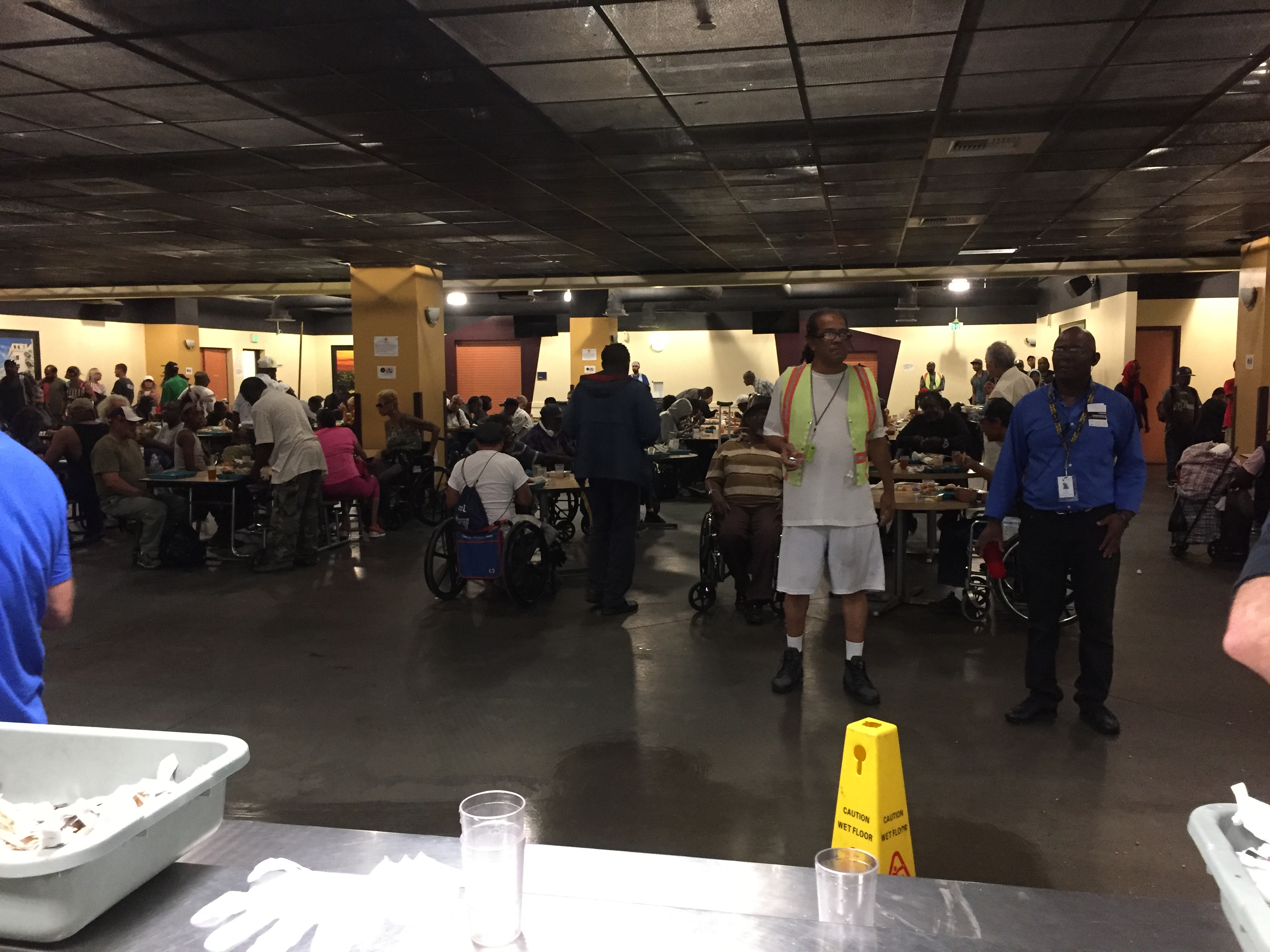
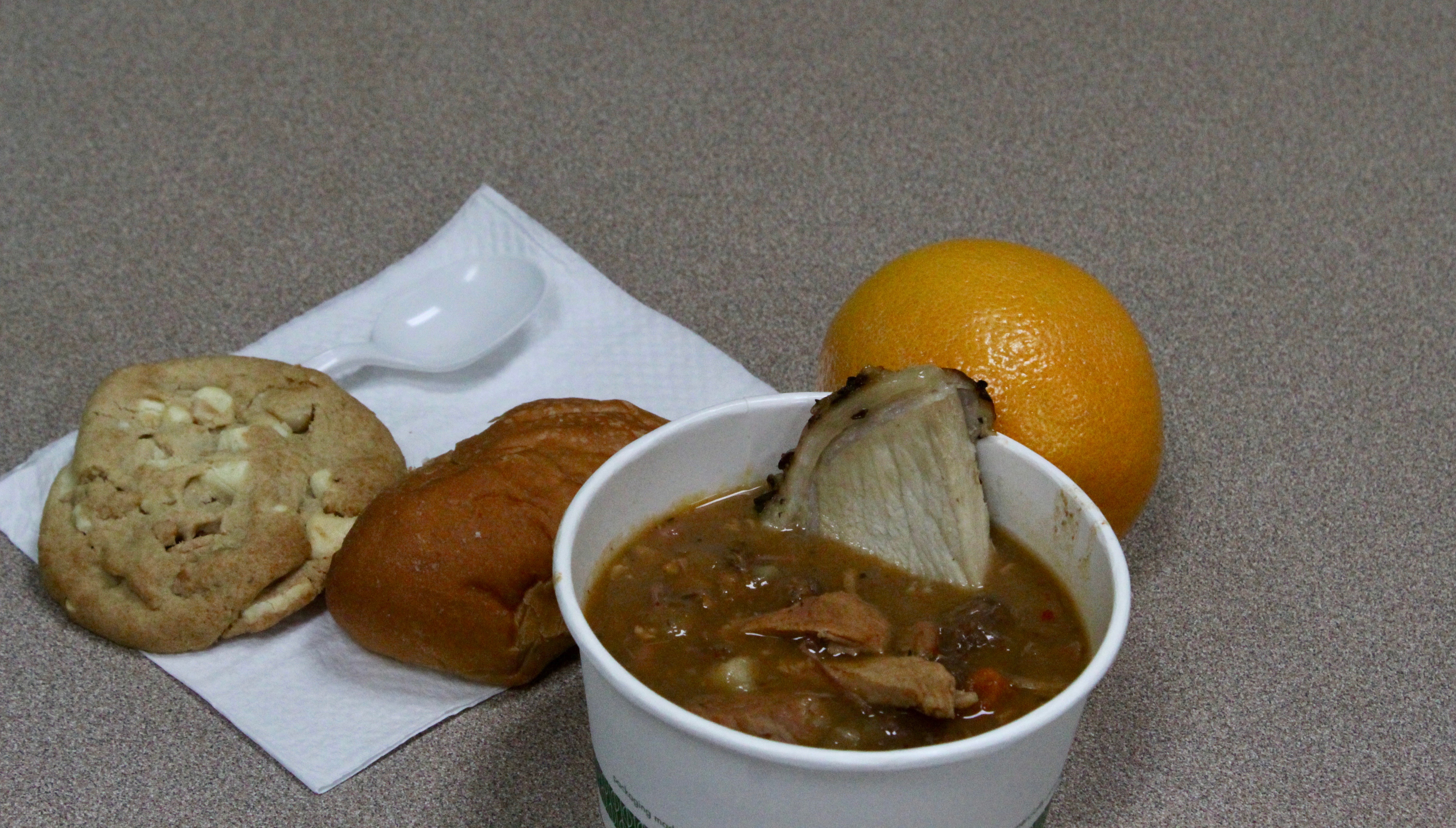
The St. Francis Center provides a breakfast service Monday through Saturday. The chef, Xochitl Larios, who has been a volunteer at the center for more than 20 years, finds a way to repurpose beans, vegetables and protein to make a filling soup.
One regular at the center, Kathi Lewis, said she feels nourished and satisfied after eating Larios' creation. "It gives me energy," Lewis said.
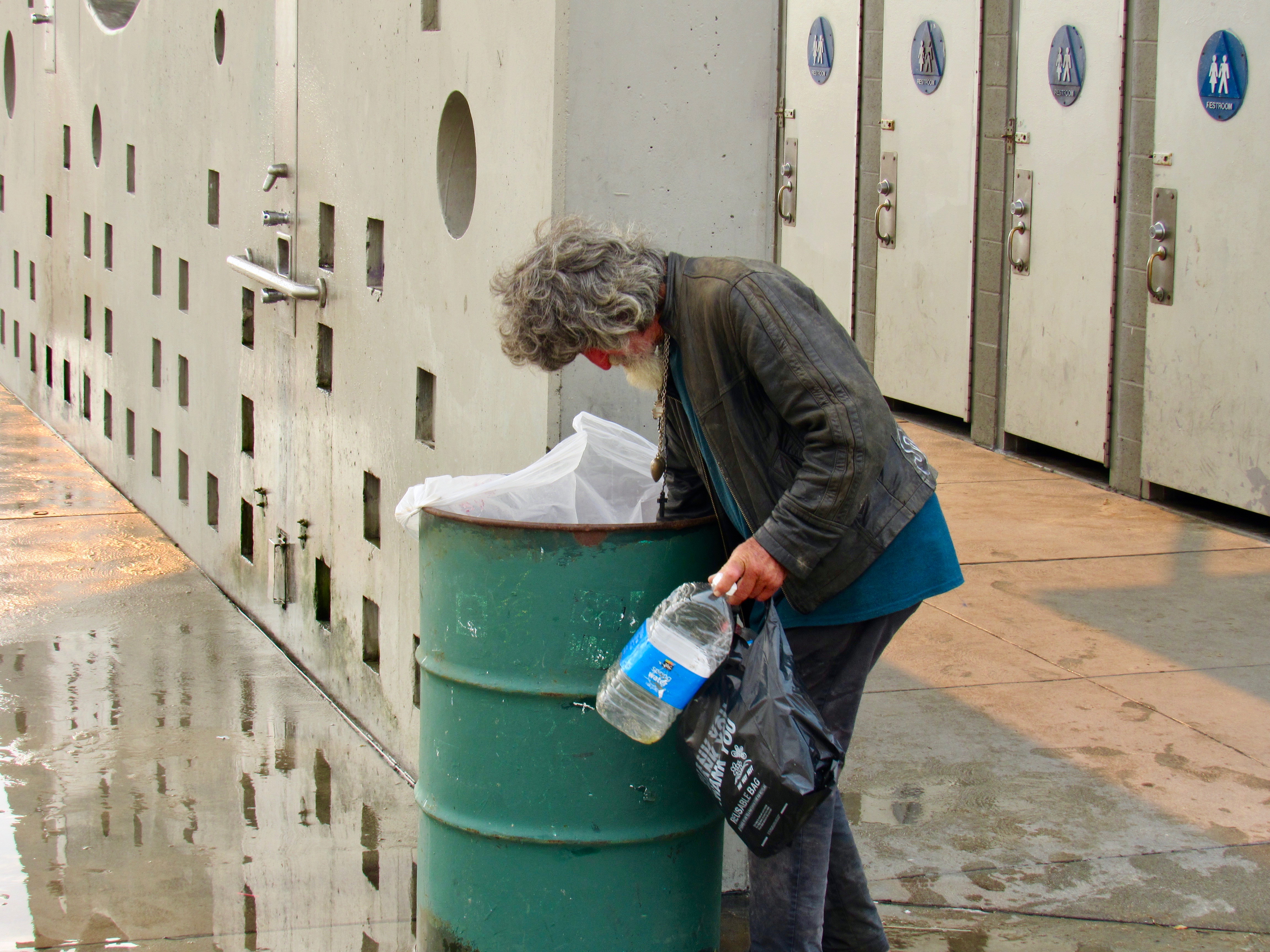
She acknowledged eating food out of trash cans in the past, noting that this left her feeling sick, depressed and fearful of ingesting parasites.
St. Francis Center sends guests off with a snack pack and bagged lunch, hoping they'll feel nourished throughout the day and avoid fast-food alternatives.
"Fast food does not fill you up. It doesn't sustain your health," program manager Lucia Garcia said.
CalFresh (formerly known as the Food Stamp Program) provides more than 1.1 million low-income and homeless enrollees with an electronic benefit transfer card, which they can only use at pre-approved restaurants.
"The purpose of this program is to promote a safeguard of the health and well-being of low- income individuals and households to purchase food, thereby raising their nutrition level," CalFresh’s Nutrition Program Director DeLlora Ellis-Gant of the Department of Social Services (DPSS) said.
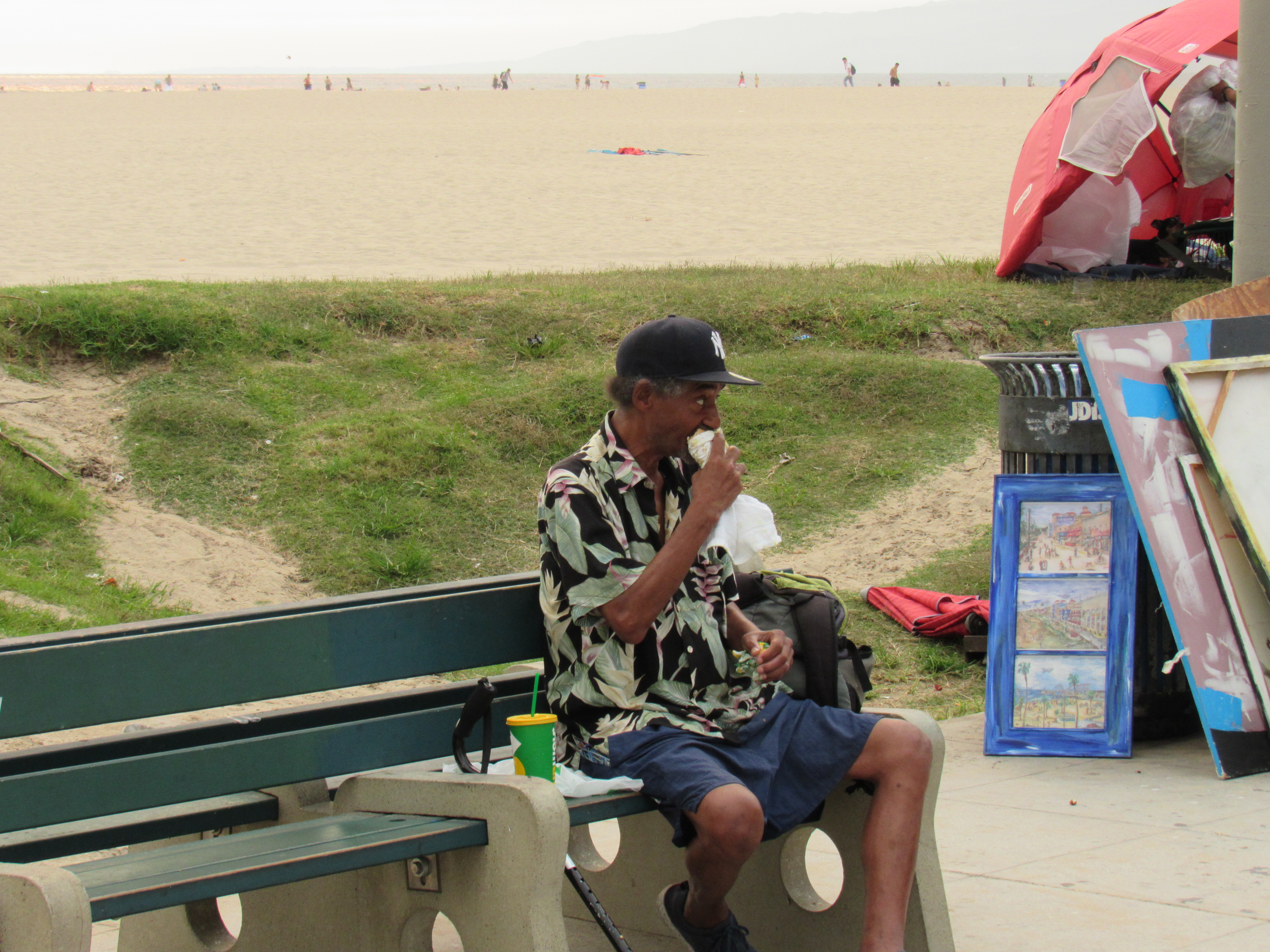
More than 1,000 restaurants on CalFresh's list are fast-food establishments. The top five are Jack in the Box, Subway, Burger King, Domino's Pizza and Carl's Jr.
"Most of those restaurants have healthy options. We require them to pass a five-healthy-point checklist ... [participating restaurants] have to share their menu with us and must ensure they are offering some type of fruit or vegetables," Ellis-Gant said.
DPSS also tries to increase the awareness of healthy meals by developing a "Choose My Plate" flyer to encourage participants to improve their nutritional intake. In the future, the department also hopes to partner with healthier food providers, such as Trader Joe's and Whole Foods.
Kleinbrodt said the problem lies in the American food system, blaming the government and its related agencies, like CalFresh, for investing in the production of synthetic nutrients.
"You're dealing with a population that is looking for inexpensive food, and inexpensive foods are processed foods, and processed foods are ultimately processed from grains and oils that our government is subsidizing, but [they] are our least healthy crops," she said.
Until a solution is realized, L.A.'s homeless population will continue eating what they find on the street.
For his part, Michael Mejia will continue taking whatever he can get. As he says goodbye to a few friends, he hops on his bike and heads south toward Marina del Rey. His stomach filled with pie; his water bottle, with fruit.