
By: Brooke Becton
After a night out celebrating International Women's Day with friends, Breann Keeney slept just two hours. Then she got in her car for a nearly four-hour drive in a thickening fog. The white sky outside began to close in on her. Alone in her car with near-zero visibility, Breann had plenty of time to ask herself questions. Among them, why was this 21-year-old taking such a dangerous trip to visit her ex-boyfriend, Dillon?
Fast forward eight years, the couple are now living what some would call the "American Dream." They live in a charming one-story home in Artesia, complete with a toy filled yard for their 1-year-old daughter, Katin, and plenty of running room for their dog, Luna.
In high school, the two dated; she was a freshman and he was a sophomore. Breann was the good girl, a little quiet and reserved, "but still like abrasive and in your face." Dillon, on the other hand, was the bad boy who was a little rough around the edges.
After a couple of stints in juvenile hall, Dillon's reluctance to put his bad boy ways behind him took a toll on his relationship. Despite giving Dillon a strong support system and pleading with him to get his life together, Breann eventually had enough. Needing a fresh start after graduation, the Long Beach native moved to Yorba Linda to get away from her all too familiar surroundings.
A few years went by and the two ran into each other at a party. Dillon approached Breann, but she wasn't interested.
About a year after that party, Dillon decided to reach out to Breann again, this time through Facebook.
They reconnected and Breann took Dillon up on his offer to come see him. However, she didn't know what the outcome of their reunion would be because she was visiting him... at Centinela State Prison.
Dillon was about eight months into his five-year sentence after being convicted on assault charges when he sent his first direct message.
And with an estimated 2.2 million people incarcerated in the United States, more people are finding themselves in similar situations to Breann's.
Dozens of women have gathered on the site, prisontalk.com to openly discuss getting back in contact with ex-lovers while they're serving prison sentences.
"So my ex bf is back in jail and I wrote him last week. Since then, he wrote me back and wants me to visit him before I leave the state for the summer (I'm a student)," writes user waitil723 . "He also asked for some money to get personal items inside and to put money on my cell phone so he can call me."
User meadow22 writes, "Hi everyone. I am new here, and I need some advice. I just recently got a letter from my ex, who I haven't spoken to in a few years. We have been through a lot and I was surprised to even get a letter from him. We went through some pretty horrible times and I just now got the apology I have been waiting for, for so long. But do I believe that apology, or is it all just talk. How do you know if it is really meaningful. I'm not sure if I can even accept his apology after everything that has happened."
Breann can relate.
"He apologizes and I'm thinking this is how many years later?" the 28-year-old recalls. "Like why are you apologizing? I don't need your apology. Like your apology don't mean s*** to me, I'm good. I didn't need it then and I don't need it now."
But once Breann and Dillon came face-to-face, she had a gut feeling this time around would be different and it was time to make some serious decisions.
"I left that visit and I knew right then, like I'm either all in this or I'm all out," Breann recalls. "The way that I see this is that they don't have time to play a game and neither do I."
So, with shows like We TV's "Love After Lockup" that romanticize and stereotype prison relationships, the perception on popular culture can be damaging.
"I just feel like you shamed everything that some of us worked so hard for and (something) you guys probably are working for as well," says Breann.
The mother of one is protective over her family given their circumstances. She believes prison reality shows feed into and maybe even promote negative stereotypes of incarcerated individuals. A stereotype her and her husband try to fight.
May 2019
Click to Enlarge
Experts say prison relationships are difficult.
"It is not about seeing each other every day. What benefits or hurts a relationship is the quality of the interaction around meaningful communication, emotional and physical connection, and shared experience," says Dr. Chris Esguerra. "A couple can see each other every day but not have a beneficial relationship; they may even have an abusive relationship."
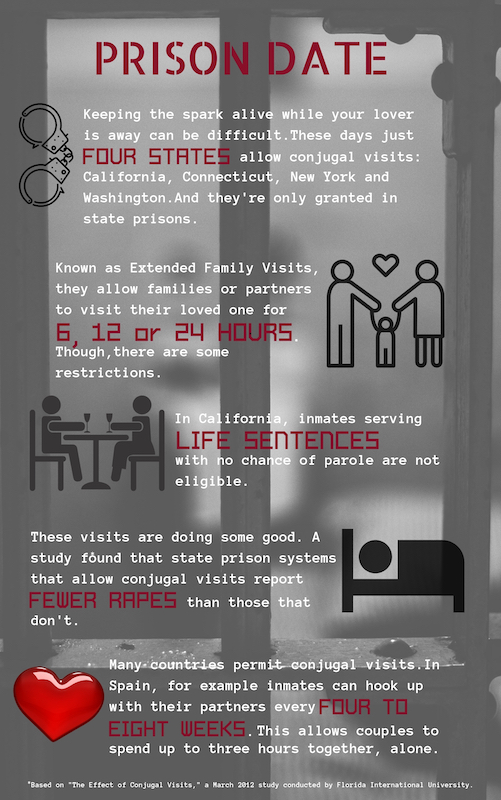
Dillon Keeney served a majority of his sentence in California, but because they weren't married at the time, conjugal visits weren't an option.
"Family members and children who visit overnight and are thus able to build and sustain more meaningful relationships with their incarcerated parent or family member may benefit tremendously," according to a 2012 Prison Visitation Policies: A Fifty-State Survey by Yale Law School. "Indeed, more generally, the positive impact of visitation on visiting family and on inmates has been well documented."
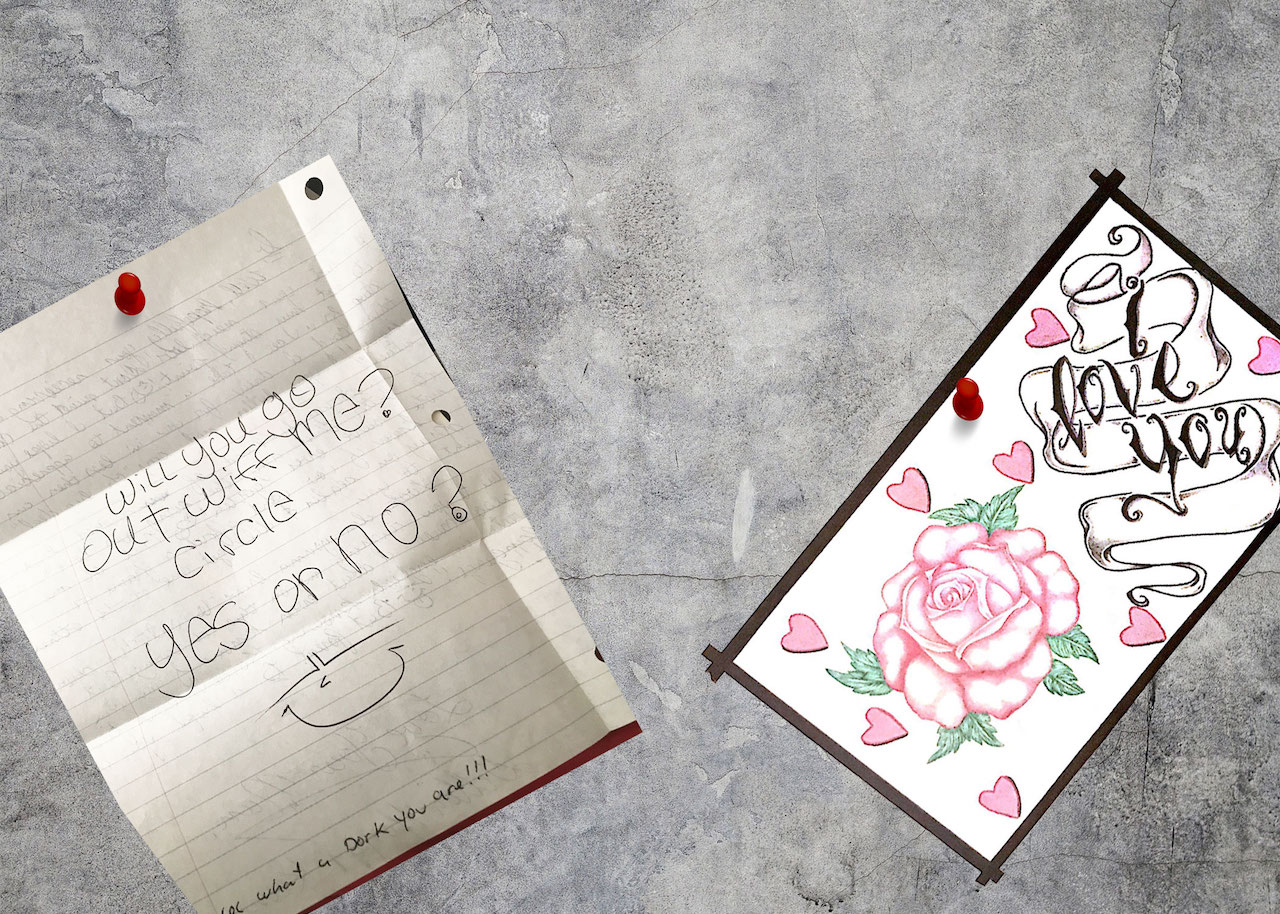
As a result, the couple had to find other ways to create emotional intimacy. Over the course of nearly five years, Breann and Dillon Keeney communicated through 20-minute phone calls when they could, wrote love letters back and forth and had short weekend visits.
While serving time, inmates are often told not to become intimate (neither emotionally or physically) with fellow inmates and prison workers. However, Dr. Carnetta Porter explains there's a difference between emotion and intimacy, and it takes a conscious effort to block intimacy.
"Can you consciously control yourself into shutting off intimacy? Yes," Porter continues, "Are they successful at it? Probably not, because they're human."
Breann says she was going through a depression and felt "isolated and alone" during the time Dillon had reached out to her. Once the two began talking again, they relied heavily on each other.
"I confided in him so much that became like 'You are my best friend. Like you're the only person that knows what I'm going through and vice versa,'" says Breann.
Dillon says loneliness or the stereotypical financial burden of prison is not why he decided to reach out to his ex-girlfriend after so many years.
"I felt like everything was adding up for me" Dillon recalls thinking while serving his sentence. "It was making sense as to what I had to do or what I needed to do and where I went wrong."
Dillon explains that having open communication with Breann is what ultimately helped their relationship while he was away. It was also an escape from his sentence.
"I had to step out of that world every time I opened up a letter or (we spoke on) the phone or had a visit," says the 29-year-old. "I had to transform into the reality side of it because even though that was my reality, I had to be a certain way in order to protect myself and then you still have to be aware of your surroundings."
And Dillon credits Breann to making him "up his game" and turn his life around.
"I'm super grateful and I'm super thankful that she gave me the opportunity...not just to us, but to push me as an individual," Dillon says.
For Breann and Dillon, their real-life "Love After Lockup" story has a positive ending.
Dillon has rehabilitated his life; he works for a construction company and has been out of prison for almost four years. He says his goal is to tell his story as a way to give back in hopes of helping keep others from going down his same path.
"I just feel like I want to give back more of my story to maybe avoid or possibly help (someone else) in any way avoid trouble."
But still, he acknowledges that he couldn't have done it alone.
"It's not just even my story. It's us. We got us here," Dillon says.
May 2019
Finances take a toll on inmates and their loved ones while in prison.
Dillon Keeney took pride in having one of the highest paying prison jobs at his facility. He made 13 cents an hour working in the prison kitchen.
It cost $75,560 to house an inmate in California in 2017. Many inmates have jobs working somewhere in their respective prisons. However, the pay is not reflective of the other costs of surviving in prison.
A fifteen minute collect call from prison ranges from $2 to $3. That price increases if the inmate is serving time in another state.
Plus, inmates are left with the responsibility of getting money put on their books to buy items from the prison commissary. Inmates can purchase non-perishable food items, more articles of clothing and other novelties like televisions or MP3 players.
Those who can't afford to keep up with the costs of additional luxuries often rely on their loved ones to support them.
Breann Keeney moved back in with her mother to save up for when Dillon was released from prison. She then took on two jobs, including bartending to support Dillon while he was in prison.
"I worked every Thursday, Friday and Saturday night. I would get off work at 4 o'clock in the morning and run home, take a shower, close my eyes for 20 minutes and then head to a visit," she says.
But, it wasn't a one-way street.
"He was very hesitant on taking money from me actually for the longest time he sent me money," Breann recalls.
The choice to support Dillon stemmed from not wanting to rely on outsiders. Breann being a busy bartender is no stranger to putting in hard work.
"Being the woman that I am... taking stuff from other people, knowing I could give that too, as long as I kept working, I knew I'd be fine."
Still, Dillon says some inmates might not have the purest intentions.
"It's very easy to get misled. You know it's very easy to get misled and get misconstrued into all of that nonsense," explains Dillon.
May 2019
In 2018, WE TV's "Love After Lockup" was the fastest growing cable reality series, according to Nielsen. The show chronicles the relationships of six couples– a recently released inmate and a civilian who have met through a prison dating website.
Breann finds herself frustrated with how the show portrays prison relationships.
"We already get so much heat from everybody else. Why are you going to go on national TV and make us just look like idiots?" she continues, "Because now it really does follow. Women are stupid. Women will fall for anything. Women will take anything from a man just to get some attention and that's how it felt to me."
But, it's evident that audiences are interested in the show.
"It looks at love in a whole new prism. I think it's unexpected and I don't think people realize that that's a world that really exists out there," says Eric Hoberman Senior Vice President of Development for ITV Creative. "I think when you watch that show it's kind of like you're led into a new life a new dating world that you didn't know existed."
Hoberman cautions, "These shows are not documentaries. That's the one thing you have to be conscious with... you're making a TV show so you have to make it entertaining as well as interesting."
Loyal "Love After Lockup" fan, La'Ren Cyr, admits the show is a guilty pleasure of hers. She finds herself trying to determine who's on the show with pure intentions. But, like Breann Keeney, Cyr thinks the show can come off as "dramatic like most other reality tv shows."
Breann warns that not everything is a prison cliché.
"It was sh**ty because there are good men that are in prison that don't deserve that and do deserve good women to have their back."
Something not shown on the show is the reality of how inmates cope with serving time. Dillon says he was tough on himself because of what he put his family through.
"I wanted it to be the hardest for me because I deserved that." He adds, "Not only did I put my family... they're serving time and then it's like I'm asking (Breann) almost to serve time with me."
May 2019

Click to play
Unlike Breann and Dillon, former inmate Chandra Bozelko's experience with love after being released from prison was different. Bozelko, a Princeton graduate, served six years in prison for non-violent crimes including identity theft that remain on appeal.
However, to some men on the Internet, Bozelko's intelligence isn't what is appealing; it's her time spent behind bars.
When Bozelko was released in 2015, within 48 hours of making a Facebook account she had hundreds of direct messages from men around the world. She was caught off-guard because social media wasn't as widely used when she began her sentence in 2009.
"I think it's a little extreme to seek out someone who's in prison. But if we look at the reasons like control. They're not going to be harmed. There's excitement," explains Dr. Kellen Grayson a psychologist and Licensed Family and Marriage Therapist.
Grayson says there's also an erotic component that comes with being drawn to violence and danger.
Bolzelko wasn't a violent offender. But, that didn't stop men from reaching out to her. It's the perception that an incarcerated person is dangerous that makes some inmates appealing to thrill seekers.
A fetish, "creates sexual excitement because breaking boundaries and breaking rules and dating someone who is willing to do that is likable," explains Grayson.
It was a scary place for Bozelko to be, considering those on parole are not supposed to interact with law enforcement, unless it's a medical emergency.
"I guess they thought we would just do anything with them, and they could get us to do anything and they would get away with whatever they wanted with us," she says.
Still, Grayson clarifies that this behavior is not healthy.
"There tends to be something that the person who is seeking that kind of romantic relationship is lacking. That could be self-esteem," says Grayson.
He also adds that other failed relationships or a history of trauma could possibly be to blame as well.
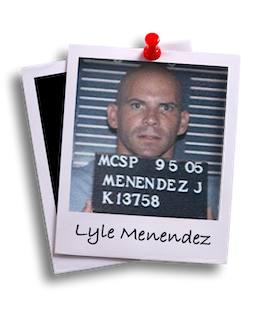
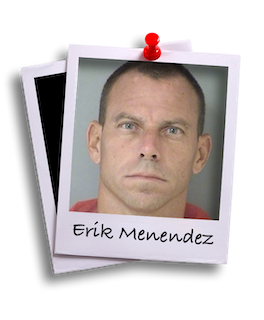
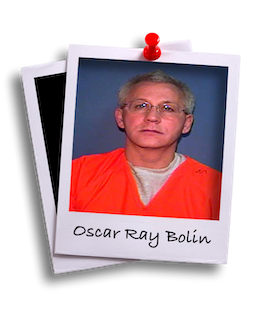
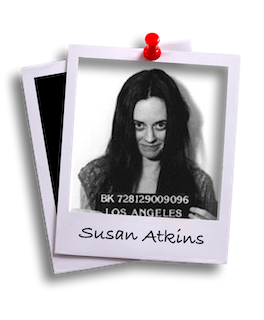
May 2019Take a look at some of the most noteworthy high-profile prison romances with some of the most notorious murderers in history.


©2019 by BROOKE BECTON