Borderless Wildlife


On this crisp February morning, Susan Malusa will hike five hours through underbrush, no trail in sight, with the 9,466-foot peak of Arizona's Huachuca Mountains looming in the distance. Her backpack is full of 25-pounds of gear -- a camera, a steel security box, a heavy metal cable, locks, batteries and SD memory cards (not to mention first aid and a GPS).

Malusa, a research specialist at the University of Arizona, is on a mission along the United States-Mexico border that could inform one of the leading political debates of the new Trump Administration: She studies the endangered jaguar that some say would suffer if a border wall is built.

She'll be checking an array of trail cameras -- placed at knee-height on tree trunks -- for images of the elusive animals. The jaguar has been in crisis since 1972, when it was listed under what is now the Endangered Species Act. Unlike other tracking programs, researchers don't put radio collars on jaguars. Malusa doesn't want to pose any risk to an already delicate population. "Even though it's safe 99 percent of the time, nobody really wants to risk injuring the animal in any way," Malusa says. "We're working with a really, really small population here."
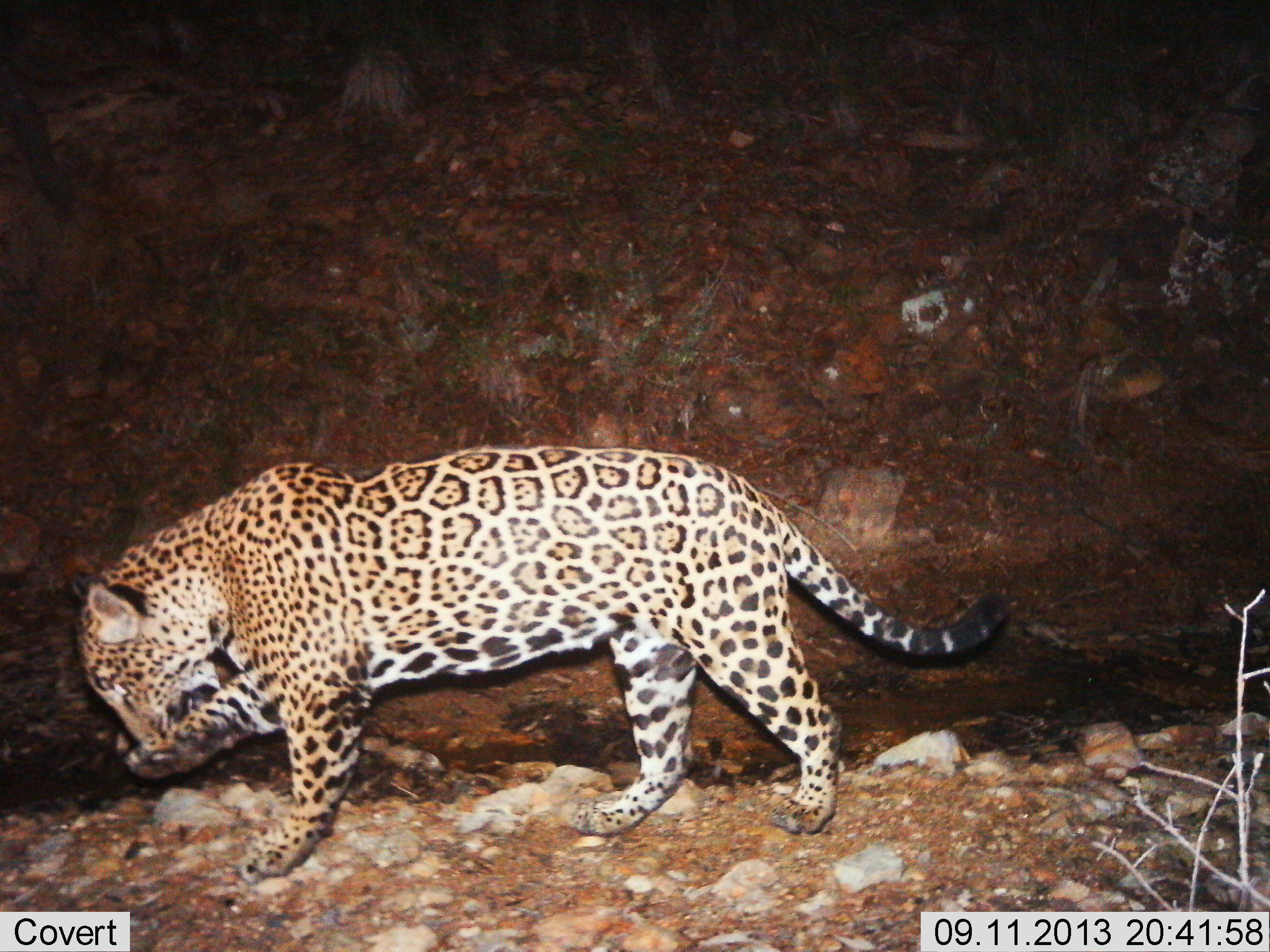
Photo courtesy of the U.S. Fish and Wildlife Service

Malusa will spend hours in the mountains, but knows seeing a jaguar is unlikely. "It's like Christmas every time you get that SD card and you open it up to see a mountain lion was there 15 minutes before you got there," Malusa says. Mountain lions, she explains, are often an indicator that jaguars are nearby, as they share habitat and have similar behaviors.

Another hard-to-find creature is the Mexican gray wolf. "Wolf enthusiasts throughout the continent may spend thousands of dollars to travel to Denali or Yellowstone National Park with the express intention of seeing wolves," says John Murtaugh, a program coordinator at the California Wolf Center in Julian, California. "And when they're lucky, they'll see them through a telescope."

Both the Mexican gray wolf and the jaguar frequent the mountain ranges along the U.S.-Mexico border. Their habitats have become deeply fragmented by the construction of fences and roads. Congress authorized the Department of Homeland Security in 2005 to bypass environmental impact reviews to build fences and roads for the sake of border security. By 2010, nearly one-third of the border had barbed wire or chainlink fencing.

The story of the gray wolf

"It's divided communities and families and harmed the economy," says Randy Serraglio, the Southwest conservation advocate for the Center for Biological Diversity, which is trying to stop the wall's construction. The group has sued the Trump administration, "calling on federal agencies to conduct an in-depth investigation of the proposal's environmental impacts." The last comprehensive environmental review of U.S. border security policy took place in 2001, Serraglio says.

Since then, Serraglio says, the border patrol has nearly doubled in size, and an increase of infrastructure in the name of security isn't lawful. "The law compels the federal government to analyze what the impacts are going to be," he says. "They need to update their programmatic environmental analysis of their border security policy, and that is the fundamental premise of the lawsuit."

Jaguars rely heavily on connectivity to Mexico for genetic diversity. "Animals don't see the quote Mexican border," Malusa says. "This is part of their home range." Freely moving back and forth across the border ensures gene flow within the population, a crucial element to maintaining genetic diversity, which protects species from disease and increases chances of survival.

"You will never establish a population here in the U.S. if the border wall cuts off the ability of jaguars to move back and forth," Serraglio says.

Vicente Paco, a border patrol agent at with the Tucson, Arizona, sector, says agents see wildlife every day. "One of the things that we do encounter out here is that the roadways pose a great danger to wildlife," he says.

The No. 1 threat to wildlife is habitat loss and fragmentation. The jaguars inhabit only one section of the mountains, forests and deserts along the 2,000-mile border. The wall would be a mammoth, concrete reminder of how the White House chooses to ignore environmental issues and the plight on endangered species, Serraglio says.

"The border wall itself would harm more than a hundred species in the region, many of which are protected under the Endangered Species Act as threatened or endangered," he says. "Of course some of the biggest ones are jaguar, ocelot, Mexican wolf [and] Sonoran pronghorn."

The proposed wall would be six feet underground and stretch at least 18 feet into the sky. Its purpose: Keep out illegal immigrants. But at least 100 species of plants and animals that live on or near the border could find their lives disrupted, too.

"These species need to be able to move back and forth across the border in order to be biologically healthy." Serraglio says if that ability is lost, "you can kiss them goodbye."

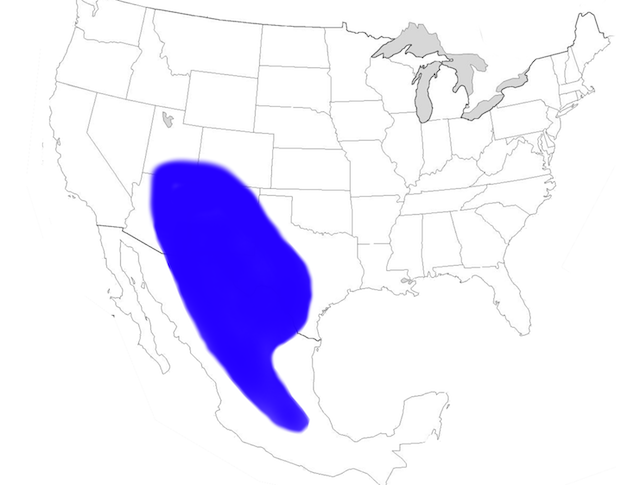
Historic Mexican gray wolf range
The Case of the Mexican Gray Wolf

On a gray day in early March, Murtaugh wears a long-sleeved, forest-green button down shirt. It's made from thick material, and the words "California Wolf Center" are emblazoned in tiny letters over a pocket on the left side, along with an embroidery of a wolf.

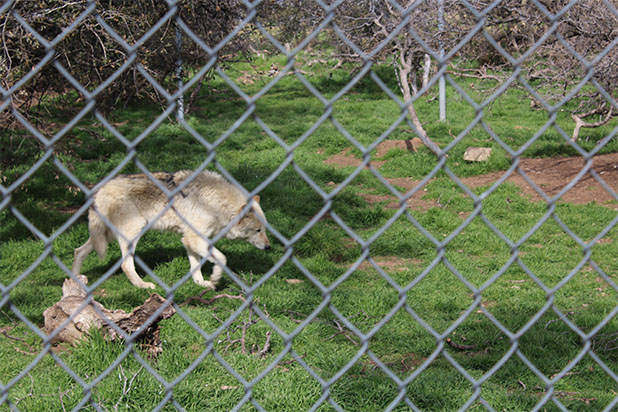
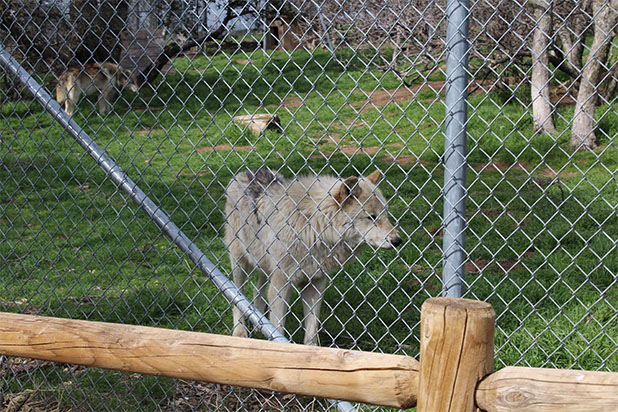
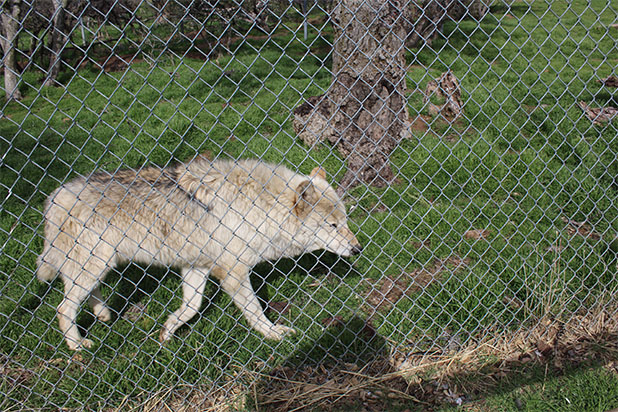
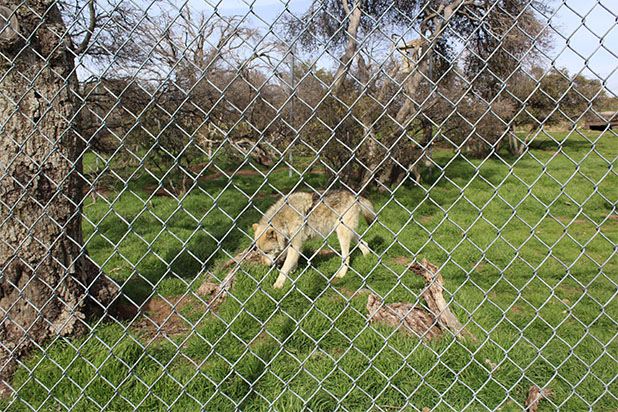
It's the uniform every member of the California Wolf Center is wearing this particular Saturday. Murtaugh is leading a couple dozen visitors around the grounds, which are rocky and full of evergreen trees. The guests haul around DSLR cameras and hold up iPhones when they reach a chain-link fence, and a hush ripples through the crowd in anticipation of what the Ray-Ban bespectacled guide will say next.

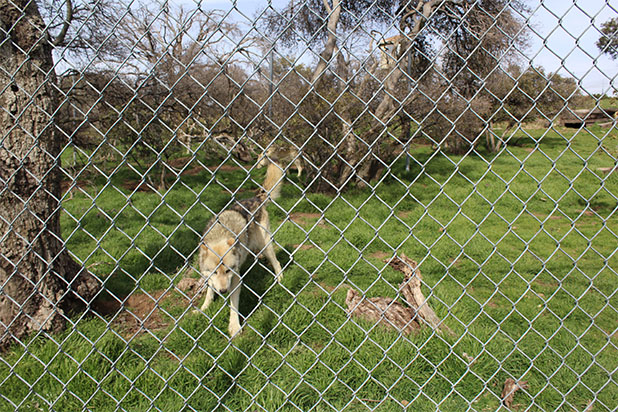
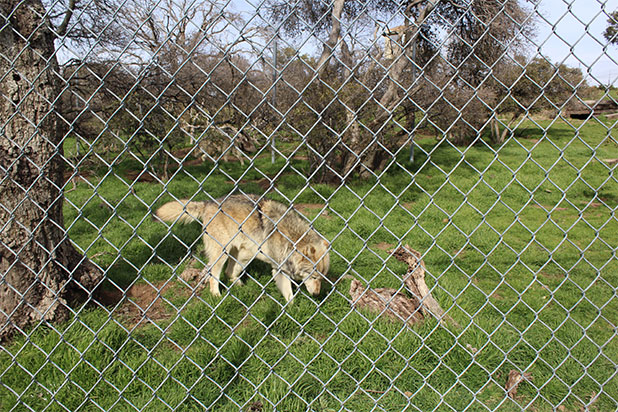
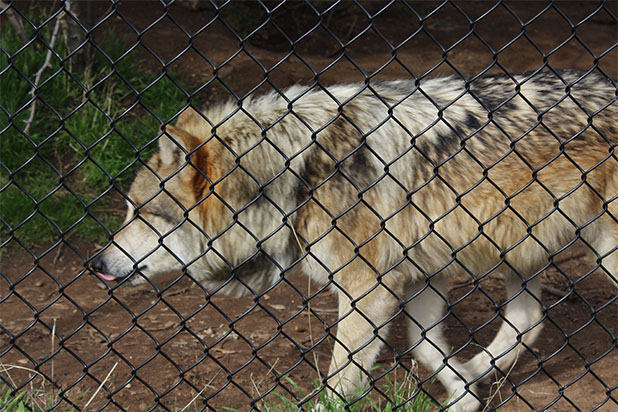
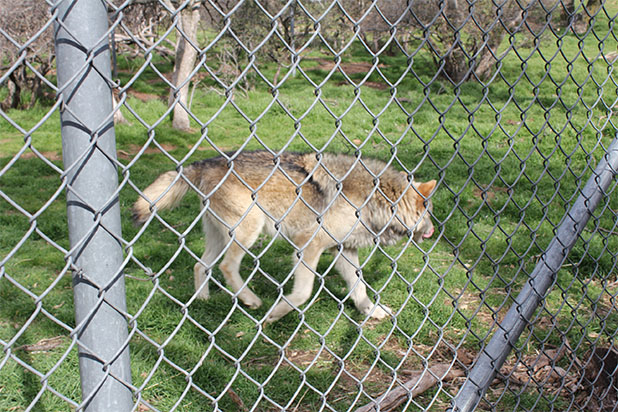
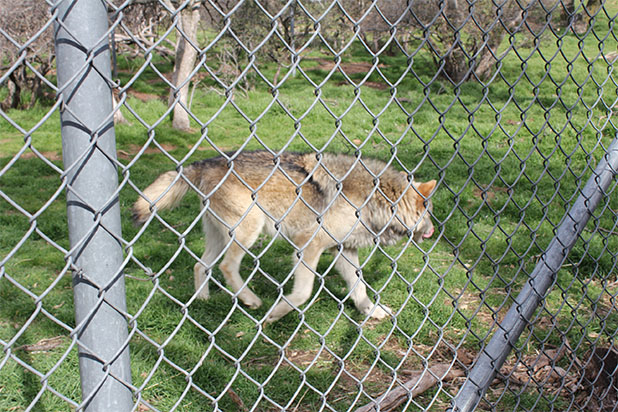
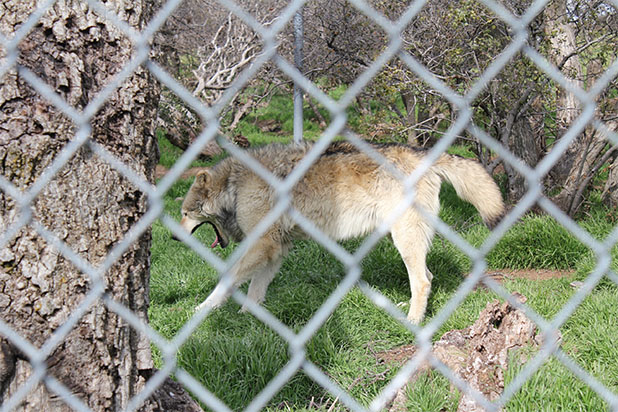
"In here, we have Zeke and his girlfriend Terry," Murtaugh says in a voice that is clearly practiced -- he's given this speech before. "You can tell which is which because Zeke is always following Terry around."

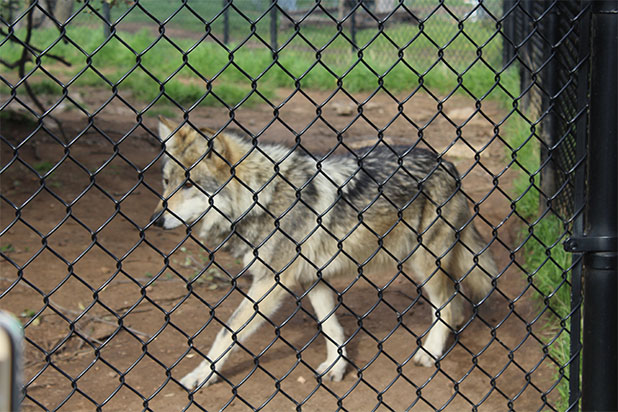
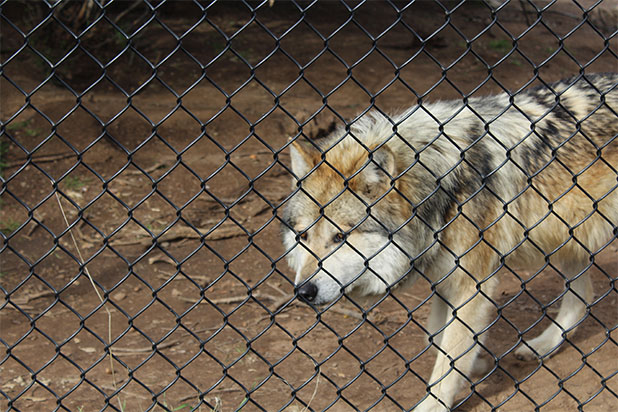
Zeke and Terry are both Mexican gray wolves, an endangered species whose natural habitat more than 300 miles away has dwindled down from vast expanses that spanned the border of the United States and Mexico to just a few sections in Mexico and Arizona. There are only 113 Mexican gray wolves living in the wild.

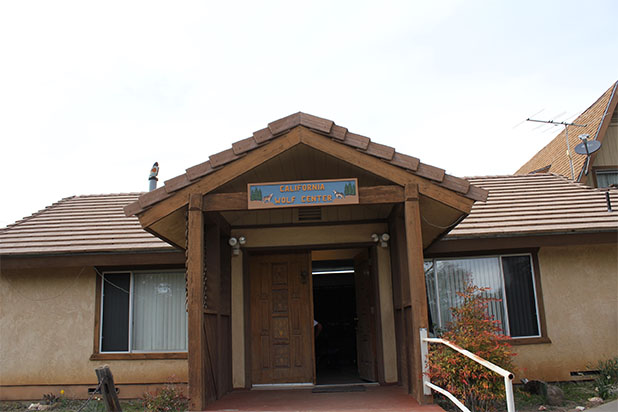
The center itself is inconspicuous, nestled in the hills near Lake Cuyamaca in the small town of Julian. To get to the center, you have to drive along the winding two-lane California 78, spot a discreet sign pointing you to KQ Ranch, and then make a mildly terrifying descent down a steep and narrow "road" that plops you out in front of a small wooden house with a wooden sign painted blue over the doorway.

Welcome to the California Wolf Center.

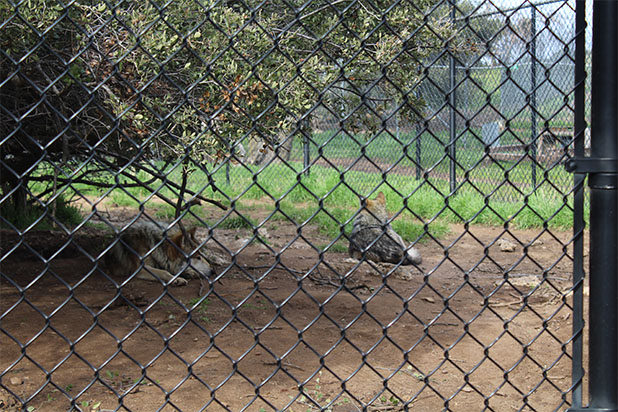
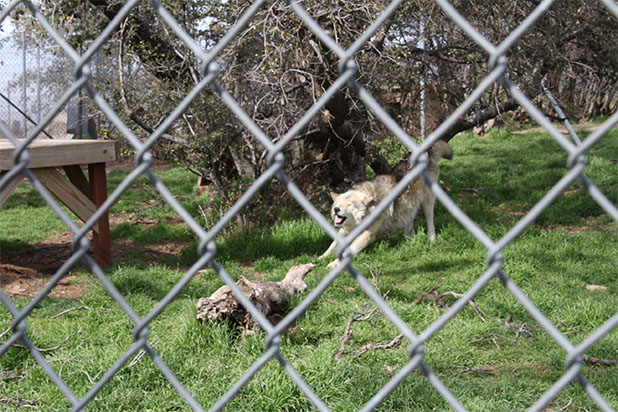
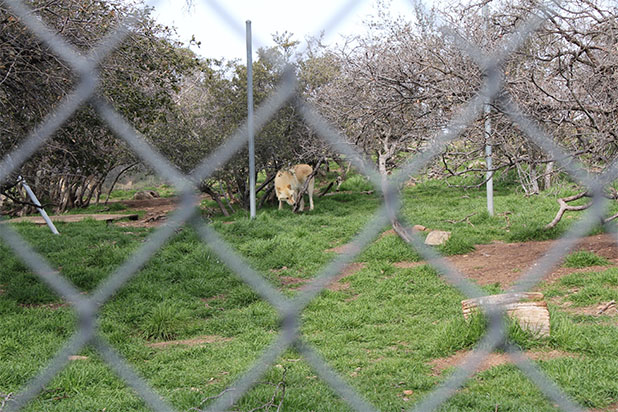
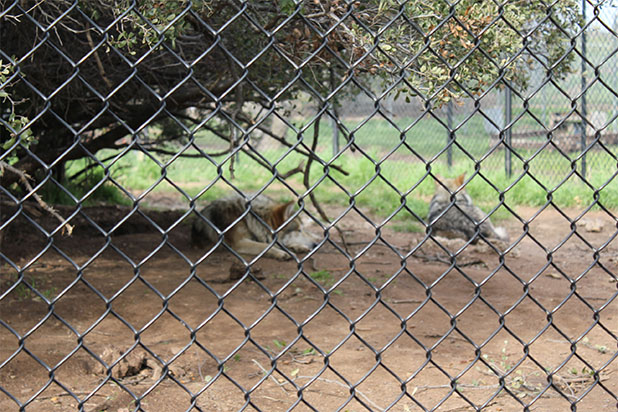
Endangered gray wolves at the California Wolf Center in Julian, California.

The center might not look like much, but the work that just a handful of employees and volunteers do is saving the population of the gray wolf. Here, they take a more hands-on approach than Malusa's team does with the jaguars.

Zeke and Terry, the wolves that Murtaugh loves to highlight on his tours of the facility, arrived here as part of the Species Survival Program, which collects genetic information from wolves around the country. Zeke was born somewhere in the wild, Terry in New Mexico. The program pairs wolves together that are a likely match.

Think of Tinder, but for a keystone species whose population is critically endangered. The seven pups born in 2016 at the center raised the world's population of the species by 1.3 percent.

Financing Endangered Species Recovery

The United States and Mexico share a border that consists of mountain ranges, deserts, forests, the Rio Grande river, and both federal and privately owned land. Each provide habitat for various forms of wildlife.

The Cabeza Prieta Wildlife Refuge in Arizona shares 56 miles of the border with the El Pinacate y Gran Desierto Altar in Mexico. Combined, these areas provide more than 2.5 million acres of desert habitat. The endangered, antelope-like Sonoran pronghorn is one animal that migrates between these refuges.

Despite legislation that has been in place for decades, like the Endangered Species Act, signed into law in 1973, protecting wildlife has been slipping down Washington, D.C.'s priority list for some time now.

The portion of the U.S. Fish and Wildlife Service's budget dedicated to habitat conservation declined in recent years. In 2014, such efforts amounted to $114,000. This year, it's $67,500. Budget cuts hit the wolf tracking program, so the California Wolf Center stepped in to cover the cost, Murtaugh says.

The budget cuts are part of a larger trend of defunding environmental programs under the Trump administration. The U.S. Fish and Wildlife Service -- which is responsible for carrying out the Endangered Species Act -- is part of the Department of the Interior, which itself is facing a 12 percent cut in Trump's proposed budget. That's not to mention the 31 percent decrease in funding to the Environmental Protection Agency. Documents detailing just how those cuts will play out show cutting environmental cooperation with Mexico and Canada under the North American Free Trade Agreement. The North American Agreement on Environmental Cooperation (NAAEC) says explicitly that each party is obligated to "assess, as appropriate, environmental impacts." No impact report has been done by the Trump administration to assess the potential damage and risk to environment from the construction of a border wall.

The U.S. Fish and Wildlife Service issued a statement addressing environmental concerns about the border wall. It says, in part: "Any assessment of the potential impacts of a US-Mexico border wall on threatened and endangered wildlife would be made through the formal consultation process under section 7 of the Endangered Species Act. We have not received a request for such a consultation from any agency and would not make speculative assessments outside of that process."

The Center for Biological Diversity's lawsuit also alleges a threat to human health, claiming wildlife is a key part of a healthy ecosystem. "Ecology is like Jenga," Serraglio explains. "You can keep pulling little pieces of it out... and it's still standing there, but you never can be sure when you finally pull one out that creates a cascading effect that breaks down the whole ecosystem."

To anyone who has experienced the toppling blocks of a Jenga tower, his analogy drives home a poignant point. It's easy for issues of wildlife and habitat conservation to remain out of sight, out of mind -- why should someone living comfortably in Los Angeles or another city care about some rare, endangered species living down near the border? Beth Pratt, the director of the California chapter of the National Wildlife Federation, says, "When you start messing with ecological systems, it is not just wildlife that is impacted, it is ourselves."

Pratt points to a couple of examples of how ecological health relates to the health of humans. Fires in California are becoming more and more rampant. Dead trees -- of which there are 100 million in the Sierra Nevada -- are quick to catch flame, and a lack of biological diversity contributes to that. Pratt lives near the Sierra Nevada and can remember being evacuated for fires six times in the last couple years.

Another example comes from the extinction of mountain lions on the East Coast. Because of the lack of predators, the deer population has exploded, causing widespread Lyme disease. Deers spread it by the ticks that live on their fur. So the tick population increases right along with the population of their doe-eyed hosts.

"If the mountain lions were taking out the deer as they should be, you might not have as many incidents," she says. "We don't think about how much we rely on these creatures, everything from pollinators who pollinate our food but the environmental health of these ecosystems is directly related to our own health. And you have to care if you care about the health of the human race as well."

Just as reintroducing mountain lions on the East Coast will rein in the deer population and bring back biological balance, reintroducing wolves brought back biological balance in Yellowstone National Park. In fact, it was learning about the success of the wolf in Yellowstone that inspired Murtaugh -- the educator at the California Wolf Center in Julian -- to join the conservation effort. In the 1930s, wolves were killed off completely in Yellowstone. Species that the wolf traditionally preyed upon -- like elk -- began to flourish, but with consequence. The elk population grew beyond the capacity of Yellowstone, and the herbivores didn't feel the pressure to move around the park, causing overgrazing and lack of resources for other fellow prey.

It took more than 60 years for wolves to be reintroduced to Yellowstone. When wolves returned to the ecosystem, elk again faced pressure to move their spindly legs around the vast park. They grazed on new plants, and the formerly diminished species of willow, aspen and cottonwood plants, began to flourish. This caused a flourishing all the way down the food chain. This ripple effect is known as a trophic cascade; it occurs when predators in a food web release prey farther down on the food chain from predation.

The Case of the California Condor

At the San Diego Safari Park, in an office on a hill overlooking the employee parking lot, sits a picture of Michael Mace with Jane Goodall. Other adornments on the white walls include drawings of various bird species, pictures of Mace and his family, and a model of a condor mid-flight. Mace, the curator of birds at the park, points to a database on his computer screen. With a few taps on the keys, he can access the full family history of any condor that has lived since the 1980s and find out where it lives and has lived. It's a program very similar to the gray wolf Species Survival Program. All of this genetic mapping is done at the Safari Park's Institute for Conservation Research. Mace chuckles at the thought of the database as online dating for wildlife. "Yeah, on steroids," he says.

In the 1980s, the world's condor population was 22. "It was critical to genetically manage the population to reduce the risk of inbreeding, which we know for other species has been detrimental," Mace says. When conservationists deal with such fragile populations, you can bet that they take precaution. "Every release site, every breeding center, has the same genetic representation. So that if there was a disease outbreak in a region of the country, we would not lose any of that very valuable, irreplaceable genetic material," he says.

"We found in the wild that condors would sometimes land on powerline structures or collide with powerlines," Mace says, pointing out a way that urbanization has affected conservation work. Condors wingspan can reach up to 10 feet, easily spanning the width of powerlines. To diminish the risk of condors getting caught in powerlines once released, they go through a behavior modification program before they reach the wild. "We put up a mock power pole, it is wired to deliver a mild electric charge. Condors, being very smart, quickly figure out that if I land on that it's an uncomfortable sensation. That behavior that they learned here translates to the field and has reduced the electrocutions."

Replenishing populations is difficult, and each species requires a different approach. Types of conservation are as diverse as the species that need help. One thing rings true for the jaguar, Mexican gray wolf and California condor, though: habitat connectivity is vital to their survival.

From the Border to D.C.

Talk about the border often invokes emotional responses from politicians and their constituents. But even Republican Congressman Rep. Will Hurd, whose district includes more of the U.S.-Mexico border than any other, opposes a border wall. His constituency spans 800 miles along the border, from San Antonio to El Paso.

"Building a wall is the most expensive and least effective way to secure the border," he said in January. "Big Bend National Park and many areas in my district are perfect examples of where a wall is unnecessary and would negatively impact the environment, private property rights and economy."

Serraglio says, "When you hear a Republican congressman saying things like that in response to the proposals of a Republican president, you realize, yeah there's some very complex politics at work here." The lawsuit is only part of a larger effort to "slow things down and... really analyze and think about what we're going to do."

For now, it looks like some members of Congress are taking steps to do just that. By the end of April, funding for the wall was still up in the air. The Trump administration insists commitment to building a wall remains. "Build that wall!" was one of the loudest and most popular rallying cries during Trump's campaign.

As recently as March, some animals still eeked past barriers at the border. One female Mexican gray wolf traveled from Mexico to Arizona, where she was captured on a private cattle ranch and taken to a wolf management facility in New Mexico. Any construction at the border would greatly diminish animals' chances of moving from habitat to habitat.

While the fate of the border wall remains unsettled, the wolves at the California Wolf Center will keep posing for guests' cameras. Murtaugh will keep teaching and spreading the word about the gray wolf. "By helping to engage our public with the story of these wolves, we are working to encourage awareness of conservation," he says.

And Malusa will keep up her monitoring expeditions in the Coronado National Forest in southeastern Arizona. "We hope that this body of knowledge continues to be used and for all the different agencies."

By the end of February, Malusa's cameras in the Huachuca Mountains had captured images of two jaguars. As for the continued success in endangered species detection and rehabilitation, Serraglio says: "It would be thrown out the window if Trump gets his way and builds his wall."


Snapshot of species that face further threat from a border wall

Click on a photograph for more information.


Contact reporter Ashley Boucher here. You can find the social media campaign for this project here. Published April 28, 2017